

 Deutsch
 Español
 Suomi
Suomi Français
 Bahasa Indonesia
 Italiano
 日本語
日本語 Português
 Tagalog

1. What are green tea polyphenols and EGCG?
Green tea contains a family of plant compounds called catechins. The best-known is EGCG, short for epigallocatechin gallate. Other catechins include ECG, EGC and EC. Together, these compounds are often grouped under the name green tea polyphenols.
Researchers are interested in catechins because UV light does more than cause redness. It can set off inflammation, disrupt local immune cells, damage DNA, and over time affect collagen and elastic fibres in the dermis. In laboratory and human experimental studies, green tea catechins appear to interact with several of these pathways.
The key detail is the form. A cup of green tea, a concentrated EGCG capsule, and a topical green tea cream are not interchangeable. They deliver different amounts to different parts of the body, and they come with different safety considerations.
2. How they may work in sun-exposed skin
Green tea does not seem to work like sunscreen. In a human study of topical green and white tea extracts, the products had an SPF of about 1, yet still appeared to protect aspects of skin immunity after solar-simulated UV exposure. That points to a biological effect rather than simple UV blocking.
Green tea catechins may help by calming UV-triggered inflammation, reducing oxidative stress, and limiting some of the later signals involved in redness and tissue stress. Small human studies have found that topical EGCG or green tea polyphenol mixtures applied before UVB exposure reduced erythema, inflammatory cell infiltration, sunburn cells, and some DNA damage markers.
There is also evidence that oral catechins can make their way into the skin. In one 12-week study, catechin-related compounds were found in skin tissue and blister fluid after supplementation. A follow-up analysis identified multiple catechin metabolites in plasma, skin fluid and biopsies, including compounds shaped by gut bacteria. So taking catechins by mouth is biologically plausible. Plausible, though, is not the same as proven clinical protection.
3. What the evidence says
The clearest pattern is seen with topical green tea preparations used before UV exposure. Older human split-site studies found that topical green tea polyphenols reduced redness, protected Langerhans cells, and reduced UV-induced DNA damage. EGCG and ECG appeared more active than some other isolated catechins for redness, although whole green tea mixtures may work better overall than single isolated compounds.
The oral evidence is more uneven. A 2011 placebo-controlled trial in 60 women used a high-catechin green tea beverage for 12 weeks and reported better photoprotection and skin quality measures. Another open-label study gave fair-skinned adults green tea catechins plus vitamin C for 12 weeks and found catechin metabolites in skin, reduced UV redness response, and lower UV-induced 12-HETE, an inflammatory lipid signal.
The better-controlled oral trials are more cautious. In a double-blind randomized trial, 50 fair-skinned adults took 1080 mg green tea catechins plus vitamin C daily or placebo for 12 weeks. The active group did not show significant protection against minimal erythema dose, redness response, inflammatory cell infiltration, PGE2, or 12-HETE. A related randomized endpoint found no reduction in direct UV-induced DNA lesions after higher-dose solar-simulated radiation.
Evidence for repair and photoaging is still limited. A 2022 mechanistic trial found that oral catechins selectively protected fibulin-5, a protein linked with elastic fibre structure, after acute UV exposure. But the same study did not show broad protection of collagen or elastic fibre measures. Longer-term photoaging trials have also been disappointing: a two-year oral green tea polyphenol trial in women did not significantly improve major histologic photoaging outcomes compared with placebo.
For context, green tea sits among other add-on approaches studied for sun-related skin support, including Polypodium leucotomos, nicotinamide, carotenoids, astaxanthin, beta-carotene, and lycopene. None of these replaces sunscreen.
 Topical use: Clearest human signal, mainly before UV exposure.
 Oral catechins: Reach the skin, but protection is modest and inconsistent.
 Recovery: Early mechanistic data, not enough to promise visible repair.
4. Food, supplements and topical forms
Brewed green tea is the gentlest route. It provides catechins along with caffeine and other tea compounds, but the dose varies depending on the tea type, brewing time and serving size. The positive beverage trial used about 1402 mg catechins per day, which is far more than many casual tea drinkers consume.
Supplements are more concentrated and less predictable. The NIH Dietary Supplement Ingredient Database found product-to-product variability in green tea supplements when measuring catechins, EGCG and caffeine. That helps explain why a supplement label may not match a study dose neatly.
Many oral studies used standardized catechin extracts plus vitamin C for 12 weeks. Vitamin C is often included to stabilize catechins, so the findings do not always apply to EGCG-only products or to ordinary tea drinking.
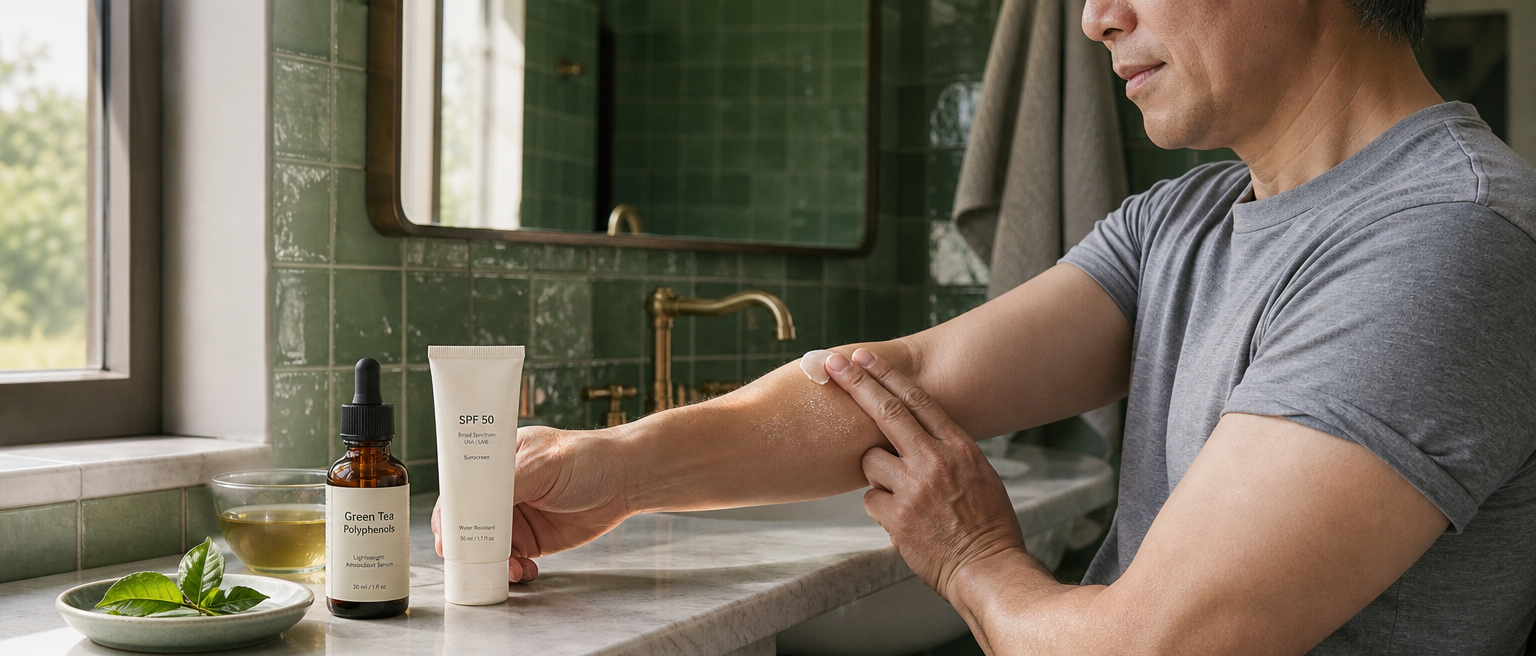
Topical products depend heavily on their formulation. Concentration, stability, skin penetration, and whether the formula uses whole green tea extract or isolated EGCG can all affect results. A controlled study of a 4% green tea extract lotion found that the effect appeared time-dependent, with clearer changes after repeated use rather than immediately.
5. Safety
For most adults, brewed green tea is considered safe in normal beverage amounts. The main practical cautions are caffeine sensitivity, sleep disruption if it is taken late in the day, and possible interactions with some medicines.
Concentrated green tea extract is a different category. NCCIH notes that green tea extract supplements can cause nausea, constipation, abdominal discomfort and increased blood pressure, and that uncommon liver injury has been reported. Interactions have been noted with nadolol, atorvastatin, raloxifene and potentially other drugs.
EFSA concluded that catechins from green tea infusions are generally not a safety concern, but intakes of 800 mg or more EGCG per day from supplements have been associated with raised liver enzymes in trials. LiverTox also describes concentrated green tea extract as a well-established cause of rare clinically apparent liver injury, usually appearing within 1–6 months of use.
Topical green tea is usually discussed as a lower systemic-risk option, but skin irritation or allergy can happen with any cosmetic active. Patch testing is a sensible step if you have reactive skin.