 Deutsch
 Español
 Suomi
Suomi Français
 Bahasa Indonesia
 Italiano
 日本語
日本語 Português
 Tagalog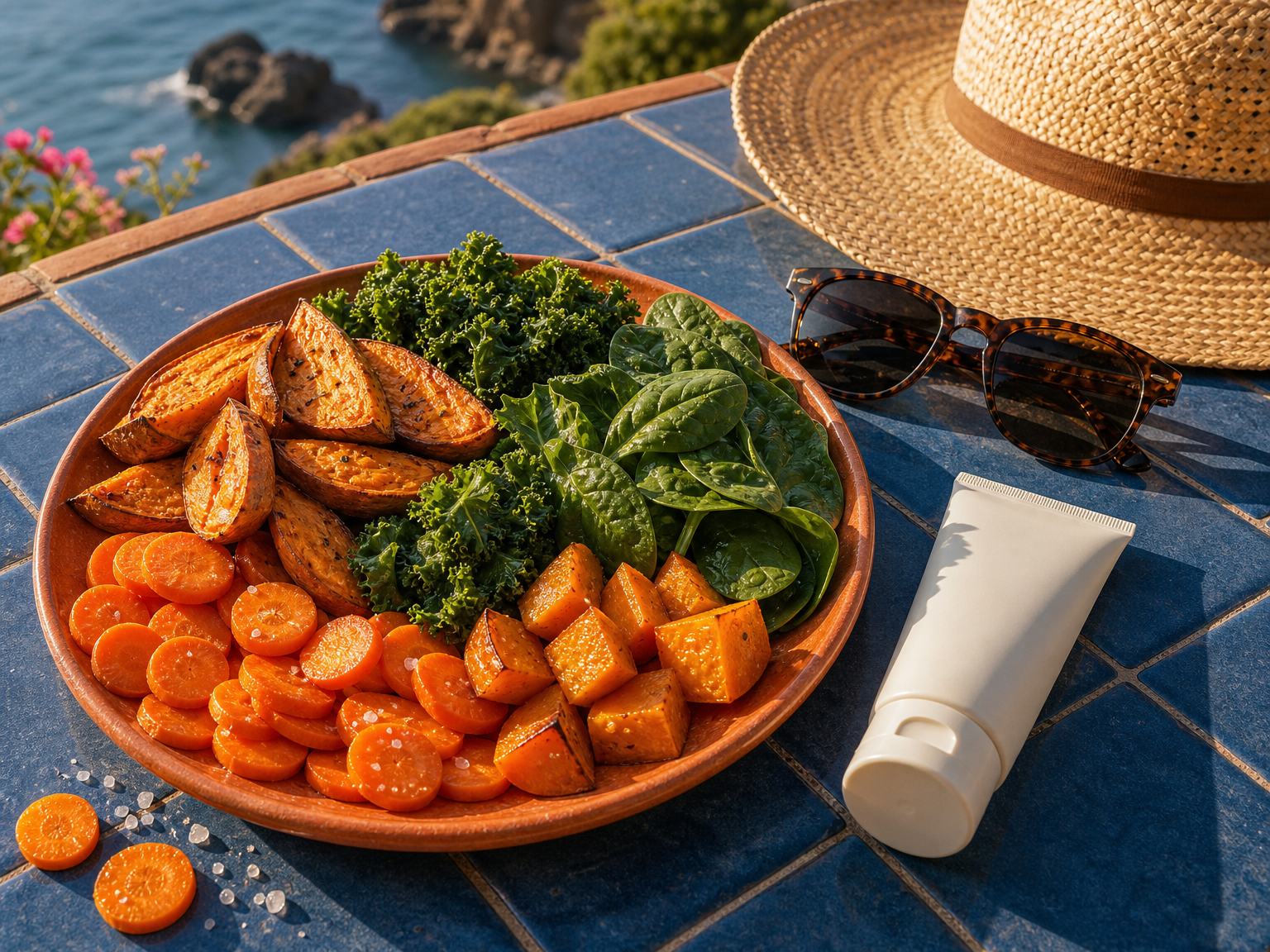

1. What is beta-carotene?
Beta-carotene is an orange-red plant pigment found in foods such as carrots, sweet potatoes, pumpkin, spinach, kale and other leafy greens. It is part of a wider family called carotenoids, which also includes lutein and lycopene. For a broader food-and-nutrient overview, see our guide to what beta-carotene is.
It is also a “provitamin A” carotenoid, meaning the body can convert some of it into vitamin A when needed. That conversion varies a lot from person to person, partly because of genetics. Food beta-carotene is not absorbed in the same way as supplemental beta-carotene; the NIH estimates that 1 microgram of retinol activity equivalent equals 2 micrograms of supplemental beta-carotene or 12 micrograms of beta-carotene from food.
When it comes to skin, the interest is not only about vitamin A. Beta-carotene can build up in the outer layers of the skin. Over time, that may slightly change how skin responds to sunlight.
2. How it may work in sun-exposed skin
UV radiation creates reactive oxygen species — unstable molecules that can damage lipids, proteins and DNA. Beta-carotene can quench singlet oxygen, one type of reactive oxygen species, and may help reduce some of the oxidative stress that follows UV exposure.
That does not mean it blocks UV rays. Sunscreen, clothing, shade and sensible timing reduce how much radiation reaches the skin in the first place. Beta-carotene works from the inside, and any effect depends on stores building up in tissue. This kind of inside-out support is often discussed as oral photoprotection, and its timing looks very different from applying SPF before going outside.
The likely effect is not unique to beta-carotene, either. In some studies, mixed carotenoids have performed similarly to beta-carotene-only formulas, and combinations with vitamin E have sometimes looked stronger than carotenoids alone. This suggests the broader dietary pattern — and possibly other carotenoids studied for skin outcomes, such as astaxanthin — may influence skin carotenoid levels.
3. What the evidence says
The clearest signal is a reduction in UV-induced erythema, the redness that appears after controlled UV exposure. A meta-analysis of seven placebo-controlled supplementation studies found a significant protective effect, with a clear time pattern. Protection generally appeared after about 10 weeks, and the estimated benefit increased with longer use. Even then, the authors described the protection as modest, with an approximate maximum SPF around 4.
 Slow onset: Benefits generally appeared after about 10 weeks.
 Modest effect: The estimated maximum protection was around SPF 4.
 Important limits: Studies mostly measure lab redness, not real-world sunburn.
Several trials follow that pattern:
- In a 12-week trial of adults with fair skin, 24 mg per day of beta-carotene or a mixed-carotenoid formula containing beta-carotene, lutein and lycopene reduced redness after UV exposure by week 12.
- Another 12-week study found that 25 mg per day of total carotenoids reduced UV-induced erythema, and the carotenoid-plus-vitamin-E group appeared to do better than carotenoids alone.
- A longer 24-week trial using oral carotenoids reported less redness after simulated solar radiation, with summaries describing a rise in minimal erythema dose by the end of treatment.
The negative studies are just as useful for understanding the limits. A single 120 mg dose did not protect against a sunburn reaction. Neither did 90 mg per day for 23 days, even though beta-carotene levels rose in blood and skin. In another trial, 15 mg per day for 8 weeks did not produce convincing improvements in UV-related oxidative stress markers or redness.
Taken together, the evidence suggests that duration is more important than taking a large dose right before sun exposure. Skin carotenoid stores seem to build slowly.
Source note: The human trials, reviews and safety assessments summarized here are listed in the References section below.
4. Does beta-carotene help skin recover after UV damage?
The recovery question is less clear than the prevention question. Some newer carotenoid research looks at oxidative-stress markers, inflammatory signals and enzymes linked with collagen breakdown after UV exposure. Reviews suggest carotenoids may influence markers such as ICAM-1, HO-1, MMP-1 and MMP-9.
But direct evidence that beta-carotene alone helps skin heal after UV damage is limited and mixed. The 8-week beta-carotene trial that measured UV-induced oxidative stress did not find convincing photoprotection from 15 mg per day. Most positive studies measure how red the skin becomes after UV exposure, not how quickly a real sunburn heals, how much DNA damage is repaired, or whether skin ageing outcomes improve. Other nutrients studied in sun-damaged skin, such as nicotinamide, have their own evidence questions and should not be treated as a replacement for sun protection either.
So the fair answer is this: beta-carotene may slightly reduce the intensity of UV-triggered redness after sustained intake, but it should not be treated as a reliable recovery aid after too much sun.
5. Dose, duration, diet and individual risk
In skin trials, the most convincing supplemental regimens were usually around 24 to 25 mg per day for 12 weeks or longer. Shorter use has been less convincing. Higher-dose, longer regimens have shown effects in some studies, but more is not automatically better, especially given the safety concerns.
Diet is the safer starting point. Normal dietary carotenoids appear to accumulate in skin, and small observational work links higher skin carotenoid levels with yellower skin tone and lower UV photosensitivity. Eating carotenoid-rich foods with a meal that contains some fat may help absorption, because carotenoids are fat-soluble.
Individual response may vary. Most skin trials were done in healthy, fair-skinned adults, often Fitzpatrick skin type II. That limits what we can say for darker skin types, people with photosensitive conditions, people using photosensitising medicines, or those with a history of skin cancer.
6. Safety
Beta-carotene from food is generally considered safe. Very high carotenoid intake can turn the palms, soles or face yellow-orange, a harmless condition called carotenodermia that fades when intake drops.
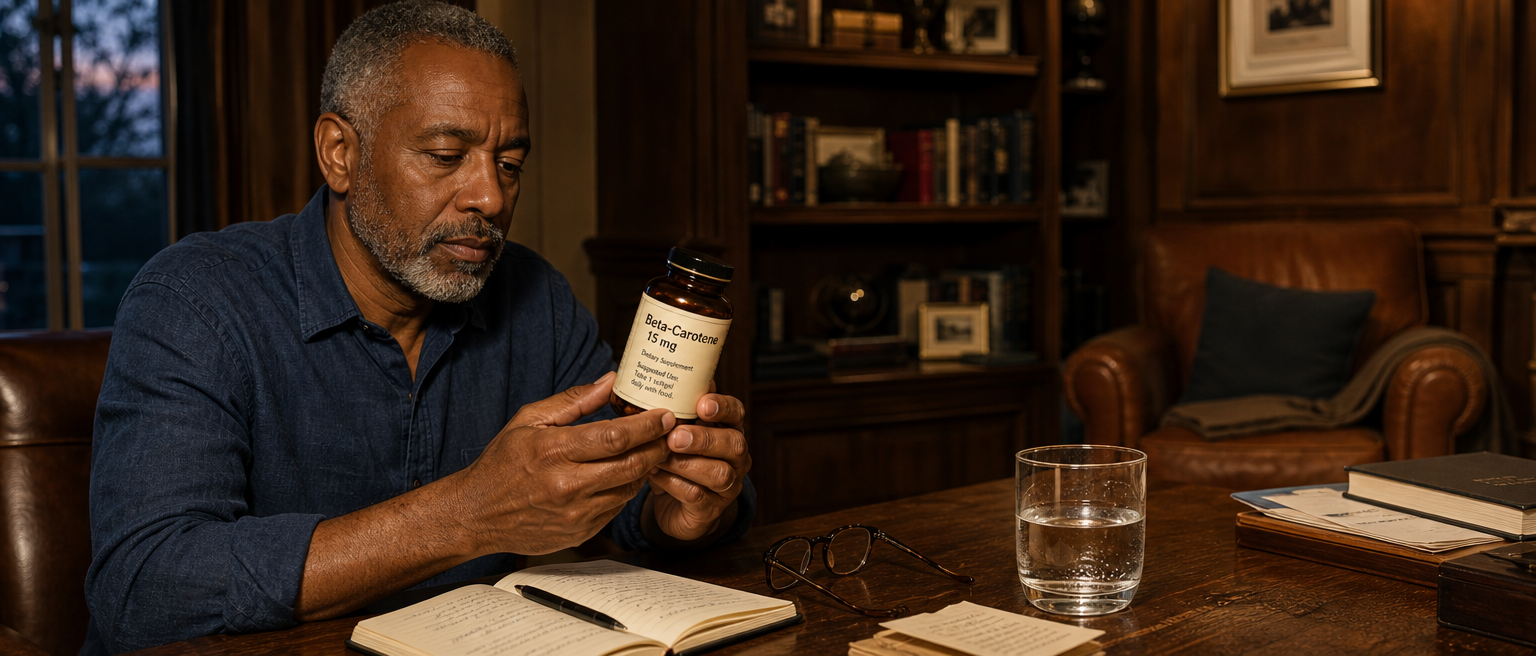
Supplements are a different story. Large trials found serious harm from high-dose beta-carotene in people at higher lung-cancer risk. In the ATBC trial, male smokers taking 20 mg per day had higher lung-cancer incidence and higher overall mortality. CARET, which used beta-carotene plus retinol in smokers and asbestos-exposed people, also found increased lung-cancer risk and mortality. EFSA’s recent safety materials state that smokers should avoid food supplements containing beta-carotene.
Beta-carotene has also failed as a skin-cancer prevention strategy. In people with previous nonmelanoma skin cancer, long-term beta-carotene did not reduce new basal-cell or squamous-cell cancers. The Nambour trial similarly found no significant prevention of new skin cancers from beta-carotene supplementation.
Also check labels carefully. Some “skin” or vitamin A products combine beta-carotene with preformed vitamin A, such as retinol or retinyl palmitate. Preformed vitamin A can be toxic at high intakes. If you are pregnant, trying to conceive, taking oral retinoids such as isotretinoin or acitretin, using orlistat, or taking multiple vitamin A-containing products, speak with a clinician before supplementing.