

 Deutsch
 Español
 Suomi
Suomi Français
 Bahasa Indonesia
 Italiano
 日本語
日本語 Português
 Tagalog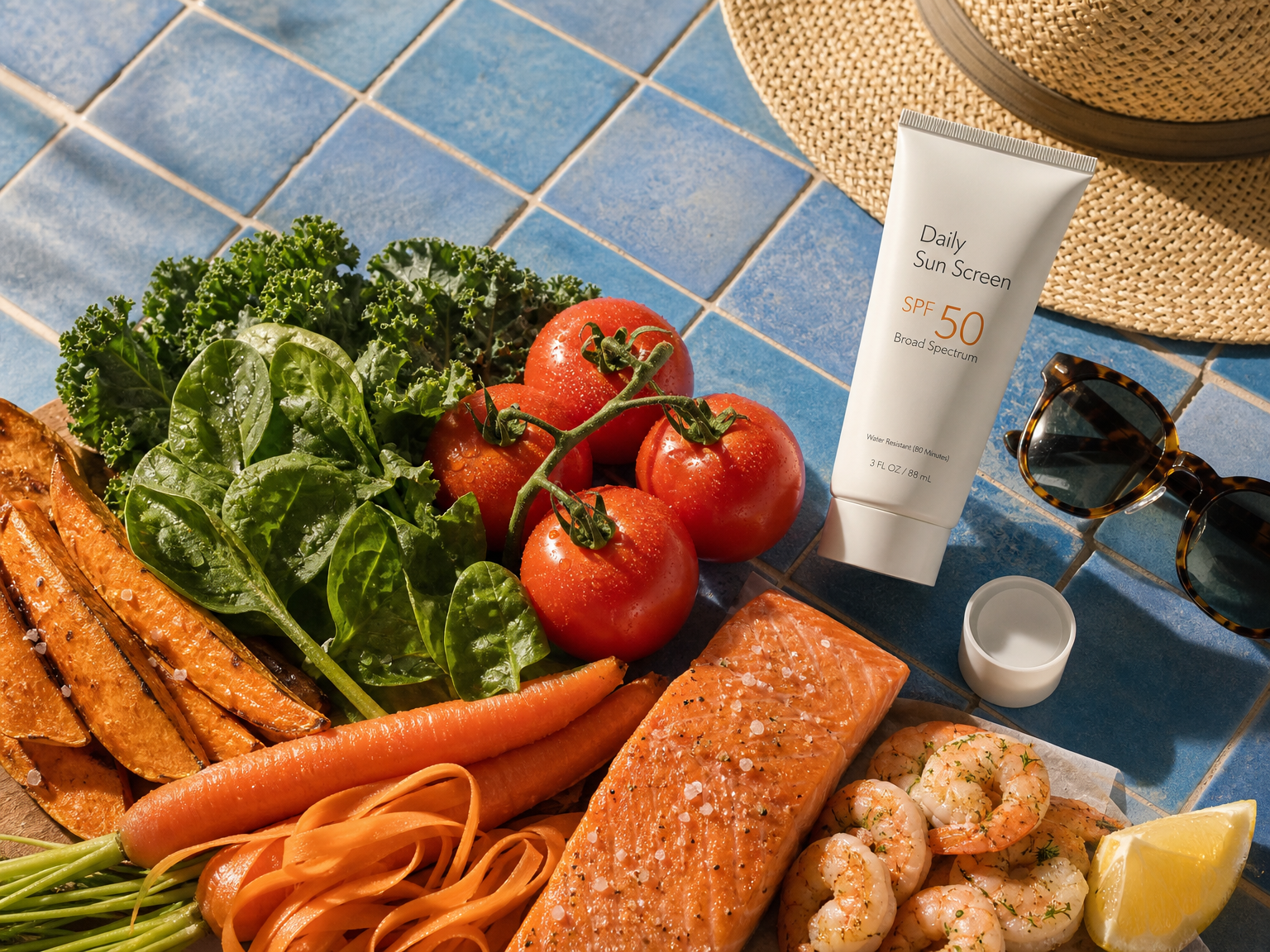

1. What are carotenoids?
Carotenoids are natural pigments that give many foods their red, orange, yellow and deep green colors. Tomatoes are rich in lycopene. Carrots and sweet potatoes contain beta-carotene. Spinach and kale provide lutein and zeaxanthin. Astaxanthin, another carotenoid, is made by algae and can be found in seafood such as salmon and shrimp.
Some carotenoids can collect in human skin. They do not create a physical shield the way sunscreen does. Instead, they seem to influence how skin responds to stress from ultraviolet, or UV, light. UVB is more closely linked with sunburn redness. UVA penetrates more deeply and contributes to pigmentation, oxidative stress and photoaging.
That distinction helps clarify what the research is really testing. Most studies are not asking whether carotenoids provide “sun protection” in the everyday sunscreen sense. They ask narrower questions: does the skin need a higher UV dose before it reddens, pigments or switches on inflammatory and matrix-degrading signals?
2. How carotenoids may work in skin
UV exposure can create reactive oxygen species — unstable molecules that can damage cell structures and set off inflammatory signals. Carotenoids can help quench some of this oxidative stress. Human studies also suggest they may influence UV-related gene signaling, including markers linked with inflammation and collagen breakdown.
For example, a 2017 human crossover study found that a lycopene-rich tomato nutrient complex reduced UV-induced increases in molecular markers such as HO1, ICAM1 and MMP1. MMP1 is involved in breaking down collagen, one reason researchers are interested in carotenoids for photoaging. Lutein also showed protective effects in that study, though less consistently.
This does not mean carotenoids “block” UV rays. A review of clinical evidence notes that older estimates for beta-carotene suggest an SPF-like effect of only around 4 at best. That is far below the protection expected from a properly applied broad-spectrum sunscreen.
3. What the evidence says
The clearest signal is that regular carotenoid intake can modestly increase the amount of UV exposure needed to cause redness, known as the minimal erythema dose. In plain English: after weeks of daily intake, some people’s skin reddens a little less easily under controlled UV testing.
 Best signal: Less UV redness after weeks of daily intake.
 Timing matters: Benefits usually appear after about 8–12 weeks.
 Main limit: Sunburn recovery and skin-cancer prevention are not proven.
Key sources are listed in the References section.
- A 2008 meta-analysis of seven beta-carotene studies found protection from sunburn-like redness, but duration was important. Short courses of only a few weeks were usually not enough; benefits were more likely after about 10 weeks or longer.
- In a 2003 trial, 24 mg/day of beta-carotene reduced UV-induced redness. A mixed carotenoid formula with 8 mg each of beta-carotene, lutein and lycopene produced a similar protective effect, suggesting a mixed approach may be reasonable.
- Tomato-based interventions also look promising. One study used 40 g of tomato paste daily with olive oil, providing about 16 mg/day of lycopene, for 10 weeks and found reduced UV-induced erythema. Another 12-week study found that synthetic lycopene, tomato extract and a solubilized tomato product all increased serum lycopene and skin carotenoids, with protection against UV-light-induced redness.
Newer research has looked beyond UVB redness. A 12-week placebo-controlled trial of mixed carotenoids in adults with Fitzpatrick skin types II–IV increased skin carotenoid levels, increased UVB minimal erythemal dose and increased UVA minimal persistent pigmentation dose. In practical terms, more UVA was needed to produce lasting pigmentation.
Astaxanthin has been studied too. A small 10-week trial in healthy Japanese adults reported an increase in minimal erythema dose, while a 16-week trial in healthy women suggested astaxanthin may help limit changes in wrinkles and skin moisture over time. These studies fit the broader photoaging picture, but they are small and tied to specific products.
The recovery question is much less clear. Most human trials measure resistance before controlled UV exposure. Evidence that carotenoids speed healing after an actual sunburn is much weaker and relies more on biomarkers, cell or animal work, and indirect photoaging outcomes. A recent systematic review placed carotenoid-based supplements among the more studied oral photoprotection categories, but also stressed that the literature is limited by small sample sizes and mixed interventions. Another 2025 review of photoaging trials found no significant pooled benefit for lycopene and carotenoid categories on skin elasticity or photoaging outcomes, although only a small number of carotenoid studies were available for that analysis.
4. Practical considerations
Carotenoids appear to work slowly. Same-day use, a weekend-only supplement, or taking capsules after accidental overexposure is not evidence-based. In trials, the usual timeframe is about 8–12 weeks of daily intake before researchers test UV responses.
Studied intakes include tomato-rich foods or supplements providing roughly 10–16 mg/day of lycopene, mixed carotenoid formulas around 24 mg/day total, lutein-containing products and astaxanthin doses commonly in the 4–12 mg/day range. There is no universally accepted dermatology dose for sun protection.
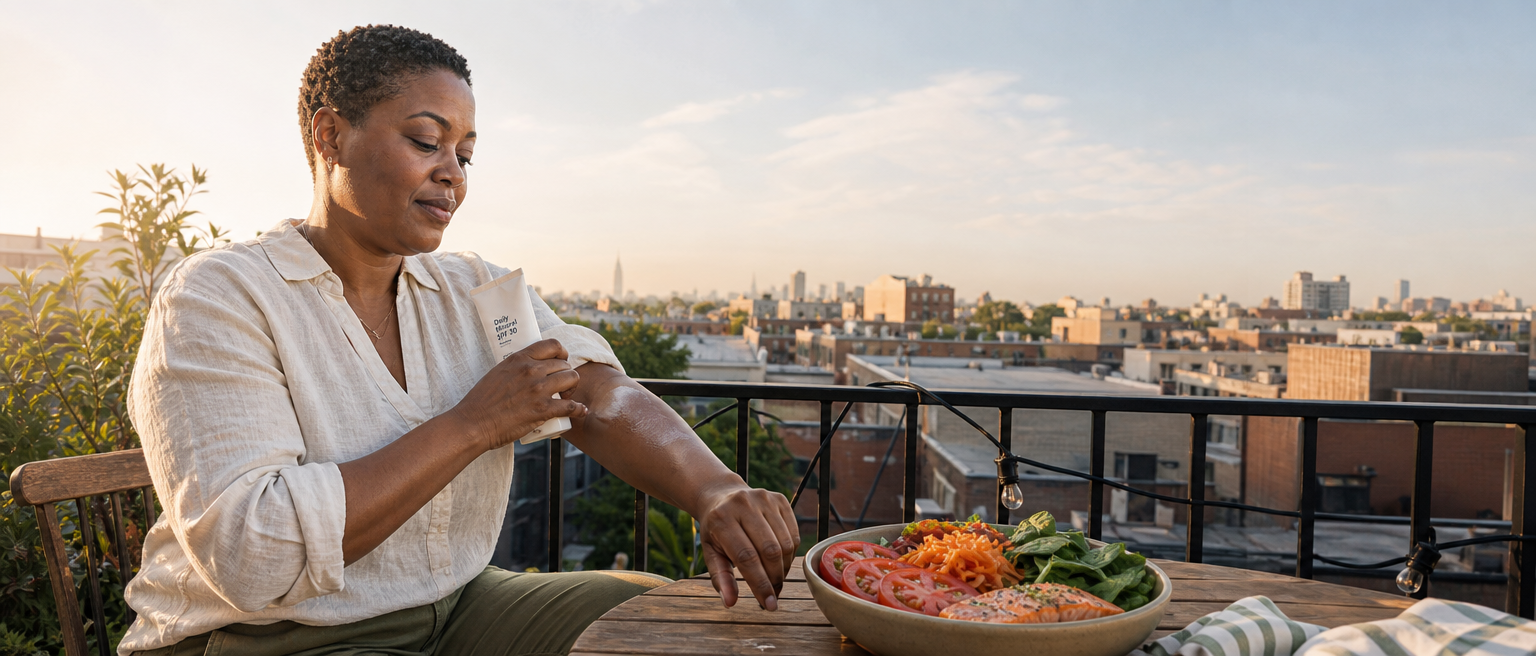
For most people, a food-first approach is the safest default. Regularly eating tomatoes, carrots, sweet potatoes, leafy greens and other colorful plant foods provides a mix of carotenoids alongside fiber and other plant compounds. Fat helps absorption, so it can make sense to pair carotenoid-rich foods with olive oil, avocado, eggs or oily fish.
Some adults may consider supplements, but label details count. Check the specific carotenoids, the dose per serving and whether the product relies heavily on beta-carotene. Regulatory agencies have not generally accepted broad UV-protection health claims for beta-carotene or multi-antioxidant blends, which is a useful reminder to be wary of any sunscreen-replacement language.
5. Safety
For most people, carotenoids from food are safe. The main visible sign of excess beta-carotene intake is carotenodermia, a reversible yellow-orange tint to the skin, especially on the palms and soles.
High-dose beta-carotene supplements deserve more caution. Large trials in smokers and asbestos-exposed people found increased lung-cancer risk with beta-carotene supplementation. The NIH Office of Dietary Supplements notes that the ATBC trial found an 18% higher lung-cancer risk in male smokers taking 20 mg/day beta-carotene for 5–8 years, while CARET found higher lung-cancer risk and mortality in smokers, former smokers and asbestos-exposed participants taking beta-carotene with retinyl palmitate.
For that reason, current smokers, former smokers and people with asbestos exposure should avoid high-dose beta-carotene supplements unless a clinician specifically advises otherwise. Pregnant people, those taking medication, and anyone with a medical condition should check before using concentrated supplements.
Other carotenoids have their own safety frameworks. EFSA has set an acceptable daily intake for lycopene of 0.5 mg/kg body weight per day from all sources. For astaxanthin-rich oleoresin, current EU rules set maximum supplemental levels of 8 mg/day for the general population older than 14 years, with lower limits for younger age groups. These are safety guardrails, not proof of an ideal skin dose.