

 Deutsch
 Español
 Suomi
Suomi Français
 Bahasa Indonesia
 Italiano
 日本語
日本語 Português
 Tagalog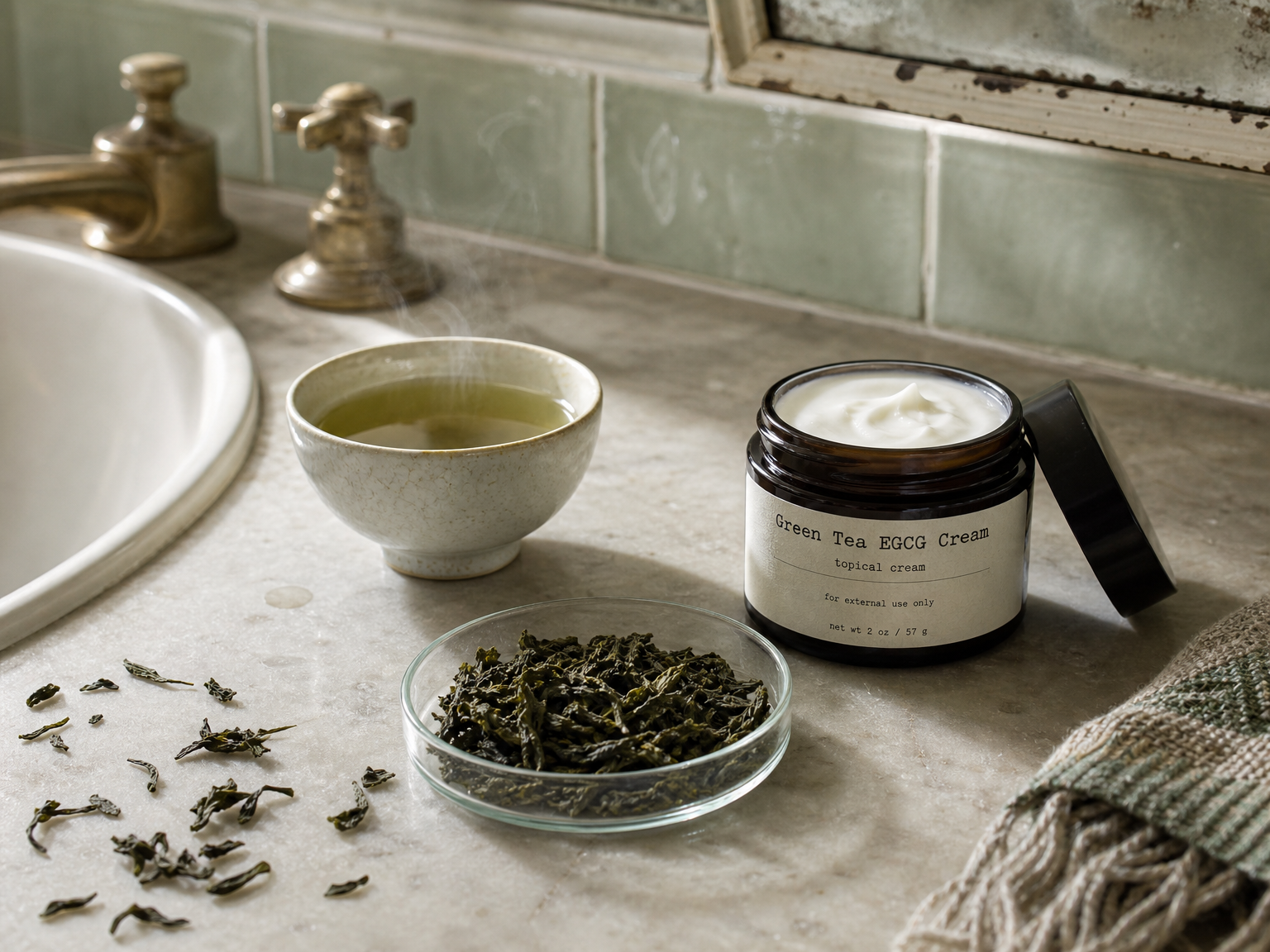

1. What is green tea in acne care?
Green tea comes from the leaves of Camellia sinensis. Its possible role in acne care is mostly linked to catechins, a group of plant compounds. The catechin studied most closely is epigallocatechin-3-gallate, better known as EGCG.
In skincare, though, “green tea” can mean several very different things: a brewed tea compress, a cosmetic extract, a standardized EGCG cream, or a high-dose oral green tea extract capsule. Those forms are not interchangeable. Most of the stronger acne evidence is for leave-on topical preparations, not for drinking tea or applying homemade masks.
2. How green tea could affect acne
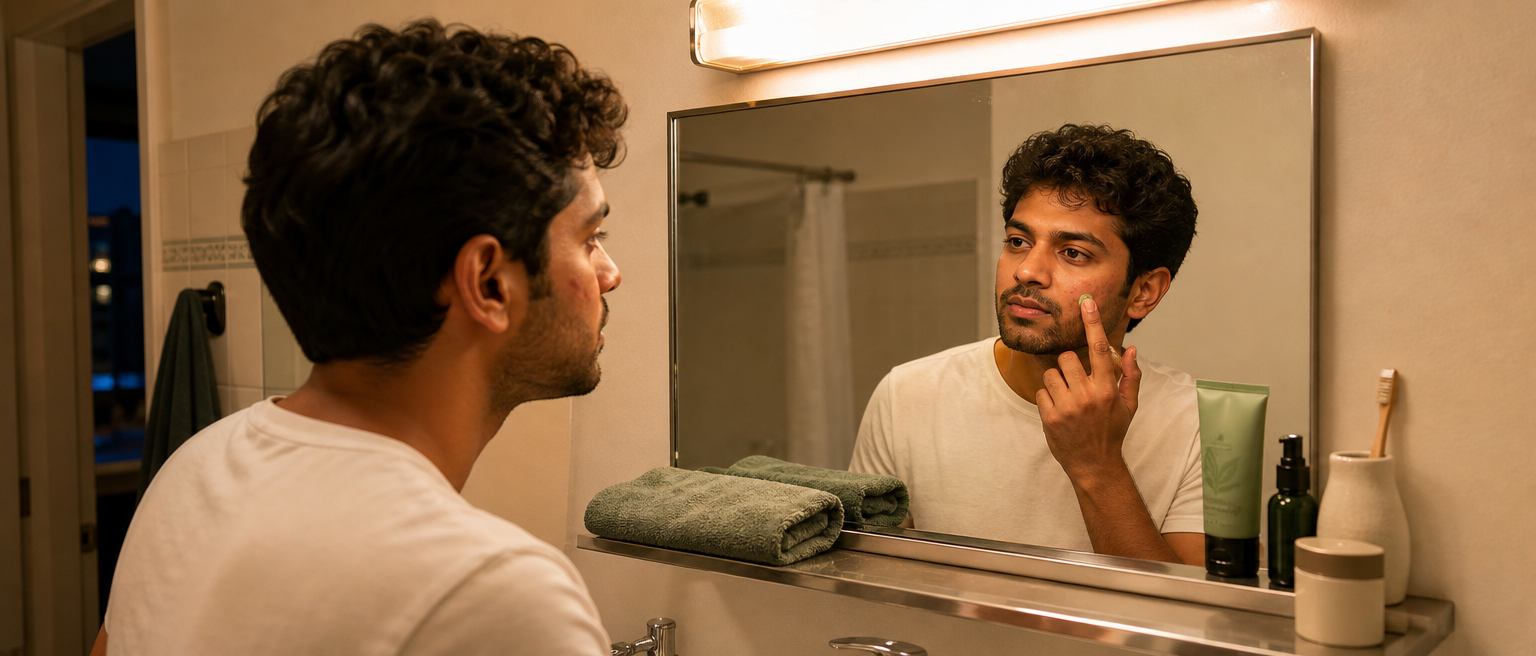
Acne develops when a few processes come together: excess sebum, clogged pores, Cutibacterium acnes activity, and inflammation around the follicle. EGCG appears to influence several of those pathways.
In sebocyte studies — sebocytes are the skin cells that make oil — EGCG reduced lipogenesis, which means oil production. One study found that EGCG interfered with IGF-1-driven oil signaling and lowered inflammatory cytokines. Another found that EGCG reduced sebum production through AMPK-SREBP-1 signaling, a pathway involved in fat-making inside the cell.
Green tea catechins may also help quiet inflammation. Studies have reported effects on NF-kB, AP-1, TLR2, IL-8, and ERK1/2 signaling. Put simply, these are chemical “switchboards” that help drive redness, swelling, and inflammatory acne lesions.
There is some antibacterial plausibility, too. EGCG has shown activity against acne-related bacteria in lab settings. That does not mean it works like an antibiotic, but it does help explain why topical green tea could be useful for inflamed pimples.
3. What the evidence says
The clearest overview comes from a 2021 systematic review and meta-analysis of five randomized clinical trials. Overall, green tea extract reduced inflammatory lesion counts. When the researchers looked at topical and oral use separately, the topical studies were more convincing. Topical green tea reduced inflammatory lesions more clearly and also showed some reduction in non-inflammatory lesions. Oral green tea did not show the same consistent effect on non-inflammatory lesions.
 Topical green tea reduced inflammatory lesions more consistently in small trials.
 Oral extract results were mixed and less reliable.
 Study duration, formulas, and participant groups varied.
A few clinical findings stand out:
- A small study of 2% green tea lotion used twice daily for six weeks reported a drop in average total lesion count from 24 to 10 in people with mild-to-moderate acne.
- Another trial compared 2% tea lotion with 5% zinc sulfate solution and concluded that the tea lotion was effective, though the study was small and older.
- An oral trial in post-adolescent women used 1,500 mg per day of decaffeinated green tea extract, providing 856 mg EGCG, for four weeks. Some inflammatory areas improved, especially around the nose, mouth, and chin, but total lesion counts were not clearly better than placebo.
The overall pattern is fairly steady: topical green tea looks promising for inflammatory acne and oily skin; oral green tea extract looks less reliable; and claims about blackheads, whiteheads, or broad “acne prevention” are less proven.
4. Which forms work best?
The most evidence-backed choice is a standardized leave-on topical product. In the studies, this usually meant a lotion, cream, or emulsion containing green tea extract, EGCG, or a defined catechin mixture. Leave-on products have a practical advantage because they keep the ingredient in contact with oily follicles for longer.
The best topical range is not fully settled, but the research gives a few useful clues. A 2% green tea lotion has human acne data. A 3% green tea emulsion reduced sebum in a small study of male volunteers without acne. A 5% EGCG cream reduced sebum in people with seborrhea, meaning very oily skin, though that study was not an acne treatment trial. Polyphenon-60, a green tea catechin preparation, has also been linked with fewer comedones and pustules in a small clinical-mechanistic study.
Products most likely to make sense are:
- Leave-on lotions, gels, creams, or emulsions.
- Formulas that state the percentage of green tea extract, EGCG, or catechins.
- Products made for oily or acne-prone skin, ideally fragrance-free and non-comedogenic.
Less convincing options include rinse-off cleansers, generic cosmetics that list green tea near the end of the ingredient list, brewed tea toners, tea-bag compresses, and DIY masks. They may feel soothing, but they have little acne-specific evidence. Matcha and brewed green tea may be fine as drinks, but drinking tea has not been shown to reliably clear acne.
Oral green tea extract is the trickiest form. It may help some inflammatory lesions, but the acne evidence is weaker than it is for topical use, and the safety concerns are more important.
5. Safety
Topical green tea is usually well tolerated, but it can still irritate sensitive skin. Start slowly, especially if you already use benzoyl peroxide, retinoids, exfoliating acids, or prescription acne products. Patch test first, then apply a small amount once daily before increasing.
Stop using it if you develop burning, swelling, worsening redness, itching, or a rash. Avoid putting homemade preparations on broken skin, because they are not sterile and may irritate more than a properly formulated product.
Brewed green tea is generally safe for most adults, though caffeine can cause jitteriness, sleep disruption, reflux, or palpitations in some people. Concentrated green tea extract capsules need more caution. Official safety reviews note nausea, constipation, abdominal discomfort, possible blood pressure effects, drug interactions, and rare liver injury. The European Food Safety Authority has flagged liver-safety concerns at supplemental green tea catechin intakes of 800 mg per day or more, especially when taken as a single dose or on an empty stomach.
Be especially cautious with oral extracts if you have liver disease, drink heavily, are pregnant or breastfeeding, take regular medication, or use drugs such as nadolol, atorvastatin, or raloxifene. If acne is severe, cystic, painful, or leaving marks, see a clinician rather than relying on green tea. Dermatology guidelines highlight treatments such as benzoyl peroxide, topical retinoids, azelaic acid, antibiotics, hormonal therapy, and isotretinoin; green tea has not reached that standard-of-care level. This is especially important when comparing products marketed as acne supplements with standard acne care.