

 Deutsch
 Español
 Suomi
Suomi Français
 Bahasa Indonesia
 Italiano
 日本語
日本語 Português
 Tagalog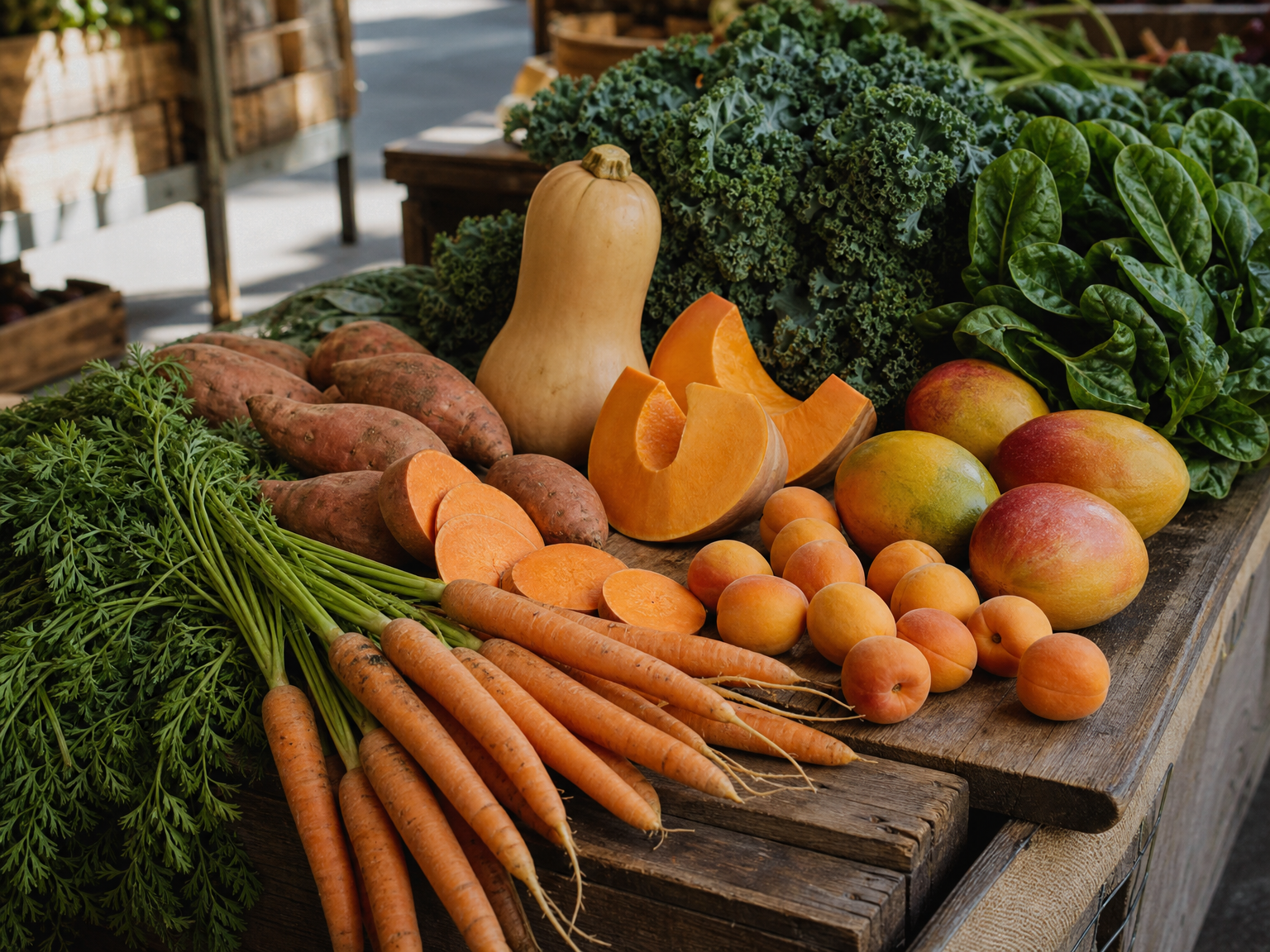

1. What beta-carotene is
Beta-carotene is one of the natural pigments that gives carrots, sweet potatoes, pumpkins and many orange fruits their color. It is also present in dark leafy greens, although the green chlorophyll masks the orange pigment.
It belongs to a family of plant compounds called carotenoids. Some carotenoids can be converted into vitamin A, and beta-carotene is the best-known example. That is why you will often see it described as provitamin A: it is not vitamin A yet, but it can become vitamin A when the body needs it.
This difference is important. Your body needs vitamin A, not beta-carotene specifically. If you already get enough vitamin A from foods such as dairy, eggs, fish or fortified products, beta-carotene is not essential on its own. But for people whose diets rely heavily on plant foods, beta-carotene can make a meaningful contribution to vitamin A status.
2. How the body uses it
After you eat beta-carotene, your body absorbs it alongside dietary fat and can convert some of it into vitamin A in the intestine. How well that conversion works varies from person to person. Genetics, gut health, food preparation, the amount of fat in the meal and overall vitamin A status can all play a part.
Vitamin A supports several everyday functions. It helps the retina in the eye respond to light, which is why deficiency often first shows up as trouble seeing in dim light. It also helps maintain the surface of the eyes, skin and mucous membranes, and it is involved in immune defense, reproduction, growth and normal heart, lung and organ function.
Beta-carotene also has antioxidant activity in the body. Antioxidants help neutralize unstable molecules called free radicals. Still, an antioxidant effect seen in a test tube does not automatically mean a supplement prevents disease in real life. That is where clinical trials are needed.
3. What the evidence says
The clearest benefit of beta-carotene is straightforward: it can help the body meet vitamin A needs, especially when dietary vitamin A intake is low. Beyond that, the claims become more specific and less certain.
 Best-supported use: helping meet vitamin A needs when intake is low.
 Disease-prevention claims are mixed, narrow or negative in trials.
 High-dose supplements raise important safety concerns for smokers and former smokers.
- Vision and deficiency: Vitamin A deficiency can cause night blindness, dry eyes and, in severe cases, blindness. Beta-carotene-rich foods can help prevent deficiency where vitamin A intake is low. But beta-carotene has not been proven to improve normal eyesight in people who are not deficient.
- Immunity: Vitamin A is important for immune function, so correcting low vitamin A status can help. But routine beta-carotene supplements have not been shown to act like an immune upgrade for well-nourished adults.
- Cancer and heart health: Large reviews of randomized trials do not support beta-carotene supplements for preventing cancer, cardiovascular disease or death. In smokers and some other high-risk groups, supplements have been linked to higher lung-cancer risk.
- Eye disease: Older AREDS formulas for age-related macular degeneration included beta-carotene, but newer AREDS2 formulas replaced it with lutein and zeaxanthin because of lung-cancer concerns in smokers and former smokers. This benefit is about slowing progression in certain people with diagnosed AMD risk, not improving general eyesight for everyone.
- Skin and sun exposure: Some older research suggests long-term beta-carotene supplementation may offer modest protection against sunburn. This does not replace sunscreen, shade or protective clothing.
- Brain health: Observational studies sometimes link higher beta-carotene intake or blood levels with better cognitive outcomes. Trials have not consistently shown that beta-carotene alone improves cognition, so this remains interesting but unproven.
4. Food sources and supplement basics
Good food sources of beta-carotene include carrots, sweet potatoes, pumpkin, winter squash, spinach, kale, collard greens, broccoli, cantaloupe, mango and apricots. These foods also bring fiber, potassium, vitamin C, polyphenols and other nutrients, which is one reason the food-first advice is so strong here.

Chopping and cooking can make some beta-carotene easier to absorb, especially from tougher vegetables such as carrots and leafy greens. Adding a little fat, such as olive oil, avocado, nuts or yogurt, can also help because beta-carotene is fat-soluble.
Supplement labels can be confusing because beta-carotene from a capsule is not the same, in practical terms, as beta-carotene from food. The body typically absorbs supplemental beta-carotene more efficiently, so food and supplement amounts should not be treated as interchangeable.
Most adults in higher-income countries are not vitamin A deficient. People at greater risk can include those with very limited diets, fat-malabsorption conditions, some digestive disorders, liver or pancreatic disease, and people living in regions where vitamin A deficiency is common. In these situations, the aim is to correct vitamin A status safely, not to use high-dose beta-carotene as a wellness shortcut.
5. Safety and cautions
High intakes of beta-carotene from food are generally considered safe. Eating a lot of carrots or squash can turn the skin yellow-orange, especially on the palms and soles. This is called carotenodermia. It can look alarming, but it is usually harmless and fades when intake drops.
Beta-carotene supplements are a different story. Current smokers, former smokers and people exposed to asbestos should avoid beta-carotene supplements unless a clinician specifically advises otherwise. Multiple major reviews and public-health bodies have linked supplemental beta-carotene, especially at higher doses, with increased lung-cancer risk in these groups.
People who are pregnant, trying to conceive, taking medication, managing a chronic condition or considering high-dose supplements should speak with a healthcare professional first. For most people, the safest approach is to get beta-carotene from colorful vegetables and fruits, and to use supplements only when there is a clear reason.