

 Deutsch
 Español
 Suomi
Suomi Français
 Bahasa Indonesia
 Italiano
 日本語
日本語 Português
 Tagalog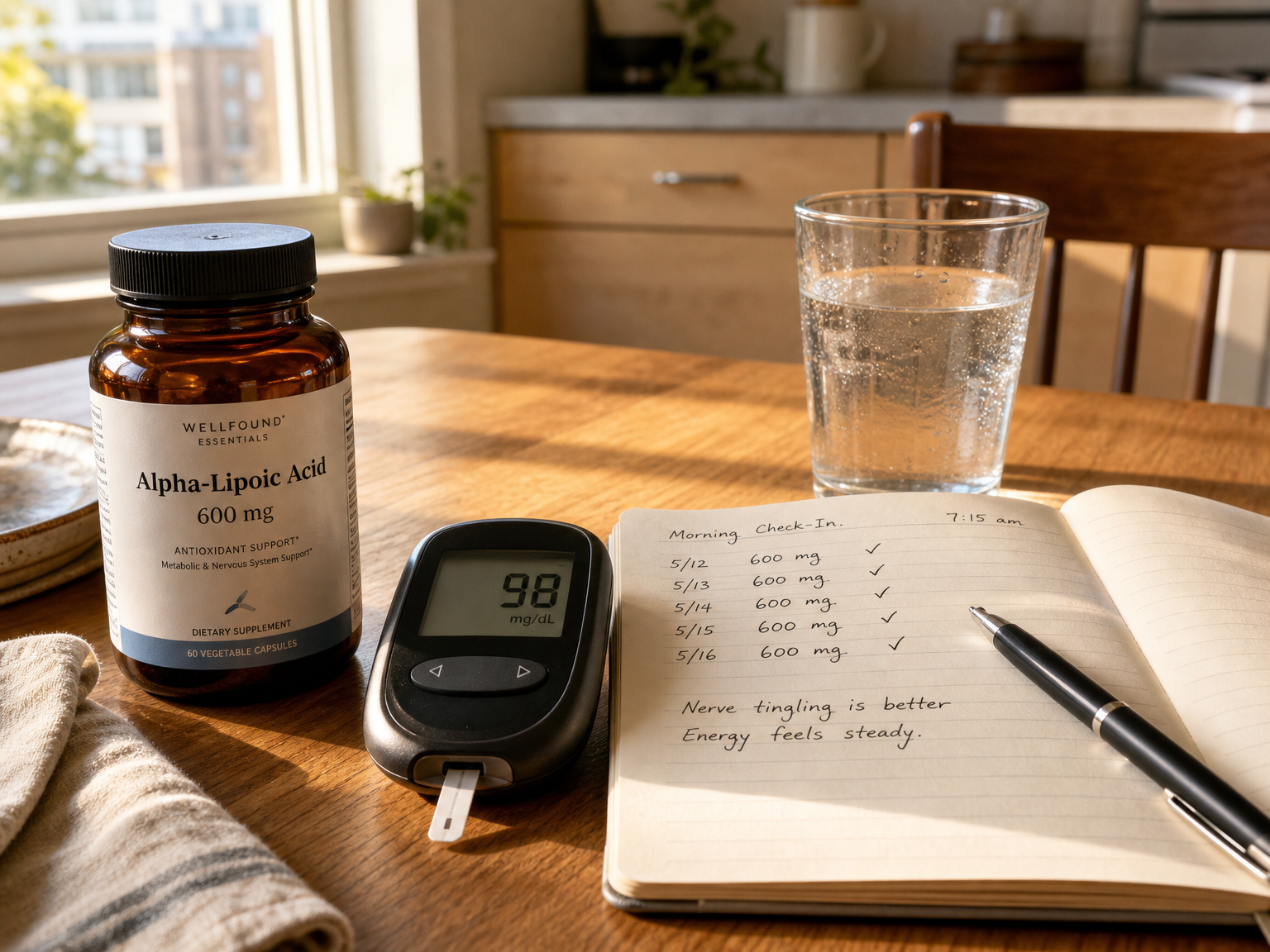

1. What is alpha-lipoic acid?
Alpha-lipoic acid is a sulfur-containing compound the body makes in small amounts. It is also sold as a supplement and may be listed as lipoic acid or thioctic acid.
In research, ALA is best known for diabetes-related nerve pain, because it has been studied in diabetic polyneuropathy. It is also marketed for blood sugar, “antioxidant” effects, energy metabolism and general wellness. Its safety depends a lot on who is taking it, the dose, other medicines being used, and whether symptoms such as low blood sugar show up.
A large 2020 safety review of randomized placebo-controlled trials found no overall increase in treatment-emergent adverse events with ALA compared with placebo. That is reassuring, but trials are not built to catch every rare reaction. In practical terms, ALA has 2 safety stories: routine doses are usually tolerated, while unusual reactions and overdose can be serious.

 Trials: Routine oral doses are generally well tolerated in short-to-medium studies.
 Dose: Nausea, vomiting and vertigo become more likely as dose rises.
 Rare risks: Case reports help flag insulin autoimmune syndrome and overdose toxicity.
2. Common side effects and dose-related risks
The usual side effects are mild and often digestive. People report nausea, vomiting, heartburn, stomach discomfort and headache. Skin reactions, including rash and itching, also appear in real-world adverse-event reports.
Dose makes a difference. In the SYDNEY 2 trial, people with diabetic neuropathy took 600, 1,200 or 1,800 mg per day. Nausea, vomiting and vertigo became more common as the dose went up. This is one reason 600 mg per day is often treated as the better tolerated oral dose in neuropathy research. More does not automatically mean better results, and it may simply make side effects more likely.
Longer-term data are more limited. In the NATHAN 1 trial, 460 people with diabetic polyneuropathy took 600 mg per day or placebo for 4 years. Discontinuation and general tolerability were broadly similar, but serious adverse events were more frequent in the ALA group than placebo, and heart rate or rhythm disorders were the adverse-event category reported significantly more often. Not every serious event was clearly caused by ALA, but the trial is a useful reminder that long-term use should not be described as risk-free.
3. Blood glucose, diabetes medicines and hypoglycemia
ALA can lower fasting glucose and may improve insulin sensitivity in some adults. For some people, that is exactly why they are interested in it. For others, especially those already taking glucose-lowering medicines, it can become a safety concern.
The main practical worry is hypoglycemia — blood sugar falling too low. This is more likely to matter if ALA is combined with insulin, sulfonylureas or other diabetes medicines that lower glucose. Symptoms can include shakiness, sweating, hunger, confusion, palpitations, blurred vision or faintness.
Anyone with diabetes should think of ALA as a glucose-active supplement, not a neutral wellness product. Blood-glucose monitoring may need to be tighter when starting it, stopping it or changing the dose. If spontaneous or repeated hypoglycemia happens while taking ALA, especially without a clear medication explanation, insulin autoimmune syndrome should be considered.
4. Insulin autoimmune syndrome: the rare but important signal
Insulin autoimmune syndrome, or IAS, is a rare condition in which the immune system makes antibodies against insulin. It can cause episodes of spontaneous low blood sugar, sometimes severe. It is also called Hirata disease.
ALA is one of the best-recognized supplement triggers. EFSA reviewed the issue in 2021 and concluded that ALA added to foods, including supplements, is likely to increase IAS risk in people with certain genetic susceptibility patterns. The review identified 49 case reports where IAS developed after ALA use. Symptoms usually improved within weeks to months after stopping ALA, although some people needed treatment.
The genetic link is important, but it is not something most consumers can easily act on. EMA product-safety recommendations noted that people with HLA-DRB1*04:06 and HLA-DRB1*04:03 appear more susceptible. HLA-DRB1*04:06 has been reported especially in Japanese and Korean patients, while HLA-DRB1*04:03 is found especially in Caucasian populations. A European case series reported 6 Caucasian patients who developed fasting and postabsorptive hypoglycemia 30 to 120 days after starting 600 mg per day; 5 carried HLA-DRB1*04:03 and 1 carried HLA-DRB1*04:06.
This does not mean IAS is common. It appears rare, and the absolute risk is not known. The difficulty is that EFSA could not identify a safe dose threshold. The lowest reported intake linked with IAS in the case literature was 200 mg per day. Because the relevant HLA types are not usually known without genetic testing, unexplained hypoglycemia during ALA use deserves medical attention rather than guesswork.
5. Pregnancy, breastfeeding, chronic illness and interactions
Pregnancy data are somewhat reassuring, but still incomplete. A retrospective study of 610 pregnant women treated with 600 mg per day for at least 7 weeks reported no maternal or neonatal adverse effects. That is useful human evidence, but it is observational and came from a specific medical setting. It does not prove that routine supplement use is safe across all pregnancies.
Breastfeeding data are much thinner. Practical clinical references generally note that safety during breastfeeding has not been established. If you are breastfeeding, it is sensible to avoid ALA unless a clinician has a clear reason for recommending it.
People with kidney or liver disease should also be cautious. A small pharmacokinetic study looked at ALA in severe kidney impairment and hemodialysis patients, but it was too small and too short to create firm long-term dosing rules. LiverTox has not found a convincing signal that standard-dose ALA commonly causes clinically apparent liver injury, but severe overdose can cause metabolic acidosis, shock, organ failure and secondary liver abnormalities.
There is also a possible thyroid interaction. An older human study suggested ALA may affect conversion of thyroxine, or T4, to the active thyroid hormone T3 in a specific setting. This evidence is not as strong as the glucose or IAS evidence, but people taking levothyroxine or living with thyroid disease should check before using ALA and avoid changing supplement routines around thyroid blood tests without telling their clinician.
ALA is also commonly flagged for caution in heavy alcohol use or thiamine deficiency. That is partly because thiamine deficiency can be serious and easy to miss in heavy alcohol use. In these situations, self-prescribing ALA is not ideal.
6. Overdose and secure storage
ALA overdose can be life-threatening. This is not the same as taking a standard adult dose, but it does change how carefully the bottle should be stored at home.
Case reports describe severe toxicity after large ingestions, including seizures, metabolic acidosis, low blood pressure, rhabdomyolysis, kidney failure, heart rhythm problems, multiorgan failure and death. A fatal adult case followed an intentional 6 g ingestion. Pediatric and adolescent poisonings have also been catastrophic.
Keep ALA away from children, teenagers and pets, ideally in a locked or high cabinet. If a large amount is swallowed, contact emergency services or a poison-control center immediately.