

 Deutsch
 Español
 Suomi
Suomi Français
 Bahasa Indonesia
 Italiano
 日本語
日本語 Português
 Tagalog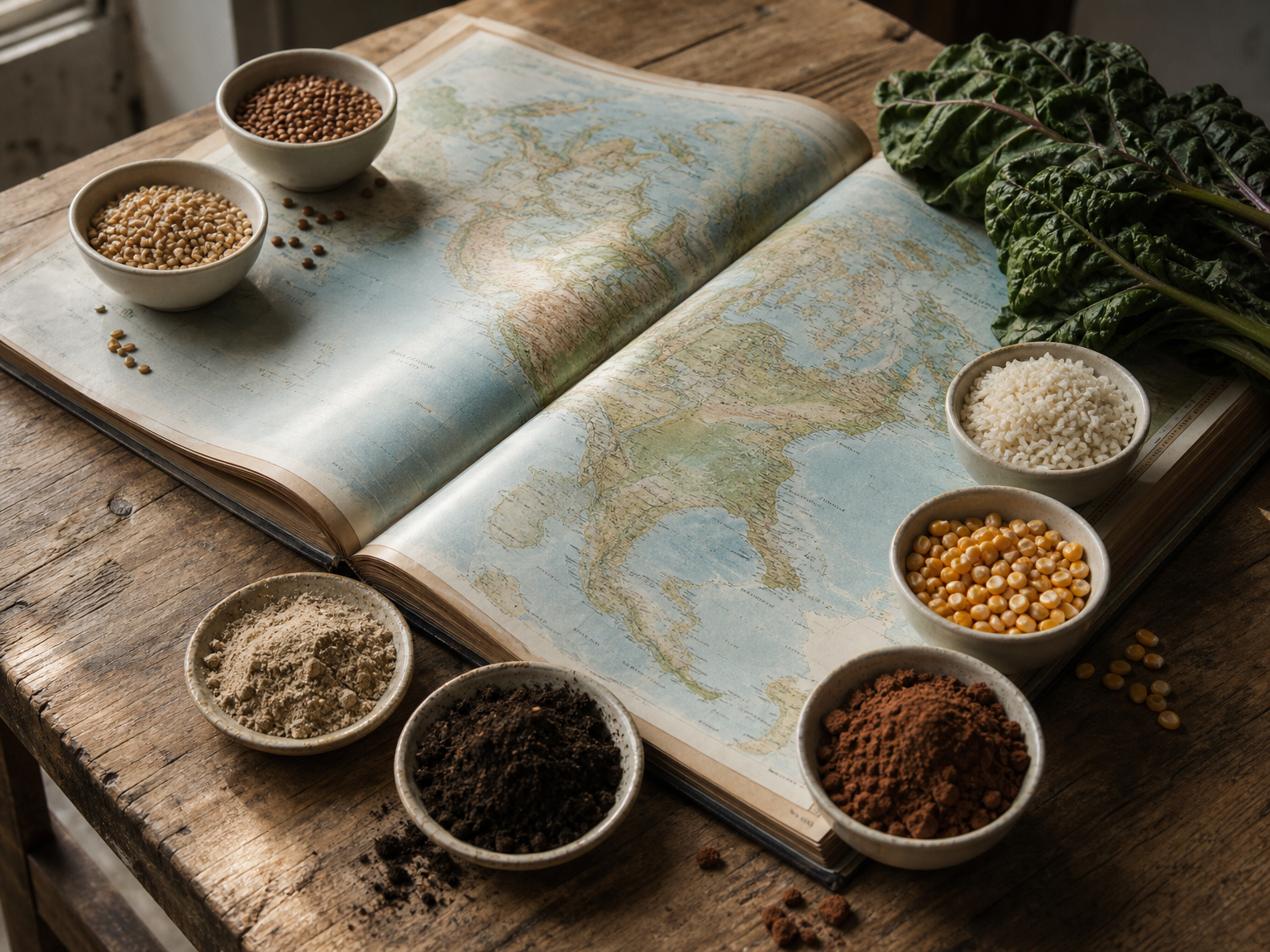

1. Why soil selenium matters
Selenium is a trace mineral the body needs in small amounts for thyroid hormone metabolism, antioxidant enzymes and immune function. It also has a narrow safe window: too little can contribute to low selenium status, while too much from very high-selenium foods or supplements can become unsafe.
Food selenium begins with geology. Plants take up selenium from soil, but how much they absorb depends on more than the soil’s total selenium. Soil pH, organic matter, rainfall, temperature and the chemical form of selenium all play a part. That is why two farms with similar total selenium can still produce crops with different selenium levels.
The connection is strongest in local staple crops. When a community relies heavily on locally grown wheat, maize, rice, beans or vegetables, low-selenium soils can lead to lower selenium intake. When the diet includes imported grain, seafood, Brazil nuts or animal foods from managed feed systems, local soil has less influence.
 Soil chemistry affects how much selenium crops can absorb.
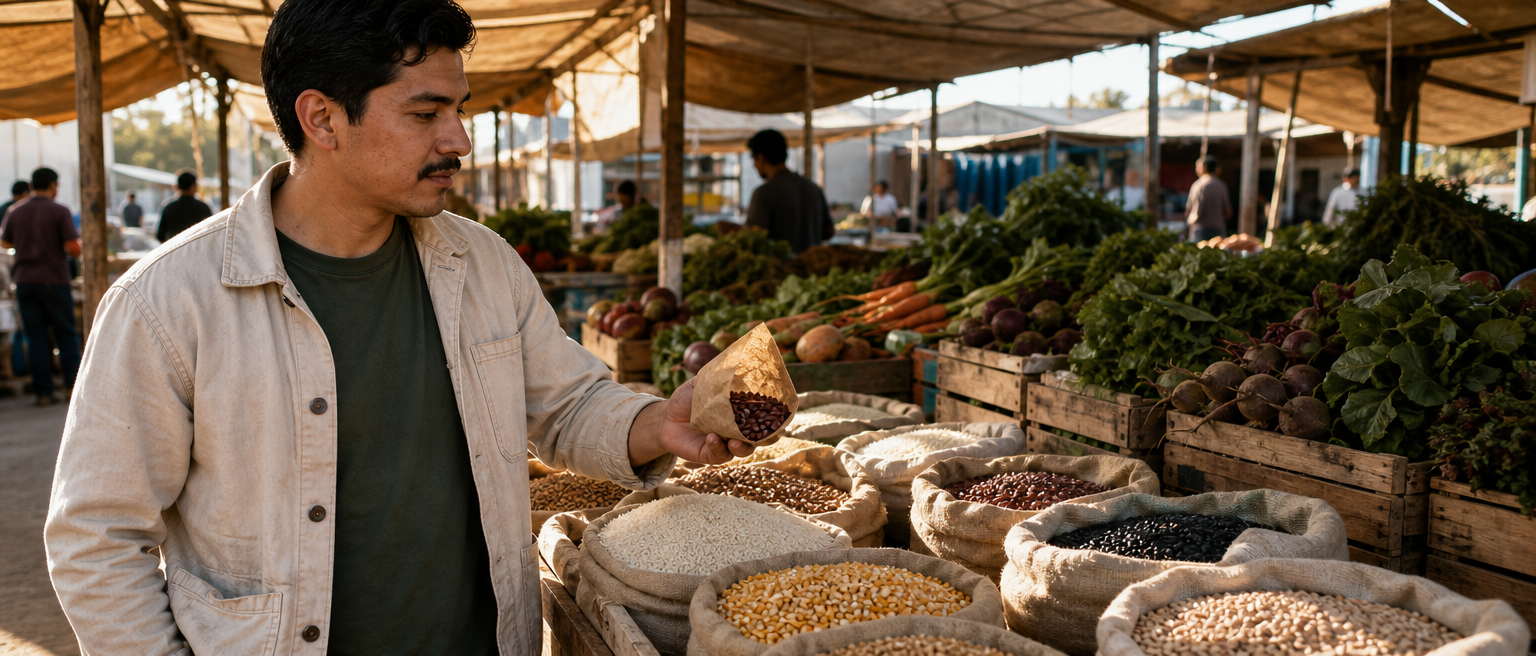
 Wheat, rice, maize, legumes and vegetables often show local soil patterns most clearly.
 Imports, animal feed, seafood and fertilizer policies can change the local picture.
2. The Americas: high zones, low zones and Brazil nut surprises
North America has some of the world’s better-known selenium-rich soils, especially in parts of the United States Great Plains and Canadian Prairies. U.S. mapping shows enriched areas across eastern Montana, western North Dakota, much of South Dakota, Wyoming, Colorado and Utah, with additional higher areas along parts of the Gulf and Atlantic Coastal Plain and the Pacific coast.
Still, North America is not uniformly high. Older and still-useful geochemical summaries describe lower-selenium soils in parts of the Pacific Northwest, northern and eastern Canada, the northeastern United States, the South Atlantic seaboard and parts of the Arizona–New Mexico border. So while “the U.S. and Canada are selenium adequate” is often true at the population level, it can hide large local differences.
South America is often linked with selenium because of Brazil nuts, one of the most selenium-dense foods. But Brazil nuts are the classic exception to any simple rule. They can be extremely high or surprisingly modest in selenium depending on the soils under the trees. One South American field study found Brazil nut selenium varied by roughly three orders of magnitude. Highly weathered tropical soils can also reduce plant availability, so South America should not be treated as one uniformly high-selenium region.
3. Europe: generally low, with Finland as the policy exception
Europe is one of the clearest low-to-moderate selenium regions. Much of Northern, Central and Eastern Europe has relatively low soil selenium availability, and selenium intake has often been lower than in North America. The UK has also had low selenium intake for decades, partly linked to changes in wheat sourcing.
The Nordic and Baltic region shows this pattern well. Soils are generally poor in selenium, and locally grown crops tend to be low unless the food system makes up for it. Norway, for example, has historically benefited from imported wheat from higher-selenium regions.
Finland is the standout exception. Finnish soils were naturally poor in available selenium, partly because of low soil selenium, low pH and high iron content. In 1984, Finland began adding selenium to fertilizers. Within two years, average intake roughly tripled and blood selenium levels rose substantially. When the fertilizer dose was later reduced, intake and blood levels fell too. It remains one of the clearest real-world examples of how changing the soil-to-crop pathway can change human selenium status.
4. Middle East: variable soils, imported staples and mixed status
The Middle East is highly mixed. Reviews suggest selenium status is often inadequate or borderline in several countries, but the picture changes with local soil, staple foods and imports.
Some sampled Saudi soils and wheat from Al-Kharj have been very low, similar to well-known low-selenium zones elsewhere. Turkish sampled soils have also been reported as low in several regions, which is important because bread can be a major selenium source when wheat is the staple. Iran shows a more mixed pattern: some soils are low to moderate, yet crop and intake data are sometimes adequate.
Gulf states show another important food-system exception. Qatar, for example, has low local soils, but imported rice and other foods can contribute meaningfully to selenium intake. In countries that import much of their grain, the selenium map of the dinner plate may look very different from the selenium map of local soil.
5. Africa: sparse data, strong local contrasts
Africa has less complete mapping than Europe or North America, but the available evidence points to important low-selenium food environments across parts of sub-Saharan Africa. Reviews have reported deficient mean blood selenium markers in Ethiopia, DR Congo, Ivory Coast, Malawi, Nigeria, South Africa, Zambia and Zimbabwe.
The pattern is not simply “low everywhere.” In Tanzania and Uganda, bean selenium has been reported as more favourable in some datasets, while beans in Kenya and Malawi were more often suboptimal. In Ethiopia, selenium deficiency is spatially patterned, with lower status in some upland regions such as parts of Amhara, Oromia, Benishangul-Gumuz and Bale, and relatively better status near lakes and Rift-associated areas.
Malawi shows how soil and local food systems work together. A national study found a high proportion of women of reproductive age had low selenium biomarkers, but risk varied by soil type and was lower near Lake Malawi, where fish intake may help. Large cereal surveys in Ethiopia and Malawi also found that grain selenium tracks geography and is influenced by soil pH, organic matter, rainfall, temperature and topography.
6. Asia: China’s low belt, high pockets and wider variation
Asia contains some of the world’s best-studied selenium contrasts. China is the clearest example. It has a famous low-selenium belt running through central parts of the country, where very low soil selenium has been linked with low intake and endemic diseases such as Keshan disease and Kashin-Beck disease.
China, though, is not uniformly low. National reviews show that Chinese soils are highly heterogeneous, with both selenium-deficient and selenium-rich areas. Some pockets are high enough to raise concerns about excess through the food chain, while other areas remain low enough to increase deficiency risk.
Beyond China, selenium-rich or seleniferous zones have been described in parts of India and Russia, while many other Asian regions remain under-mapped. The practical lesson is the same: country averages can mislead. A crop grown in one province or district may contain much more selenium than the same crop grown elsewhere.
7. Australia and New Zealand: New Zealand low, Australia mixed
New Zealand is one of the classic low-selenium regions. Its soils are naturally low in selenium, and New Zealanders have historically had lower selenium status than many populations. Imported foods and animal products can improve intake, but the underlying soil pattern remains relevant.
Australia generally has higher selenium status than New Zealand, but it is not uniformly high. Low-selenium districts have been described in southwest Western Australia, the southeast Queensland coast, coastal and central Victoria, much of Tasmania, and parts of New South Wales and South Australia. Other Australian regions may be more selenium adequate or even relatively rich.
For Australia and New Zealand, the contrast is a useful reminder that “regional food” can mean very different selenium exposure depending on local geology.
8. What this means for food choices
Most people do not need to memorise a selenium soil atlas. The useful point is that selenium-rich foods can vary a lot. Wheat, rice, maize, legumes and vegetables tend to mirror local soils most clearly. Brazil nuts can be extremely high, but their selenium content varies dramatically by origin. Animal foods often vary less, though they still reflect feed and regional food systems.
This is also why supplement decisions should be careful. Selenium is important, but more is not automatically better. If you want a broader primer on selenium in food, deficiency and safety, it can help to start with the basics before deciding whether a supplement makes sense. If you already eat high-selenium foods regularly, especially Brazil nuts, a high-dose supplement may be unnecessary. If you live in or eat mostly from a low-selenium region, food sourcing and dietary variety may play a larger role.