

 Deutsch
 Español
 Suomi
Suomi Français
 Bahasa Indonesia
 Italiano
 日本語
日本語 Português
 Tagalog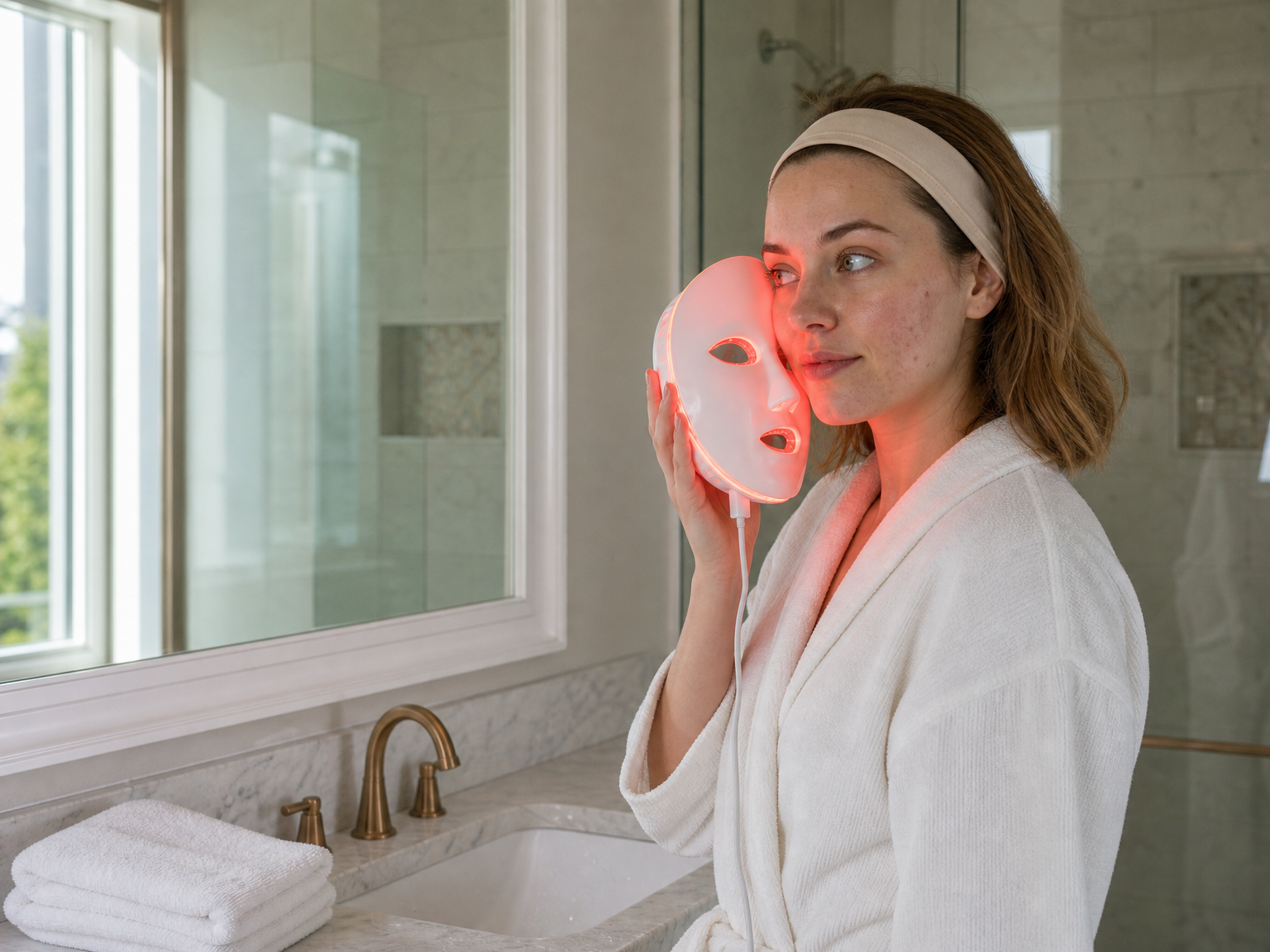

1. What is red-light therapy for acne?
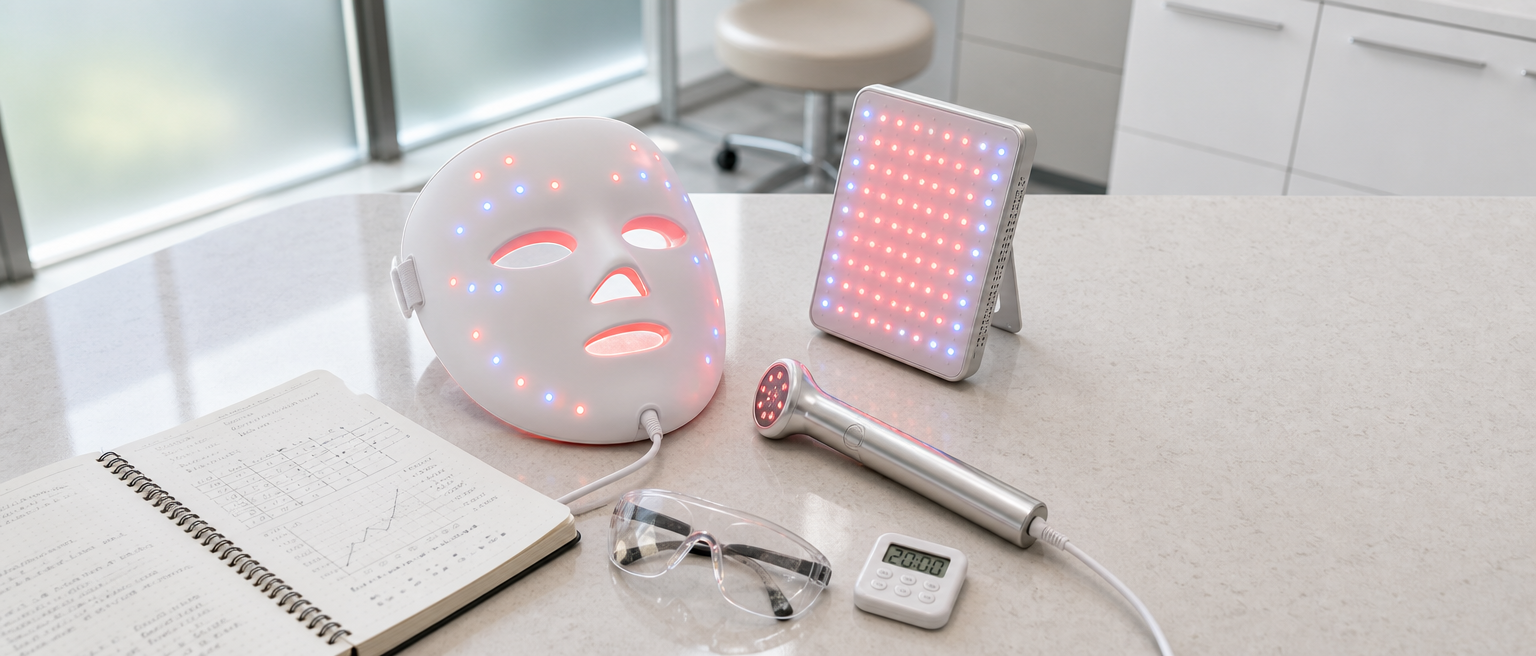
Red-light therapy usually means exposing the skin to visible red light, commonly around 620–660 nanometers. For acne, it may come as an LED mask, handheld wand, panel, or clinic-based device.
The first thing to know is that “red-light therapy for acne” is not one single treatment. It can refer to at least three different approaches:
- Plain red LED treatment, where red light is used on its own.
- Combined blue-plus-red LED treatment, where blue light and red light are used together.
- Photodynamic therapy, or PDT, where a photosensitizing medicine such as aminolevulinic acid or methyl aminolevulinate is applied first, then activated with red light.
These approaches are based on different theories and are not interchangeable. A home red-light mask is not the same as dermatologist-led PDT. It is also different from ordinary sun exposure, which is not a controlled acne treatment. That difference is one reason acne light-therapy studies can seem to point in different directions.
2. The theory behind acne light therapy
Acne develops when several processes overlap: pores become blocked, sebum increases, Cutibacterium acnes bacteria grow, and inflammation builds around the hair follicle and sebaceous gland.
Blue light and red light are thought to work on different parts of that process. Blue light has the clearer antibacterial explanation. C. acnes naturally produces light-sensitive molecules called porphyrins. When blue light hits those porphyrins, it can create reactive oxygen species that damage the bacteria. In lab studies, sufficiently strong blue light reduces C. acnes colony counts.
Red light is different. It reaches deeper into the skin than blue light, so the theory is less about directly killing surface bacteria and more about shifting the inflammatory environment around the follicle. Red light is often described as photobiomodulation, which simply means light-triggered changes in cell behavior rather than heat-based destruction.
For acne, proposed red-light effects include calming inflammatory signals, reducing abnormal thickening around the pore, and influencing the sebaceous unit. In a lab model designed to mimic acne-like skin changes, low-level red LED light reduced IL-1 alpha, a pro-inflammatory signal, and reduced thickening of the outer skin layer. Another experimental study found that 660 nm light reduced inflammatory cytokines such as TNF-alpha, IL-6, and IL-8 in inflamed skin cells, while activating the Nrf2 pathway, which helps cells manage stress responses.
That gives red light a reasonable biological story. But a reasonable story is not the same as proven clinical benefit.
3. What the clinical evidence says
Small trials suggest acne can improve after red or blue-red light treatment, especially inflammatory acne lesions such as papules and pustules.
 Small trials: Some show fewer inflammatory lesions after red or blue-red light.
 Reviews: Results are mixed and vary by device, dose, and study design.
 Guidelines: Red LED is not first-line; PDT is reserved for selected cases.
One classic trial from 2000 compared blue light, combined blue-red light, white light, and 5% benzoyl peroxide in people with mild to moderate acne. The combined blue-red group used daily 15-minute treatments for 12 weeks and had a mean 76% improvement in inflammatory lesions. The authors suggested a two-part effect: blue light acting against C. acnes and red light helping with inflammation.
A small split-face trial in 2007 tested red light alone. Twenty-eight people used a portable red-light device on one side of the face for 15 minutes twice daily for 8 weeks. The treated side improved more than the untreated side for both inflammatory and non-inflammatory lesions. This is one of the more direct signs that red light alone may help, but the study was small, short, and did not use a sham device.
A later double-blind, sham-controlled trial in Korean patients tested a home-use blue-plus-red LED device. In reported summaries, inflammatory lesion counts fell substantially in the active group, and improvement continued after treatment ended. The sham comparison makes this encouraging, but it was still a small, device-specific study.
When researchers look across the evidence, the overall conclusion becomes more cautious:
- A Cochrane review found that acne light-therapy trials were generally small and very different from each other, making firm conclusions difficult.
- A 2021 systematic review and meta-analysis focused on red light found no statistically significant difference between red-light therapy and conventional treatments for inflammatory lesions, non-inflammatory lesions, comedones, papules, pustules, or total lesions.
- A 2024 review of visible light for acne reported improvement across many studies, but this included visible light broadly, not red light alone. Many stronger results involved combined blue-plus-red approaches.
So the fairest reading is this: red light has a plausible role and some supportive trials, but across studies it has not clearly outperformed established acne treatments.
4. Photodynamic therapy is a different category
Photodynamic therapy needs to be considered separately. It is often discussed alongside red light, but it is not simply “red-light therapy.”
In PDT, a clinician applies a photosensitizer such as ALA or MAL. This substance builds up in acne-prone structures, then red light activates it. The reaction creates reactive oxygen species that may affect sebaceous follicles, bacteria, and local immune activity.
PDT may be useful in selected cases, especially moderate to severe acne that has not responded well to standard options. NICE recommends considering PDT only for adults with moderate to severe acne when other treatments are ineffective, not tolerated, or contraindicated. That is a cautious position, not a first-line recommendation.
The mechanism is also not perfectly settled. In one pilot study using ALA plus red light, patients reported improvement, but researchers did not find a significant reduction in measured P. acnes counts or sebum excretion. That suggests any benefit may come from local inflammatory or follicular changes rather than a simple “kills bacteria and dries oil” effect.
PDT can also be more uncomfortable than LED therapy. Pain, redness, swelling, pigmentation changes, and light-sensitivity precautions are more common than with home LED devices.
5. Practical considerations
If you are considering red-light treatment, the details are important. Results from one device do not automatically apply to another. Wavelength, intensity, distance from the skin, session length, and treatment schedule all change the dose the skin receives.
Trial protocols vary widely. Some home-device studies used 15-minute sessions once or twice daily for several weeks. Reviews describe an average visible-light exposure of many sessions, not a one-off treatment. There is no universal acne dosing standard that applies across masks, panels, wands, and clinic devices.
Red light is best viewed as a possible add-on for mild to moderate inflammatory acne, especially for someone who wants a non-drug option alongside evidence-based skincare. It should not delay care for painful nodules, scarring acne, rapidly worsening acne, or acne linked with hormonal symptoms.
6. Safety
Non-PDT LED red-light devices are generally well tolerated in studies. Reported side effects are usually mild and temporary, such as redness, dryness, irritation, rash, headache, or a short-term flare.
Still, “low risk” does not mean risk-free. Eye protection is sensible, especially with bright facial devices. People with photosensitivity disorders, a history of light-triggered rashes, epilepsy triggered by flashing light, active skin cancer concerns, or medicines that increase light sensitivity should ask a clinician first.
PDT has a different safety profile. Because it uses a photosensitizer, it can cause more pain and post-treatment sensitivity. It is usually best handled in a dermatology setting.