

 Deutsch
 Español
 Suomi
Suomi Français
 Bahasa Indonesia
 Italiano
 日本語
日本語 Português
 Tagalog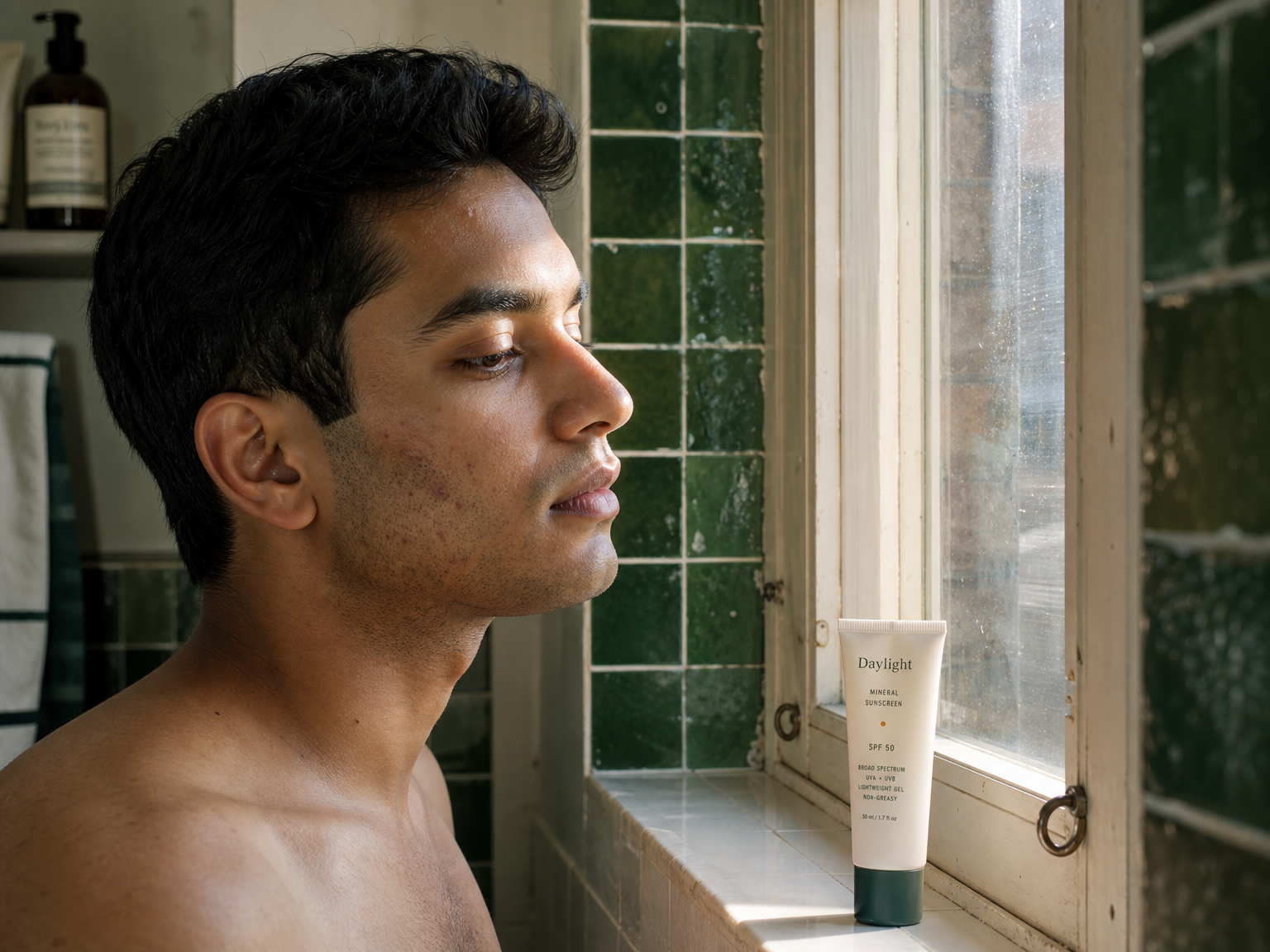

1. What people mean by “sun helping acne”
The idea that the sun “dries out” acne has been around for a long time, and it is easy to understand why. After a holiday or a few sunny days, redness can look less obvious, oily skin may feel drier for a while, and a light tan can make blemishes harder to see.
But acne is not simply wet or oily skin that needs drying out. It involves blocked pores, sebum, inflammation, bacteria called Cutibacterium acnes, hormones, and the skin barrier. A short-lived cosmetic improvement does not mean the acne process has been treated.
Modern acne guidelines reflect that. The American Academy of Dermatology guideline prioritizes treatments such as benzoyl peroxide, topical retinoids, antibiotics when appropriate, hormonal therapy, and isotretinoin for severe cases. NICE guidance discusses photodynamic therapy only in specific adult cases where other treatments are ineffective, not tolerated, or unsuitable. Neither guideline recommends casual sun exposure as evidence-based acne care.
2. How light could plausibly help acne
There is one reasonable biological reason light might help acne: certain visible wavelengths can interact with substances made by C. acnes.
C. acnes produces compounds called porphyrins. When these porphyrins are exposed to specific light, especially blue light, they can trigger reactions that damage the bacteria. This is the basic idea behind blue-light acne devices and some forms of photodynamic therapy.
That is not the same as lying in the sun. Medical or cosmetic light devices use selected wavelengths, controlled doses, and repeated treatment schedules. Natural sunlight is a broad mix of visible light, infrared heat, UVA, and UVB. When you use the sun as the “treatment,” you cannot separate the potentially useful visible-light portion from the damaging ultraviolet portion.
Red light may also have anti-inflammatory effects in some device studies, and combined red-blue approaches have been tested. But again, that evidence applies to controlled light therapy, not stronger outdoor UV exposure.
3. What the evidence says
The research is mixed for light therapy and weaker still for ordinary sun exposure. A Cochrane review looked at 71 studies of light-based acne treatments and concluded that it was unclear whether the assessed light therapies were better than placebo, no treatment, or topical comparisons. Benefits were also uncertain over time.
More recent reviews of visible-light therapy are more encouraging, especially for blue light, but they are still cautious. A review of blue-light therapy found that some trials favored blue light, yet many studies were small, short, and at high risk of bias. A 2024 review of visible light found improvements in lesion counts across many studies, but the studies used different devices, wavelengths, and protocols.
 Guidelines do not recommend natural sun exposure as an acne treatment.
 Visible-light therapy research is more promising than sunbathing, but still mixed.
 Observational studies do not show a reliable summer improvement pattern.
For natural sun exposure, the evidence is not convincing:
- Dermatology guidelines do not recommend natural sun exposure as an acne treatment.
- A narrative review concluded that solar radiation may temporarily improve the appearance of lesions, but can also trigger inflammation, worsen post-acne pigmentation or redness, and contribute to flares.
- Observational studies do not show a reliable summer improvement pattern. In one study of 452 patients, more people reported acne worsening in summer than improving, often blaming sweating and humidity.
- In a hospital-based adult acne study, about one quarter of patients reported worsening after sun exposure, and a similar proportion after sweating.
The fairest summary is this: light can affect acne biology, but sunlight is a poor and risky way to try to use that effect.
Sources: American Academy of Dermatology; NICE; Cochrane; FDA; World Health Organization.
4. What UV does to acne-prone skin
The main problem with using the sun for acne is ultraviolet radiation. UVA penetrates deeper into the skin and contributes to tanning, pigmentation, and skin aging. UVB is more strongly linked with sunburn. Both can damage skin.
In acne-prone skin, UV may cause several unwanted effects.
First, UV can oxidize sebum. Sebum contains squalene, a natural oil component. UVA exposure can turn squalene into oxidized products, including squalene monohydroperoxides. These oxidized lipids are relevant because they are linked with clogged pores and inflammatory acne biology.
Second, UV does not reliably “dry out” oil production in a helpful way. In a small study of 13 acne patients, both UVA and UVB increased sebum levels during the first three days after exposure before returning toward baseline. The same study found changes in inflammatory signaling inside comedones.
Third, UV may disrupt the skin barrier and increase inflammatory signals. A recent laboratory study found that UVA altered sebum-like lipid composition, increased inflammatory cytokines in sebocyte models, and impaired barrier-related function in reconstructed skin.
Fourth, UV can worsen the marks acne leaves behind. Post-inflammatory hyperpigmentation, the brown marks that remain after spots, is often made worse by sunlight. Post-inflammatory erythema, the red or pink marks after acne, may also look more persistent when skin is repeatedly irritated or exposed.
That is why a tan can be misleading. It may make acne less visible for a week or two, while increasing the chance of darker marks, irritation, and long-term skin damage.
5. Morning sun or stronger sun: which works better?
No good evidence shows that early-morning sun, midday sun, or higher-intensity sun is an effective acne treatment.
If someone is trying to copy blue-light therapy outdoors, stronger sunlight is not the answer. Higher-intensity sun brings more UV exposure, more heat, more sweating, and a greater risk of sunburn. It does not selectively deliver a safe acne-focused wavelength.
Early-morning sunlight usually has a lower UV index than midday sun, depending on season, latitude, weather, and altitude. That may make it safer than peak sun, but “safer” does not mean “proven acne treatment.” If you enjoy being outdoors in the morning, that is fine for general wellbeing, but it should not replace acne treatment or sun protection when UV levels rise.
Public health agencies are clear about high-intensity UV. The FDA advises limiting sun exposure especially between 10 a.m. and 2 p.m., when UV is often strongest. The World Health Organization advises sun protection when the UV index is 3 or above and states that there is no such thing as a healthy tan.
6. Does sunscreen make acne better or worse?
Sunscreen does not block a proven acne cure, because natural sun exposure is not a proven acne cure. For acne-prone skin, the question is not whether to avoid sunscreen, but which sunscreen to choose.
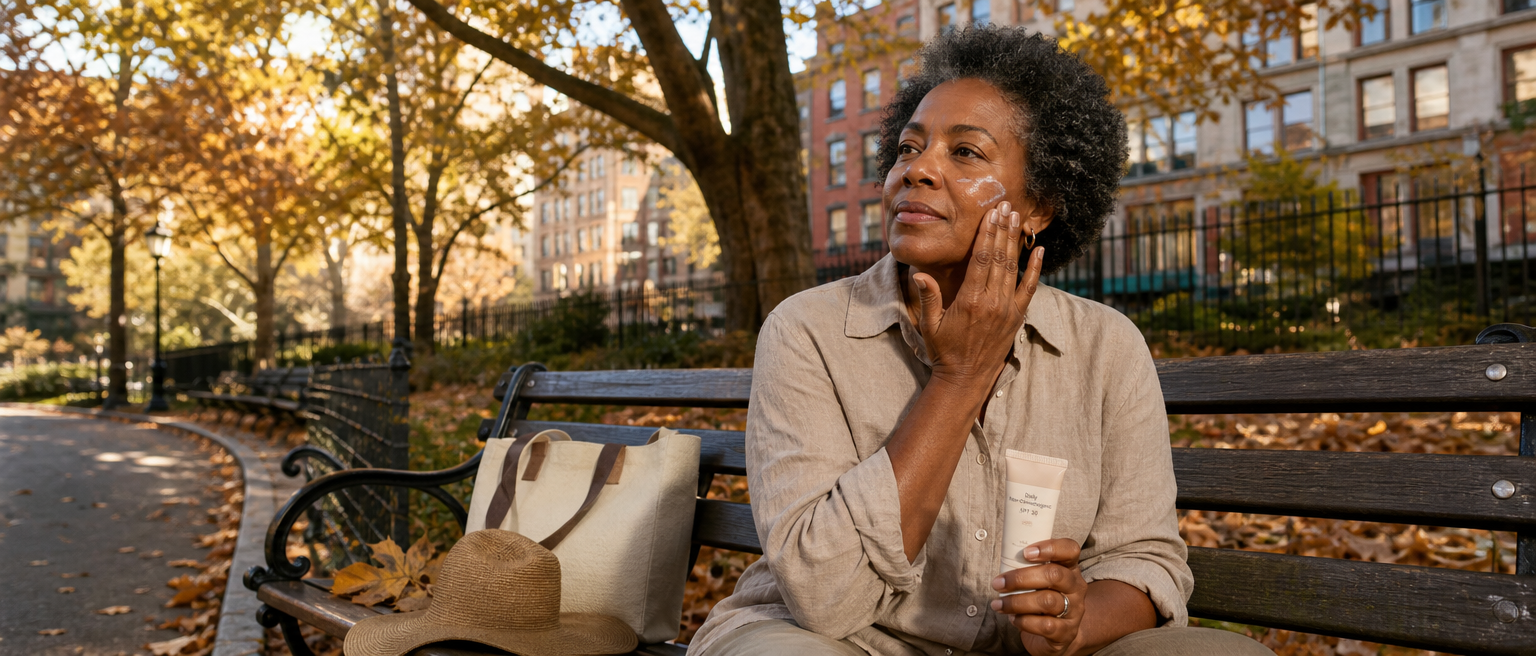
The American Academy of Dermatology advises people with acne to use a broad-spectrum, water-resistant sunscreen with SPF 30 or higher and to choose products labeled non-comedogenic or “will not clog pores.” NICE also advises avoiding oil-based and comedogenic sunscreens.
The formula can make a real difference. Heavy, greasy sunscreens may feel unpleasant or clog-prone for some people. Lightweight gels, fluids, mineral formulas, or oil-free lotions may suit acne-prone skin better. Tinted sunscreens can also help people prone to dark marks, because some tints block visible light that can worsen pigmentation.
There is also early clinical evidence that sunscreen can support acne care. In a trial of Malaysian adults with mild-to-moderate acne using adapalene, adding a sunscreen containing licochalcone A and L-carnitine was linked with better acne severity scores, improved post-acne hyperpigmentation, and better tolerability, including less dryness, burning, stinging, and scaliness.
Sunscreen is especially important if you use acne treatments such as topical retinoids, isotretinoin, or doxycycline, because these can make skin more irritated or sun-sensitive.