

 Deutsch
 Español
 Suomi
Suomi Français
 Bahasa Indonesia
 Italiano
 日本語
日本語 Português
 Tagalog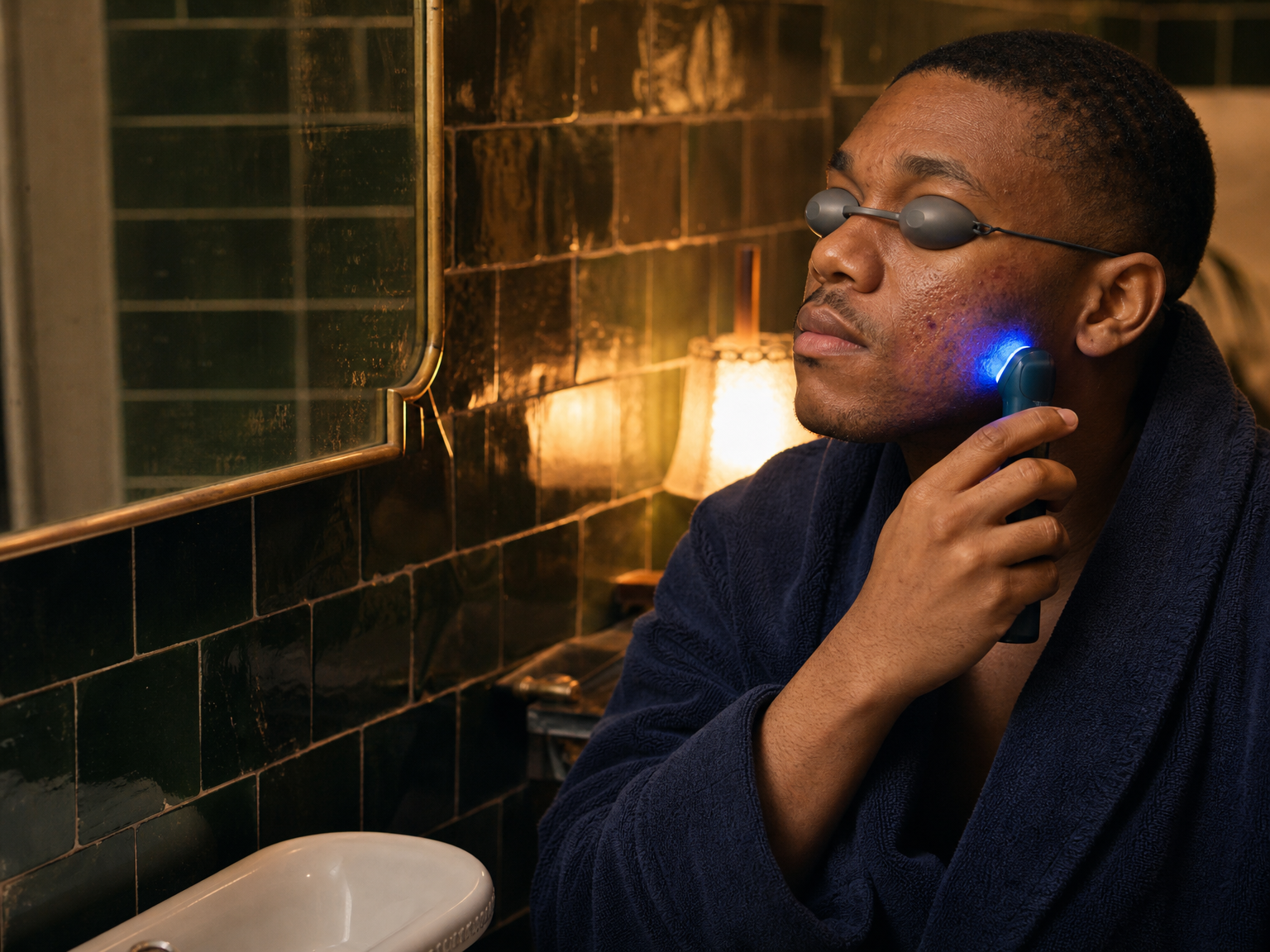

1. What is blue-light therapy for acne?
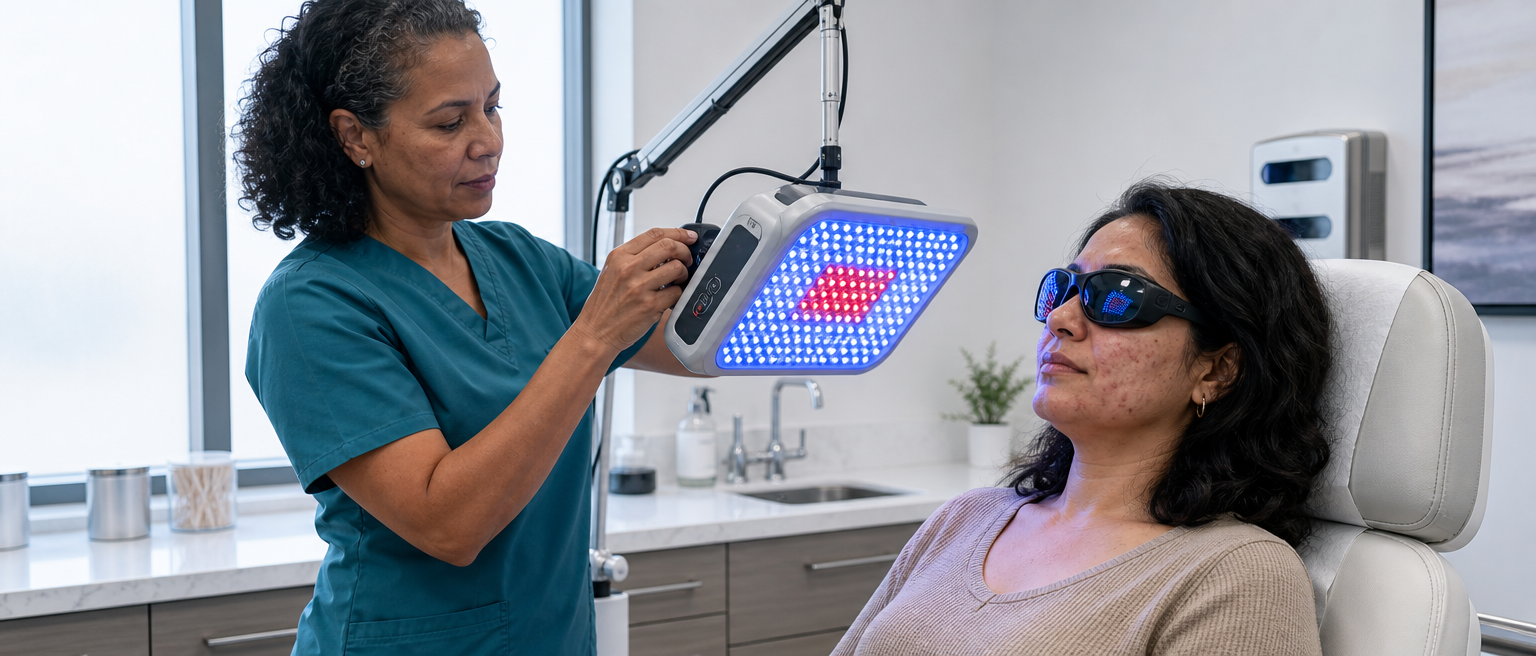
Blue-light therapy uses visible blue light, usually around 405–420 nanometers, directed at acne-prone skin. It is not ultraviolet light, so it is different from tanning beds and does not work by intentionally damaging the skin with UV radiation.
Treatment can be done in a clinic with stronger devices, or at home with smaller LED devices. Some devices use blue light on its own. Many newer devices combine blue and red light, because red light travels a little deeper into the skin and may help calm inflammation.
There is also a stronger version called photodynamic therapy. With this approach, a light-sensitizing substance such as aminolevulinic acid is applied to the skin before light exposure. That can make the treatment more powerful, but it can also mean more irritation, crusting, and downtime.
Blue light has mainly been studied for mild-to-moderate inflammatory acne — the kind that causes red bumps and pus-filled spots. It is less reliable for blackheads, whiteheads, deep cysts, and nodules.
2. The theory: why blue light might help acne
The main theory begins with Cutibacterium acnes, the acne-associated bacterium that lives in hair follicles and oil glands. This bacterium produces natural light-sensitive compounds called porphyrins.
Porphyrins absorb certain wavelengths of light especially well. In laboratory studies, blue light around 407–420 nm excites these porphyrins. That reaction can create reactive oxygen species — short-lived oxygen-derived molecules that can damage nearby bacterial cells.
In plain English: the bacteria carry molecules that behave like tiny light targets. When blue light hits them, a chemical reaction may injure the bacteria.
This theory is biologically plausible and supported by preclinical work. It helps explain why acne devices use a specific blue wavelength range rather than just any visible light. But acne is not caused by bacteria alone. Oil production, blocked pores, inflammation, hormones, and the skin barrier all play a role. That is one reason blue light may improve some lesions without clearing acne completely.
3. How the skin may respond beyond bacterial kill
The simple version is that “blue light kills acne bacteria”. The fuller picture is more interesting.
Some clinical studies have found acne improvement without a clear drop in recoverable C. acnes colony counts. That does not mean the bacterial theory is wrong. It may mean follicle bacteria are difficult to measure, or that the treatment changes bacterial activity rather than simply reducing the number found on the skin surface.
Inflammation may also be part of the story. Acne lesions are inflamed mini-environments. Immune signals, oil-gland activity, and irritation in the follicle wall all influence whether blocked pores become red, sore inflammatory pimples.
A small randomized trial of a home-use device combining 420-nm blue light and 660-nm red light reported reductions in inflammatory and noninflammatory lesions. Tissue findings suggested less sebum output, smaller sebaceous glands, and lower markers linked with inflammation and oil production, including IL-8, IL-1alpha, MMP-9, TLR2, NF-kB, IGF-1 receptor, and SREBP-1. The list is technical, but the practical point is simpler: visible light may affect both acne bacteria and the skin’s inflammatory and oil-gland response.
Still, that study used blue plus red light, so it cannot tell us exactly how much of the effect came from blue light alone.
4. What the clinical evidence says
Taken together, the evidence points to a possible short-term benefit, especially for mild-to-moderate inflammatory acne. It does not yet support blue light as a settled, one-size-fits-all treatment.
A Cochrane review found that acne light-therapy studies were often small, with a median sample size of 31, and varied widely in wavelength, dose, treatment schedule, and comparison treatment. The review concluded that high-quality evidence was lacking overall.
A systematic review in the Annals of Family Medicine reached a similar conclusion for blue light specifically: trial methods and reporting limitations made it hard to draw firm conclusions about effectiveness. The authors also noted that studies had not established whether benefits last beyond about 12 weeks.
More recent reviews are somewhat more encouraging. A British Journal of Dermatology network meta-analysis estimated that combined blue-and-red light and blue-light photochemical therapy improved total lesion counts compared with placebo in mild-to-moderate acne. But the authors also emphasized that many included trials had moderate to very low certainty, with substantial uncertainty around the estimates.
At-home LED devices are an active area of research. A JAMA Dermatology systematic review of home red and/or blue LED devices found improvements in inflammatory lesions, noninflammatory lesions, and investigator global assessment compared with control in mild-to-moderate acne. However, the dataset was small, with 216 participants across six studies, and many devices used red plus blue light rather than blue alone.
That pattern is familiar across acne add-ons: questions such as vitamin D for acne and vitamin B5 for acne also show why a plausible theory still needs good clinical evidence.
 Inflammatory lesions: Blue light can reduce red acne lesions in some people, at least short term.
 Combination therapy: Blue-plus-red light may perform better than blue light alone in some studies.
 Not first-line: Evidence is not strong enough to replace standard acne treatments.
The evidence is not strong enough to say blue light should replace standard treatments such as topical retinoids, benzoyl peroxide, or prescribed acne regimens.
5. Where guidelines place blue-light therapy
Major guidelines are cautious.
The American Academy of Dermatology’s 2024 acne guideline update said the available evidence was insufficient to develop recommendations for laser- and light-based procedures. It also conditionally recommended against adding broadband light or intense pulsed light to adapalene 0.3% gel.
NICE has taken a similar position in the UK. Its acne evidence review notes that physical therapies such as light devices may have some evidence of benefit, but the studies are generally too small or too low-quality to support recommendations. NICE has specifically called for more research on physical treatments for acne and acne-related scarring.
That does not mean blue-light therapy never works. It means guideline bodies do not yet see enough consistent, high-quality evidence to recommend it as a standard first-line treatment.
6. Practical considerations
Clinic-based blue-light treatment is often given as a short session, sometimes around 15 minutes, and is commonly repeated over several weeks. DermNet describes a typical schedule as 2 sessions per week for 4 weeks, although real-world protocols vary.
Home devices are usually less powerful than clinic devices and may need to be used regularly over weeks. Some over-the-counter light-based acne devices are FDA-cleared for mild-to-moderate acne, but clearance is not the same as proof that every device works equally well.
If you are considering blue light, these are the most realistic expectations:
- It is more likely to help red inflammatory spots than blackheads, whiteheads, cysts, or nodules.
- Improvement may take several weeks and may be clearer after a treatment course rather than immediately.
- It usually works best as part of a broader acne plan, not as the only treatment for persistent or severe acne.
- Device wavelength, power, treatment time, and consistency probably influence results, but the ideal protocol is not yet settled.
People who are also considering diet or supplement strategies can use a broader acne, inflammation, and nutrition review to keep expectations realistic.
People with deeper, painful acne, acne scarring, or acne that is affecting mood or confidence should not wait months experimenting with devices before seeking medical help. Earlier effective treatment can reduce the risk of scarring.