

 Deutsch
 Español
 Suomi
Suomi Français
 Bahasa Indonesia
 Italiano
 日本語
日本語 Português
 Tagalog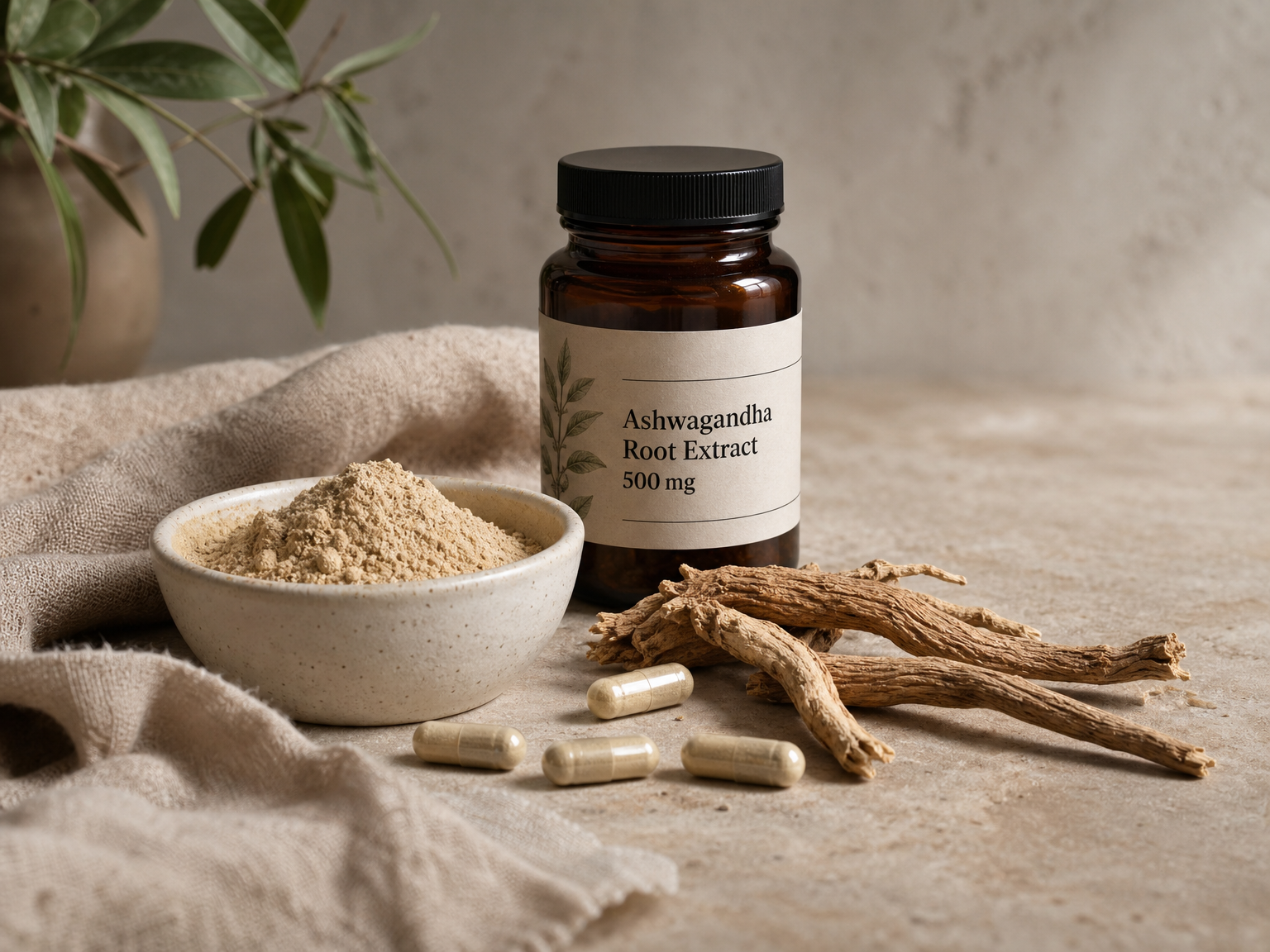

1. What is ashwagandha?
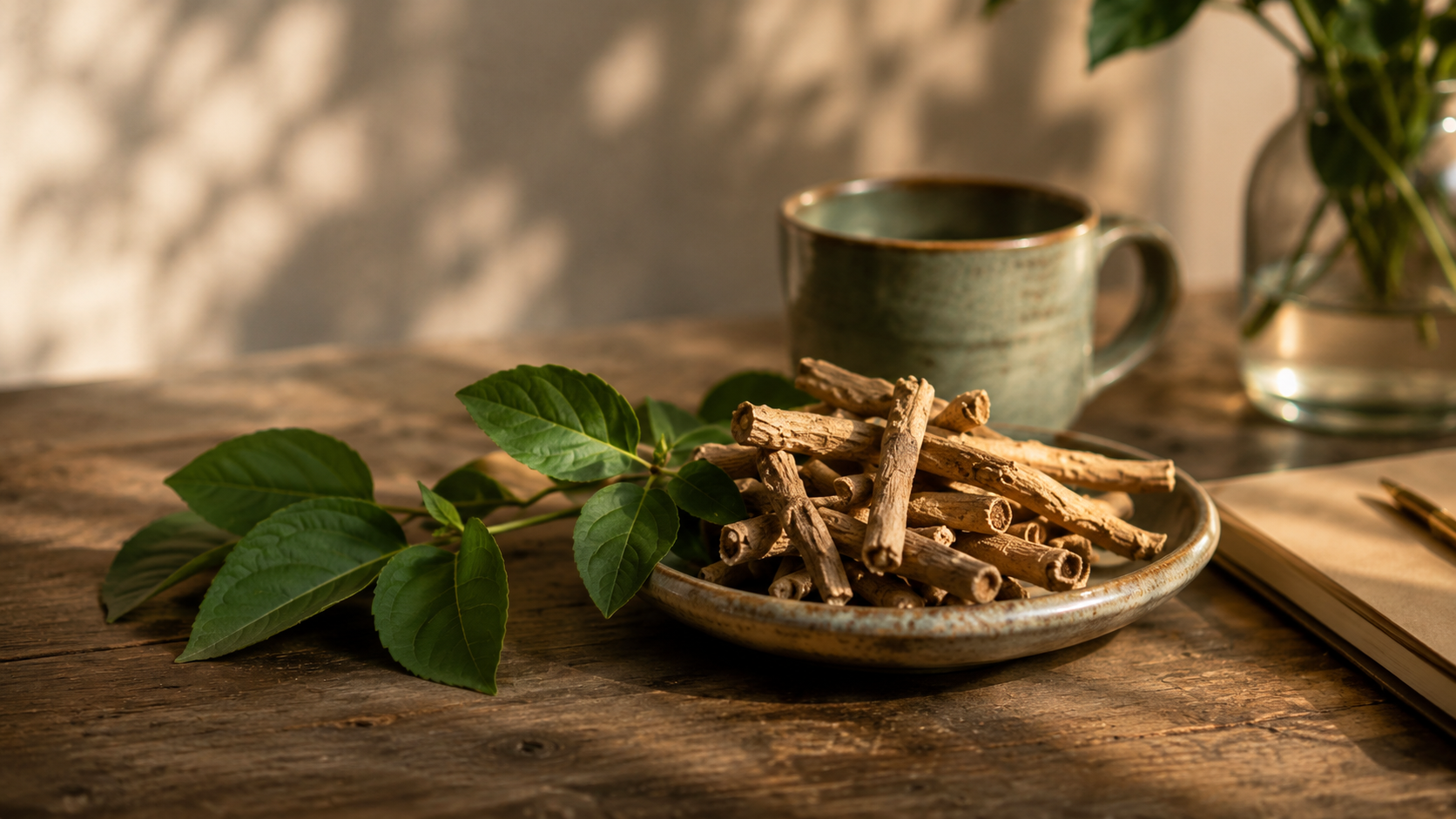
Ashwagandha is an evergreen shrub used in Ayurveda, the traditional medical system of India. Supplements most often use the root, although some modern products also use the leaves or a combination of root and leaf.
You will often see ashwagandha described as an adaptogen. This is a broad traditional and wellness term, not a precise medical category. In simple terms, it refers to a substance claimed to help the body cope with nonspecific stress. It does not mean the supplement has been proven to treat stress-related illness.
Ashwagandha contains a family of plant compounds called withanolides. Labels often use these as marker compounds to show how concentrated or standardized an extract is. But the number can be easy to overread. A product with “more withanolides” is not automatically better, safer, or more evidence-based. Different plant parts contain different compounds in different proportions.
2. Root, leaf, powder and extract: why the type matters
The most useful difference to look at is not just the brand. It is which part of the plant is used and how the product is extracted.
Whole-root powder is usually dried, ground root. It is closer to a traditional preparation, but it is less concentrated and often less standardized than extracts. Doses may be measured in grams rather than hundreds of milligrams.
Root-only extracts are made from the root and concentrated to a known level of marker compounds. They have the closest link to traditional use and much of the human clinical evidence. KSM-66, for example, is a branded root-only extract standardized to about 5% withanolides.
Root-and-leaf extracts combine different plant parts. They can have a different chemical fingerprint, often with higher standardized withanolide content and more leaf-associated compounds such as withaferin A. Sensoril is an example of a root-and-leaf extract listed in the NIH Dietary Supplement Label Database, while Shoden is a high-potency root-and-leaf extract positioned for lower-dose use.
That does not make root-and-leaf extracts automatically worse or better. It means they are not interchangeable with root-only extracts. A trial using 600 mg of one root extract does not prove that 120 mg of a different root-and-leaf extract will have the same effect.
3. What the evidence looks strongest on
The strongest evidence is for stress-related symptoms. Recent reviews of randomized controlled trials have found that ashwagandha can reduce perceived stress, anxiety scores, and cortisol, a hormone involved in the stress response. These effects are usually studied over about 6 to 12 weeks, not years.
Sleep is the next best-supported area. A 2021 meta-analysis found small but significant improvements in sleep, with larger effects in people who already had insomnia and in studies lasting at least 8 weeks. In other words, ashwagandha may be more useful for someone with a genuine sleep problem than for someone who already sleeps well.
The clearest takeaways are:
 Stress: the most consistent human evidence points to modest short-term reductions in perceived stress.
 Sleep: benefits look real but not dramatic, and seem stronger in insomnia studies.
 Product type matters: benefits seen with one extract should not be assumed for every capsule labeled “ashwagandha.”
4. What looks promising but less secure
Some areas are interesting, but the evidence is not yet strong enough for confident claims.
Anxiety is one example. Some studies show improvements in anxiety scores, but official summaries still describe the evidence for anxiety disorders as unclear. Feeling less stressed and treating an anxiety disorder are not the same thing.
Testosterone, sperm quality, and male fertility are also often discussed. Some short-term studies suggest possible improvements, but the evidence is limited and should not be treated as proof of a guaranteed fertility treatment.
Athletic performance and strength are another emerging area. Some trials and newer analyses suggest improvements in strength or performance markers, especially in physically active people. But the studies use different extracts, different training routines, and different outcomes, so the results are not yet simple enough to turn into a universal recommendation.
Cognition is similar. Early evidence suggests possible benefits for memory, attention, and processing speed, but this is still an emerging research area rather than a settled core benefit.
5. What claims are weak or not well substantiated?
Ashwagandha marketing often runs ahead of the evidence. Based on current research, the following claims are weak, inconsistent, under-researched, or too broad:
- General “hormone balancing”
- Treating thyroid disease
- Meaningful weight loss or body-fat reduction
- Diabetes control
- Menopause symptom relief
- Female infertility treatment
- Immune boosting
- Cancer prevention or treatment
- COVID-related claims
- Broad “adrenal support” or “adrenal fatigue” claims
Some of these topics have early research. Others have little direct human evidence. Either way, a good supplement claim should be specific: what outcome, in whom, using which extract, at what dose, and for how long?
6. Practical considerations
In studies, ashwagandha extract doses often fall around 125 to 600 mg per day, while whole-root preparations may be used in larger gram amounts. Stress and sleep studies commonly run for 6 to 12 weeks.
If you are comparing products, look for the plant part and extract type, not just the dose. “Ashwagandha 500 mg” tells you less than it seems. A root powder, a 5% root extract, and a high-potency root-and-leaf extract are different products.
It is also worth being careful with stacking. Taking ashwagandha alongside sleep aids, sedatives, thyroid medication, immune-modulating medicines, or multiple stress supplements can make it harder to tell what is helping and what may be causing side effects.
7. Safety
Short-term use of standardized root extracts appears generally well tolerated in healthy adults in trials, usually for up to about 3 months. Mild side effects can include drowsiness, stomach upset, diarrhea, vomiting, headache, dizziness, or rash.
Still, “generally tolerated” does not mean risk-free. Rare liver injury has been reported, sometimes after 2 to 12 weeks of use. Most reported cases improved after stopping, but severe cases have occurred, particularly in people with existing liver disease.
Pregnant and breastfeeding people should avoid ashwagandha. People with liver disease, thyroid conditions, autoimmune conditions, or upcoming surgery should be especially cautious and speak with a healthcare professional before using it. Long-term safety is still not well established.