

 Deutsch
 Español
 Suomi
Suomi Français
 Bahasa Indonesia
 Italiano
 日本語
日本語 Português
 Tagalog
Summary
Reishi mushroom, also sold as lingzhi or Ganoderma, is widely marketed for immune support, stress resilience, energy, liver health, and healthy ageing. But commercial products are not chemically uniform: they may use fruiting body, mycelium, spores, or extracts enriched for different compounds.
Current human evidence remains limited and low certainty. Broad claims for blood sugar, cholesterol, blood pressure, or major disease outcomes are not well supported, while smaller studies suggest narrower, product-specific benefits for lower urinary tract symptoms, some fatigue-related outcomes, and supportive care alongside cancer treatment. Short-term use is often tolerated, but rare liver injury reports, interaction concerns, and major quality-control problems mean reishi should be approached cautiously.
Quick Facts
What is it useful for?
Reishi is mainly studied for immune-related support, symptom relief, and adjunctive wellness uses, but strong clinical proof is limited.
Supplement types
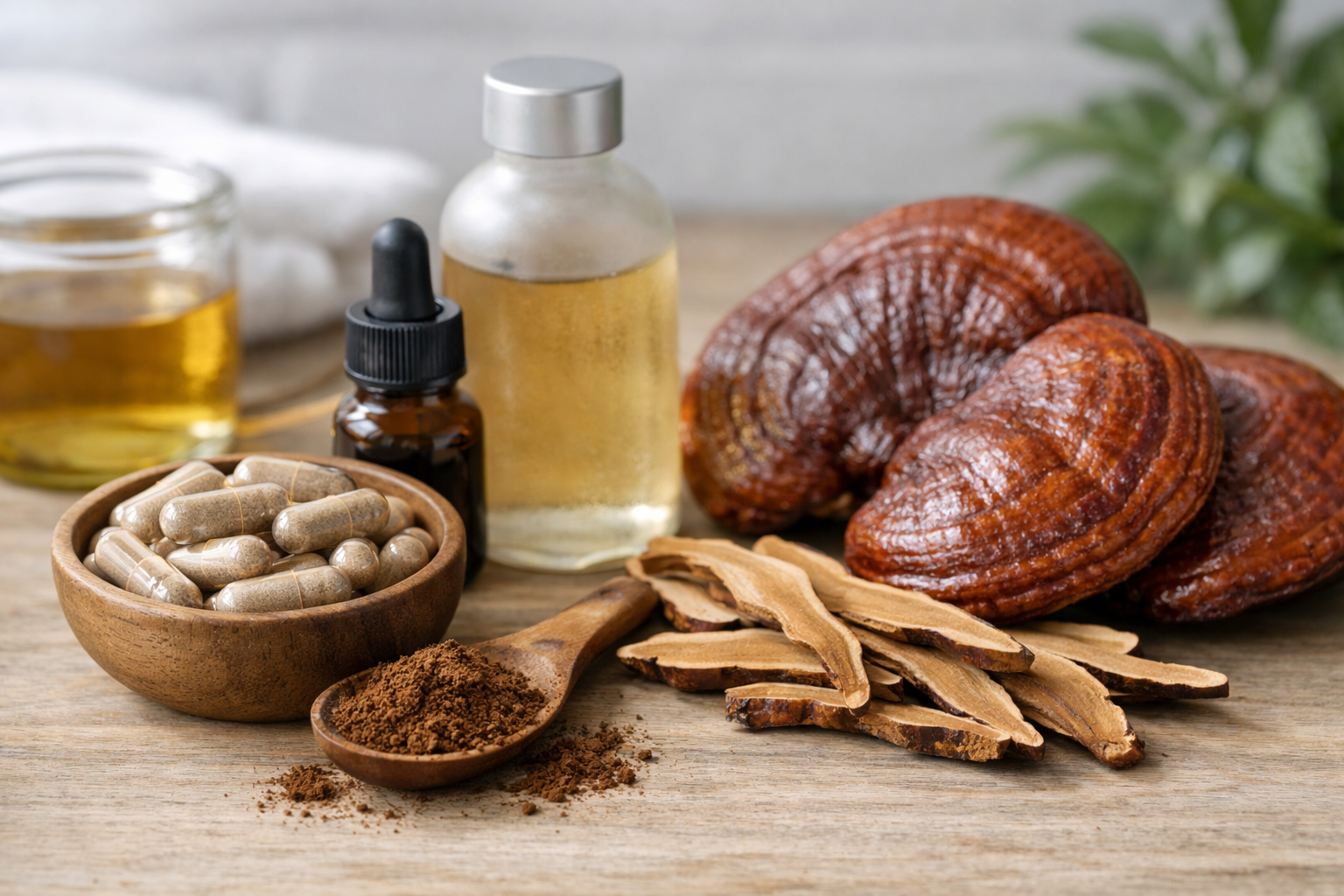
Reishi is sold as fruiting body powder, mycelium biomass, spore powder, hot-water extracts, and alcohol extracts rich in triterpenes.
Interactions
Reishi may add to the effects of blood-thinning or immune-active supplements and may warrant caution with anticoagulants, antiplatelets, immunosuppressants, and some CYP-metabolized drugs.
Side effects
Short-term use is often tolerated, but mild gastrointestinal complaints, nausea, insomnia, and very rare liver injury have been reported.
Other possible benefits
Small studies suggest possible effects on fatigue, urinary symptoms, antioxidant markers, and supportive cancer care outcomes.
Regulatory status
Reishi is sold as a supplement in many markets, but it is not an approved medicine for treating disease in the US or Europe.
What We Already Know About It
Not one uniform ingredient. Reishi is better understood as a family of preparations than a single supplement. Its chemistry depends on species identity, the fungal part used, cultivation substrate, and whether the material is processed as whole powder, spore product, or extract. This matters because two products labeled reishi may contain meaningfully different compounds and may not behave the same way clinically. References: PubMed 37048331 review; PubMed 38001761 review; NCI PDQ on medicinal mushrooms.
Plausible mechanisms exist. The main compound classes discussed in reishi supplement science are beta-glucan-rich polysaccharides or polysaccharide peptides, which are often linked to immune signaling, and lanostane-type triterpenoids, which are associated with bitterness, antioxidant activity, anti-inflammatory effects, and possible enzyme interactions. These mechanisms help explain why reishi remains biologically interesting, especially in preclinical research. References: PubMed 37048331 review; PubMed 38001761 review.
Clinical proof remains limited. The strongest human-level conclusion is that evidence quality is low. Recent meta-analysis judged the overall certainty as very low, and Cochrane reviews do not support broad cardiometabolic claims. More encouraging findings appear in narrower settings such as lower urinary tract symptoms, some fatigue-related outcomes, and supportive care alongside conventional cancer treatment, but these results are not definitive and should not be generalized beyond the tested products and populations. References: PubMed 40510787 systematic review and meta-analysis; Cochrane cardiovascular review; PubMed 27045603 cancer review; PubMed 18097505 urinary symptoms trial; PubMed 15857210 fatigue trial.
Summary of Relevant Scientific Research
Very low-certainty overall evidence — PubMed 40510787
A recent GRADE-assessed systematic review and meta-analysis examined clinical trials across healthy adults, at-risk groups, and patients with chronic disease using doses from about 200 mg to 11,200 mg per day over 1 to 24 weeks. It concluded that any benefits were generally modest and supported by very low-certainty evidence because the trials differed heavily in species, preparation, dose, population, and outcomes. Reference: PubMed 40510787 systematic review and meta-analysis.
Cardiometabolic claims not supported — Cochrane
Across five studies with 398 participants, mostly with type 2 diabetes, reishi was not shown to meaningfully improve HbA1c, fasting glucose, blood pressure, triglycerides, total cholesterol, LDL cholesterol, or body mass index. A possible post-meal glucose effect appeared in only one study and was not strong enough to support broad claims. Reference: Cochrane review on cardiovascular risk factors.
Adjunctive cancer support remains exploratory — Cochrane and meta-analysis
The cancer review found no convincing evidence that reishi alone treats cancer. Small trials using it alongside chemotherapy or radiotherapy reported better tumor response rates, improved some immune markers, and in some cases better quality of life, but a broader medicinal mushroom meta-analysis could not isolate a clean reishi-specific effect. References: PubMed 27045603 Cochrane cancer review; PubMed 31333449 adjunct medicinal mushroom meta-analysis.
Narrow symptom-focused trials are more positive — PubMed 18097505, 15857210, 22203880
A placebo-controlled trial in men with lower urinary tract symptoms found that 6 mg per day of a specific ethanol extract improved symptom scores over 12 weeks, although objective urinary measures did not change. Separate studies reported improved fatigue outcomes in neurasthenia and cancer-related fatigue settings, suggesting a more limited, product-specific role in symptom burden rather than broad disease modification. References: PubMed 18097505 urinary symptoms RCT; PubMed 15857210 neurasthenia trial; PubMed 22203880 breast cancer fatigue pilot.
Safety and quality complicate interpretation — LiverTox, MSKCC, quality-control studies
Short-term trials often report acceptable tolerance, but case reports describe rare liver injury and spore-related false elevations of the tumor marker CA72-4. Separate analytical and DNA-based studies found frequent mismatch between product labels and actual contents, meaning the marketplace often does not match the research materials used in trials. References: LiverTox — Reishi; MSKCC Reishi monograph; Quality-control study; DNA-authentication study.
Beliefs, Myths & Unproven Claims
The mushroom of immortality extends life or broadly prevents disease
The traditional nickname reflects historical use, not modern proof that reishi extends lifespan or broadly prevents disease. While preclinical work supports biologic plausibility, the available human evidence is still low certainty and does not justify sweeping longevity or disease-prevention claims. References: NCI PDQ on medicinal mushrooms; PubMed 40510787 systematic review and meta-analysis.
Reishi reliably lowers blood sugar, cholesterol, and blood pressure
These are among the most common mainstream marketing claims, but the best evidence does not support them strongly. Cochrane found no meaningful benefit for major cardiometabolic outcomes, so reishi should not be presented as a proven supplement for blood sugar or heart-risk control. References: Cochrane review on cardiovascular risk factors; PubMed 40510787 systematic review and meta-analysis.
Reishi is a proven cancer treatment
Cancer sources treat reishi as investigational or complementary, not as an established anticancer therapy. Some small studies suggest supportive effects when it is used alongside chemotherapy or radiotherapy, but reishi alone has not shown convincing evidence as a standalone cancer treatment. References: PubMed 27045603 Cochrane cancer review; NCI PDQ on medicinal mushrooms.
All reishi supplements are interchangeable
This is a major misconception. Spore powders, hot-water fruiting body extracts, mycelium biomass powders, and triterpenoid-rich alcohol extracts can differ markedly in chemistry, and label accuracy is often poor. A positive result from one standardized study product cannot be assumed to apply to any capsule or powder bought online. References: Quality-control study; DNA-authentication study; PubMed 33180770 authentication methods paper; Examine overview of reishi research.
Detailed Research Observations
Reishi is a category of preparations, not a single defined ingredient
Reishi usually refers to medicinal Ganoderma mushrooms used in East Asian traditions, but the identity problem starts with taxonomy. The National Cancer Institute notes that the East Asian medicinal species commonly discussed in research are not always identical to European Ganoderma lucidum sensu stricto, and products may instead contain G. lingzhi, G. sinense, G. sichuanense, or mixed Ganoderma material. That matters because clinical findings become harder to interpret when the tested organism is not the same one listed on the retail label. References: NCI PDQ on medicinal mushrooms; DNA-authentication study.
Formulation makes the problem even larger. Reishi products can be fruiting body powders, mycelium grown on grain, spore powders, water extracts rich in polysaccharides, or alcohol extracts richer in triterpenoids. The best-known constituent groups are beta-glucan-rich polysaccharides, polysaccharide peptides, and lanostane-type triterpenoids such as ganoderic acids. Because these preparations differ chemically, reishi should be discussed as a family of interventions rather than as one universal supplement. References: PubMed 37048331 review; PubMed 38001761 review.
The overall human evidence is still low certainty
The broadest recent synthesis of clinical trials concluded that reishi may have only modest effects on some health indices and that overall certainty is very low. This was not simply because outcomes were negative across the board, but because the trials were highly heterogeneous: different species, fungal parts, extracts, doses ranging from a few hundred milligrams to more than 11 grams per day, study lengths from 1 to 24 weeks, and populations ranging from healthy volunteers to people with chronic disease. That heterogeneity prevents clean generalization and makes headline consumer claims unreliable. Reference: PubMed 40510787 systematic review and meta-analysis.
This low-certainty conclusion is especially important because it frames how positive signals should be read. A good result from one standardized extract in one narrow patient group is not the same as proof that “reishi works” in a general sense. The evidence base currently supports biologic plausibility and a few targeted findings, but not a coherent, high-quality body of clinical proof across major health claims. References: PubMed 40510787 systematic review and meta-analysis; Examine overview of reishi research.
Broad cardiometabolic marketing claims are not backed by the best evidence
Reishi is frequently promoted for blood sugar, cholesterol, blood pressure, and heart health, but this is one of the weakest areas in the human literature. The Cochrane review found no meaningful benefit for the most important measured outcomes, including HbA1c, fasting glucose, blood pressure, triglycerides, LDL cholesterol, total cholesterol, or body mass index. One study hinted at a post-meal glucose effect, but that single signal was not strong enough to support broad metabolic claims. Reference: Cochrane review on cardiovascular risk factors.
This matters because cardiometabolic support is one of the most common consumer-facing messages around reishi. The current evidence does not prove that reishi can never affect metabolism, but it does mean existing human data do not justify presenting it as a proven tool for blood sugar control or cardiovascular risk reduction. References: Cochrane review on cardiovascular risk factors; PubMed 40510787 systematic review and meta-analysis.
The more positive findings are narrow, symptom-focused, and product-specific
One of the more credible positive randomized trials found that 6 mg per day of a specific ethanol extract improved lower urinary tract symptom scores over 12 weeks in men with slight-to-moderate symptoms. However, the trial did not show meaningful changes in urinary flow rate, post-void residual volume, prostate size, PSA, testosterone, or overall quality of life. This suggests the benefit may have been limited more to symptom perception than to a deeper disease-modifying effect. Reference: PubMed 18097505 urinary symptoms RCT.
Fatigue-related findings are also more encouraging than broad disease claims, but still narrow. A polysaccharide extract called Ganopoly, used at 1,800 mg three times daily for 8 weeks, improved fatigue and global clinical ratings in patients diagnosed with neurasthenia. A small pilot study in breast cancer patients receiving endocrine therapy found that spore powder improved cancer-related fatigue and quality-of-life measures. These studies are interesting, but they do not automatically translate to everyday tiredness in healthy consumers. References: PubMed 15857210 neurasthenia trial; PubMed 22203880 breast cancer fatigue pilot.
Cancer-related evidence is adjunctive rather than standalone
In oncology discussions, the most careful summary is that reishi remains investigational. The Cochrane review found no convincing evidence that reishi alone treats cancer, and none of the included trials reported long-term survival outcomes. Some small studies did suggest better tumor response when reishi was added to chemotherapy or radiotherapy, along with modest improvements in immune markers and quality of life. That is a meaningful distinction: supportive-care potential is not the same as proof of anticancer efficacy. References: PubMed 27045603 Cochrane cancer review; NCI PDQ on medicinal mushrooms.
A broader meta-analysis of medicinal mushroom adjuncts reported lower mortality risk and higher total efficacy, but it pooled multiple mushroom products together, including non-reishi ingredients. Because of that, it cannot isolate a clean reishi-specific effect. The current cancer picture is therefore exploratory adjunctive promise, not proof that reishi modifies disease on its own. Reference: PubMed 31333449 adjunct medicinal mushroom meta-analysis.
Safety concerns are uncommon but clinically relevant
Short-term reishi use appears generally well tolerated in many trials, and one randomized study in healthy volunteers found no measurable impairment of routine coagulation, platelet function, or thromboelastography after 1.5 g per day for 4 weeks. Even so, expert guidance remains cautious, especially for people taking anticoagulants or antiplatelet drugs, those with bleeding disorders, and those preparing for surgery. Trial reassurance and real-world precaution can both be true because the clinical context differs by user and product type. References: PubMed 16037156 coagulation study; MSKCC Reishi monograph.
Liver safety deserves separate attention. LiverTox classifies reishi as a possible rare cause of clinically apparent acute liver injury, usually with a hepatocellular pattern and recovery after stopping. Case reports also describe spore-related false elevations of the tumor marker CA72-4, which can create confusion in cancer settings. These issues appear uncommon, but they are credible enough to matter in medically complex users. References: LiverTox — Reishi; PubMed 37885515 hepatitis case report; PubMed 23884232 CA72-4 case report; PubMed 24282100 CA72-4 case series.
Quality and identity may be the biggest real-world limitation
Even if reishi were more effective than current evidence suggests, poor marketplace quality would still make translation difficult. A US quality-control study found that only 26.3 percent of tested products were consistent with label claims, and many lacked characteristic triterpenoids or showed starch-like saccharide profiles. A separate DNA study found that none of 19 tested products contained G. lucidum sensu stricto, while mixed Ganoderma species were common. This means the supplement marketplace often does not match the research literature consumers assume it reflects. References: Quality-control study; DNA-authentication study.
The practical implication is that product identity, fungal part used, extraction method, standardization, and independent testing may matter as much as the ingredient name itself. A well-characterized product may justify a cautious trial for a limited goal, but vague label claims and poorly described extracts make evidence-based use much harder. References: PubMed 33180770 authentication methods paper; PubMed 40510787 systematic review and meta-analysis.
Regulatory Status (EU and US)
United States
Reishi is best understood as a supplement ingredient rather than an approved therapeutic agent. The sources used here treat it as investigational or complementary, especially in cancer care. The National Cancer Institute does not present reishi as a proven anticancer treatment, and Memorial Sloan Kettering describes it as an herb or supplement with cautions and possible interactions rather than an approved oncology medicine. References: NCI PDQ on medicinal mushrooms; MSKCC Reishi monograph.
European Union
For European readers, the practical message is similar: reishi products may be sold commercially, but the evidence does not support presenting them as established treatments for cardiometabolic disease, cancer, or other major medical conditions. Low-certainty clinical evidence and significant quality-control problems mean marketing language should remain cautious and should not imply drug-like efficacy. References: PubMed 40510787 systematic review and meta-analysis; Cochrane review on cardiovascular risk factors; Quality-control study; DNA-authentication study; PubMed 33180770 authentication methods paper.
Dosage and Standardization
There is no single evidence-based universal dose for reishi because human studies used very different preparations and dosing schemes. Across clinical research, doses ranged from roughly 200 mg to 11,200 mg per day over 1 to 24 weeks.
Examples include about 1.4 to 5.4 g per day in cardiometabolic trials, 1.5 g per day in a healthy-volunteer coagulation study and an adenoma study, 6 mg per day of a specific ethanol extract in the lower urinary tract symptom trial, and 1,800 mg three times daily of a polysaccharide extract in the neurasthenia trial. These figures are not interchangeable across water extracts, ethanol extracts, spore products, biomass powders, or mycelial extracts.
Safety And Interactions
Short-term reishi use appears generally well tolerated in many clinical studies, but mild gastrointestinal complaints have been reported, and expert monographs also list nausea and insomnia among possible side effects. A randomized study in healthy adults did not find impaired routine coagulation or platelet function after 1.5 g per day for 4 weeks, yet caution is still advised for people taking anticoagulant or antiplatelet drugs, those with bleeding disorders, and those due for surgery.
Liver safety deserves specific attention. LiverTox states that reishi has been implicated in rare case reports of clinically apparent acute liver injury, usually arising after 1 to 2 months and generally improving after discontinuation. Interaction concerns also extend to immunosuppressants and possibly some CYP-metabolized drugs, especially with concentrated triterpenoid-rich extracts.
In oncology settings, spore powder has also been linked to false elevations of CA72-4, which can confuse tumor-marker interpretation. Because safety data are formulation-specific and commercial quality is inconsistent, people with liver disease, active cancer care, immunosuppression, complex medication regimens, or prior supplement-related adverse reactions should seek clinician review before use.
Conclusion
Reishi mushroom is a biologically rich and historically important supplement ingredient, but the modern clinical evidence remains uneven. The most defensible conclusion is that reishi has plausible mechanisms and some modest, product-specific human signals, especially in symptom-focused areas such as lower urinary tract symptoms, certain fatigue-related outcomes, and possibly supportive care alongside conventional cancer treatment.
At the same time, higher-level reviews do not support broad claims for cardiometabolic risk reduction, and overall certainty across the literature remains low to very low. Quality, species identity, extraction method, and user context all matter, so reishi is best viewed as promising but not proven.
Disclaimer
Disclaimer: We attempt to do our best to find relevant, accurate and most up to date information available in both, the public domain and in the clinical and medical research community. We recommend reviewing scientific sources for official information on the subject. This post is not intended as medical advice. Each individual person's health conditions vary and we advise to consult a doctor before taking any supplements.