

 Deutsch
 Español
 Suomi
Suomi Français
 Bahasa Indonesia
 Italiano
 日本語
日本語 Português
 Tagalog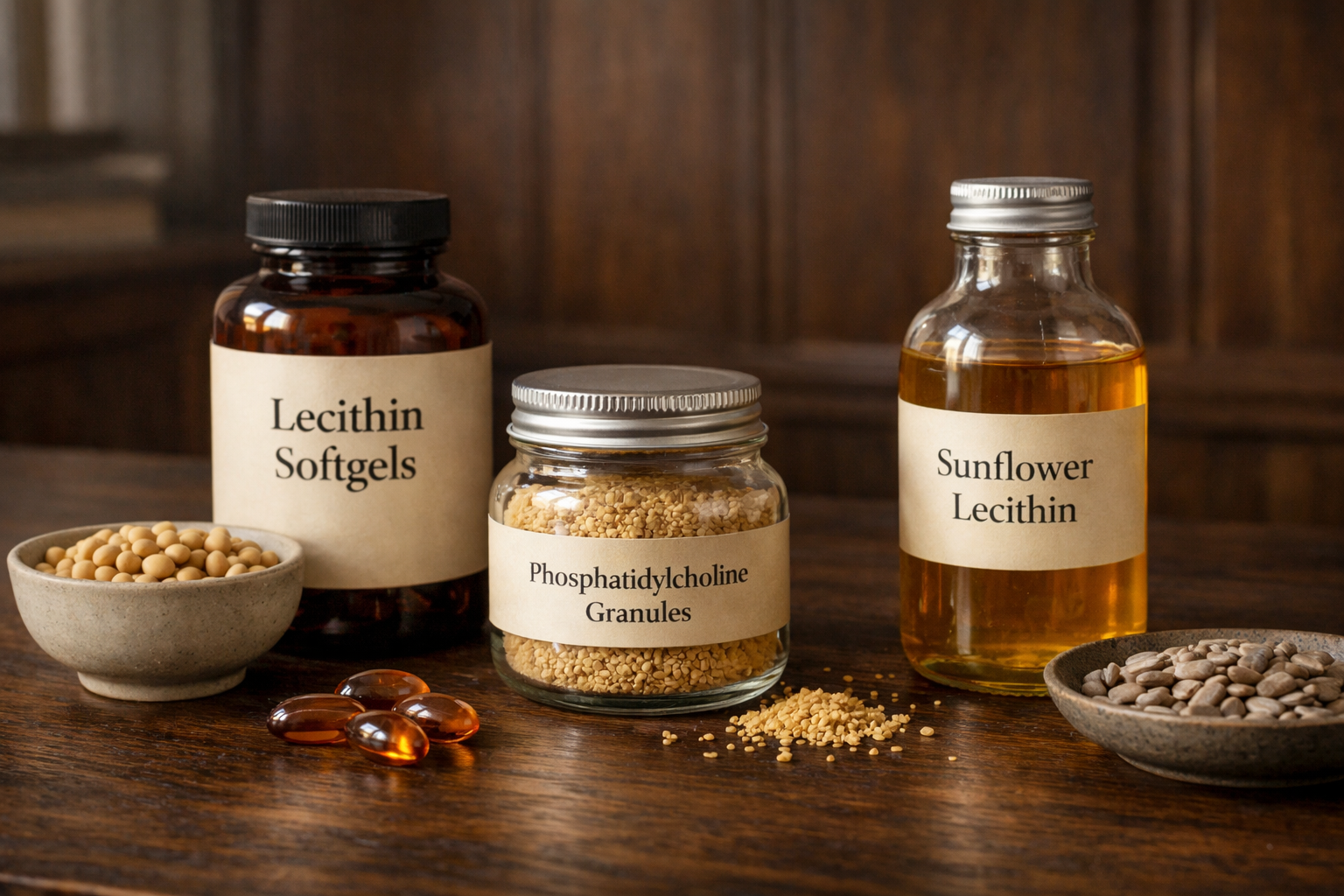
Summary
Lecithin is a mixture of phospholipids, not a single essential nutrient, and much of its nutritional relevance comes from phosphatidylcholine as a possible choline source. Products sold as lecithin can differ by source, processing, and phospholipid profile, so labels do not guarantee equivalent composition or effects.
Current evidence does not support many of lecithin's popular marketing claims. Generic lecithin has weak or negative evidence for memory, dementia, fatigue, and cholesterol lowering, while the clearest positive clinical signal is a specialized delayed-release phosphatidylcholine formulation studied in ulcerative colitis. Safety at food-use levels appears established, but high-dose supplement use, source-specific allergy issues, and total choline exposure still matter.
Quick Facts
What is it useful for?
It mainly provides phospholipids and some choline. The strongest direct evidence is for delayed-release phosphatidylcholine in ulcerative colitis.
Supplement types
Lecithin is sold as soy, sunflower, egg, or rapeseed forms, and as liquid, softgels, granules, powder, hydrolyzed, or phosphatidylcholine-enriched products.
Interactions
Potential overlap is mainly with other choline products, because total choline exposure may rise. Direct interaction and comparative bioavailability data are limited.
Side effects
Reported issues include stomach upset, diarrhea, rash, itching, dermatitis, and allergic reactions, especially in soy-sensitive users.
Other possible benefits
Early human signals exist for dry eye and some vascular markers, but the evidence is still preliminary and product-specific.
Regulatory status
In the U.S. lecithin is GRAS for food use, and in the EU lecithins E 322 were re-evaluated with no safety concern at reported food-use levels.
What We Already Know About It
What it is. Lecithin is not a single purified nutrient but a naturally occurring mixture of phospholipids, commonly including phosphatidylcholine, phosphatidylethanolamine, and phosphatidylinositol. Its nutritional relevance comes mainly from phosphatidylcholine, which can contribute choline, rather than from lecithin being a separate essential nutrient in its own right. (NIH ODS — Choline Fact Sheet; 21 CFR 184.1400 — Lecithin)
Why products differ. Soy, sunflower, egg, and rapeseed lecithins are not compositionally identical, and processing choices such as deoiling, hydrolysis, or phosphatidylcholine enrichment can materially change phospholipid profile, allergen considerations, and likely choline contribution. This is why a liquid lecithin, a granule, and a phosphatidylcholine-enriched formula should not be treated as interchangeable. (EFSA — Lecithins E 322 re-evaluation; USDA — Lecithin de-oiled handling report; Food Hydrocolloids — Lecithin review)
What evidence supports. The strongest science is on nutrient background and food-use safety, not broad therapeutic claims. Trials and reviews do not support lecithin as an effective treatment for dementia or a reliable cholesterol-lowering supplement, while the clearest positive human data involve delayed-release phosphatidylcholine-enriched lecithin for ulcerative colitis, where colonic delivery appears central to the effect. (Cochrane via PubMed — Lecithin for dementia; PubMed — Hyperlipidemic men trial; PubMed — Meta-analysis in ulcerative colitis)
Summary of Relevant Scientific Research
Choline Background, Not a Stand-Alone Nutrient — NIH Office of Dietary Supplements
The NIH frames lecithin mainly as one of several supplement forms that can provide choline-related compounds. It also notes that no studies have compared the relative bioavailability of lecithin, phosphatidylcholine, and choline bitartrate, which limits strong claims that one source is clearly superior. (NIH ODS — Choline Fact Sheet)
No Reliable Dementia Benefit — Cochrane and Linus Pauling Institute
Randomized trial evidence reviewed by Cochrane found lecithin no better than placebo for dementia or cognitive impairment. Linus Pauling Institute summaries reach the same overall conclusion for large-dose lecithin in Alzheimer's disease. (PubMed — Cochrane review on lecithin and dementia; Linus Pauling Institute — Choline; Linus Pauling Institute — Alzheimer's disease)
Cholesterol Claims Remain Weak — Double-blind controlled study
In hyperlipidemic men, lecithin had no independent effect on serum lipoproteins, fibrinogen, or related markers in a placebo-controlled trial. This directly challenges confident cholesterol-lowering marketing for ordinary lecithin products. (PubMed — Lecithin in hyperlipidemic men)
Strongest Signal in Ulcerative Colitis — Meta-analysis and LT-02 trials
The most promising clinical findings concern delayed-release phosphatidylcholine-enriched lecithin targeted to the intestine. A meta-analysis of three studies found improved remission and other outcomes, and the LT-02 program reinforces that the benefit is highly formulation-specific. (PubMed — Meta-analysis of enteric phosphatidylcholine; PubMed — LT-02 modified-release program)
Emerging Uses Are Early and Mixed — Recent human studies
A small dry-eye trial found sunflower lecithin 4,800 mg/day improved signs and symptoms in meibomian gland dysfunction, while a soy lecithin fatigue trial showed no clear benefit for the primary fatigue outcome despite some secondary improvements. (PubMed — Sunflower lecithin in dry eye disease; PubMed — Soy lecithin in fatigued women)
Beliefs, Myths & Unproven Claims
Lecithin Is a Proven Brain Food
This is one of lecithin's oldest supplement claims, but the supplied evidence does not support it. Randomized trial evidence found lecithin no better than placebo for dementia or cognitive impairment, and academic summaries report that large-dose lecithin did not improve cognitive outcomes in Alzheimer's disease. (PubMed — Cochrane review on lecithin and dementia; Linus Pauling Institute — Choline; Linus Pauling Institute — Alzheimer's disease)
It Reliably Lowers Cholesterol by Dissolving Fat
The clinical evidence presented here does not justify that message. A placebo-controlled study in hyperlipidemic men found no independent improvement in lipoproteins or related markers, so sweeping cholesterol-lowering claims are overstated. (PubMed — Lecithin in hyperlipidemic men)
Breastfeeding and Tiredness Uses Are Fully Proven
Lecithin is commonly recommended for plugged ducts, and EMA materials recognize soya-bean lecithin for tiredness and weakness, but both claims need careful framing. Breastfeeding guidance is low certainty, LactMed says scientifically valid trials are lacking, and the EMA position is traditional use rather than modern clinical proof. (Academy of Breastfeeding Medicine — Protocol #36; LactMed — Lecithin; EMA — Soya-bean lecithin monograph)
Sunflower Lecithin Is Clinically Superior to Soy
Current evidence does not show across-the-board clinical superiority. The most defensible differences are practical ones such as allergen preference, processing choices, and phospholipid composition, while comparative bioavailability between supplement forms remains unestablished. (NIH ODS — Choline Fact Sheet; USDA — Lecithin de-oiled handling report)
Detailed Research Observations
Lecithin Is a Mixture, Not a Fixed Nutrient
Lecithin is best understood as a mixed phospholipid ingredient rather than a single purified nutrient. U.S. food regulation describes commercial lecithin as a naturally occurring mixture of phosphatides of choline, ethanolamine, and inositol, together with smaller amounts of other lipids. That matters because the name “lecithin” can sound more precise than it really is. A product labeled lecithin should not be assumed to behave like pure phosphatidylcholine or like a fixed-dose choline supplement. (21 CFR 184.1400 — Lecithin)
Its nutritional importance comes mainly from phosphatidylcholine, which can contribute choline, an essential nutrient involved in cell membranes, neurotransmission, and lipid transport. The broader nutrition framework therefore centers on choline rather than on lecithin as an independent essential nutrient. This distinction helps explain why lecithin is nutritionally relevant without automatically being a proven therapeutic supplement. (NIH ODS — Choline Fact Sheet)
Choline Targets Do Not Translate Directly From Lecithin Labels
The most reliable intake framework in the source material is choline, not lecithin. The NIH states that humans synthesize some choline in the liver but not enough to meet needs, and that about half of dietary choline in the United States is consumed as phosphatidylcholine. EFSA also set adequate intakes for adults, pregnancy, and lactation, reflecting choline's nutritional importance. (NIH ODS — Choline Fact Sheet; EFSA — Choline dietary reference values)
What a lecithin label usually does not tell you is how much phosphatidylcholine is actually present. Because source and processing can substantially change composition, a stated amount such as 1,200 mg of lecithin cannot be directly converted into a meaningful choline dose without better product-specific data. This is a major reason the article cautions against treating gram amounts of lecithin as if they were nutritionally interchangeable. (EFSA — Lecithins E 322 re-evaluation; NIH ODS — Choline Fact Sheet)
Source and Processing Change the Product
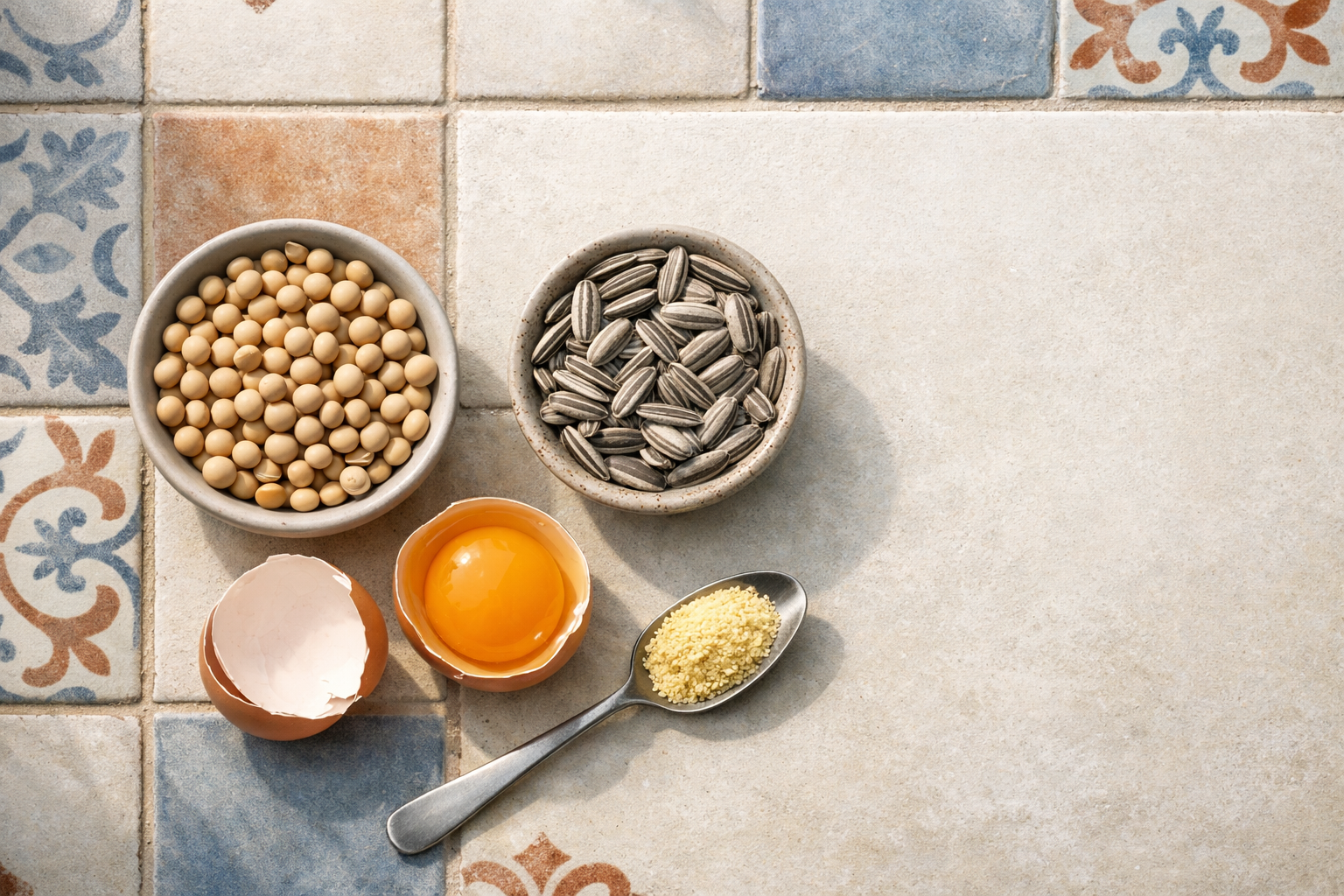
Soy remains the dominant commercial source of lecithin, but sunflower, egg, and rapeseed lecithins are established alternatives. These sources are not chemically identical. Regulatory and technical sources cited in the article show that phospholipid profiles differ across sources, which can influence emulsifying behavior, fatty-acid makeup, allergen considerations, processing suitability, and the theoretical amount of choline released from phosphatidylcholine. (EFSA — Lecithins E 322 re-evaluation; USDA — Lecithin de-oiled handling report)
The same issue applies to form. Liquid lecithin, granules, powders, deoiled powders, hydrolyzed lecithin, phosphatidylcholine-enriched materials, and liposomal products should not be treated as interchangeable. Food-science reviews describe how composition affects stability and functionality, including the behavior of phosphatidylcholine-enriched and lysophospholipid-enriched systems. In practical terms, the broad lecithin label hides meaningful differences in chemistry and likely biological behavior. (Food Hydrocolloids — Lecithin review; USDA — Lecithin de-oiled handling report)
Bioavailability Remains an Important Unknown
One of the clearest evidence gaps is comparative absorption. The NIH specifically notes that no studies have compared the relative bioavailability of choline supplements such as lecithin, phosphatidylcholine, and choline bitartrate. That means strong marketing claims about one source or one lecithin type being clearly superior are not well supported by direct human evidence in the material reviewed here. (NIH ODS — Choline Fact Sheet)
This gap matters because consumers often compare products by headline ingredient names alone. In reality, source, phosphatidylcholine enrichment, oil content, and delivery system may all affect physiological exposure, but the article notes that direct head-to-head human data are lacking. The practical takeaway is that “soy lecithin,” “sunflower lecithin,” and “phosphatidylcholine” are not evidence-based synonyms for equal bioavailability. (NIH ODS — Choline Fact Sheet)
Classic Brain and Cholesterol Claims Have Weak Support
Lecithin's long-standing reputation as a memory supplement came from the idea that phosphatidylcholine might raise acetylcholine availability in the brain. The article notes that this mechanism sounds plausible in theory, but randomized clinical evidence did not confirm a meaningful benefit in dementia. Cochrane-reviewed trials found lecithin no better than placebo, and Linus Pauling Institute summaries report no cognitive improvement from large-dose lecithin in Alzheimer's disease. (PubMed — Cochrane review on lecithin and dementia; Linus Pauling Institute — Choline; Linus Pauling Institute — Alzheimer's disease)
Cardiovascular and lipid claims also remain weak in the evidence set reviewed. A placebo-controlled study in hyperlipidemic men found no independent benefit on serum lipoproteins or related markers. Although one fatigue study reported some secondary vascular findings at higher soy lecithin doses, the article emphasizes that these were secondary outcomes in a specific population and do not establish a general heart-health or cholesterol-lowering use. (PubMed — Lecithin in hyperlipidemic men; PubMed — Soy lecithin in fatigued women)
The Strongest Positive Human Signal Is Formulation-Specific
The clearest positive efficacy signal in the article is not for generic retail lecithin but for delayed-release phosphatidylcholine-enriched lecithin used in ulcerative colitis. A meta-analysis of three studies reported improvements in remission and other outcomes, and the LT-02 program reinforced the importance of modified-release delivery to the intestine. This suggests that site-specific delivery is part of the treatment concept rather than an optional detail. (PubMed — Meta-analysis of enteric phosphatidylcholine; PubMed — LT-02 modified-release program)
Outside ulcerative colitis, the article describes a few emerging areas that remain preliminary. A small trial found sunflower lecithin 4,800 mg/day improved signs and symptoms in dry eye disease with meibomian gland dysfunction, while a soy lecithin fatigue trial did not improve the primary fatigue outcome despite some secondary changes. In lactation practice, lecithin is commonly recommended for plugged ducts, but the evidence base is low certainty and scientifically valid confirmation is lacking. (PubMed — Sunflower lecithin in dry eye disease; PubMed — Soy lecithin in fatigued women; Academy of Breastfeeding Medicine — Protocol #36; LactMed — Lecithin)
Regulatory Status (EU and US)
United States
Under 21 CFR 184.1400, lecithin is affirmed as generally recognized as safe for food use under current good manufacturing practice. This status supports its use as a food ingredient and emulsifier, not claims that lecithin supplements treat disease or provide the specific benefits often implied in marketing. (21 CFR 184.1400 — Lecithin)
European Union
In the EU, lecithins are regulated as food additive E 322, and EFSA's re-evaluation found no safety concern at reported food-use levels. EFSA also set dietary reference values for choline, but those intake values do not amount to approval of lecithin supplements for clinical outcomes. (EFSA — Lecithins E 322 re-evaluation; EFSA — Choline dietary reference values)
The EMA monograph adds an important distinction: soya-bean lecithin is recognized for relief of tiredness and weakness only on a traditional-use basis, with insufficient relevant clinical evidence. In the U.S. supplement context, LactMed also notes that dietary supplements are marketed without premarketing proof of safety and effectiveness. (EMA — Soya-bean lecithin monograph; LactMed — Lecithin)
Dosage and Standardization
Study range: No single standard lecithin dose exists because products vary in phosphatidylcholine content. Human studies used 600–1,200 mg/day for fatigue and 4,800 mg/day for dry eye, while lactation guidance suggests 5–10 g/day on low-certainty evidence. Choline targets, not lecithin targets, are 550 mg/day for U.S. men and 425 mg/day for U.S. women.
Safety And Interactions
At food-use levels, lecithin appears broadly safe. U.S. and EU reviews support its use as a food ingredient, but these findings do not automatically establish the long-term safety of high-dose supplement use. (21 CFR 184.1400 — Lecithin; EFSA — Lecithins E 322 re-evaluation)
The best-documented practical concerns are allergy and gastrointestinal effects. The EMA monograph on soya-bean lecithin lists allergic reactions, itching, dermatitis, rash, stomach ache, and diarrhea, and advises avoidance in people allergic to soy, peanut, other legumes, or birch pollen. (EMA — Soya-bean lecithin monograph)
High-dose use also deserves metabolic caution. The NIH sets an adult upper limit of 3,500 mg/day for choline, and combining lecithin with other choline-containing products may increase total exposure. Human mechanistic research also shows oral phosphatidylcholine can increase trimethylamine N-oxide, a compound associated with cardiovascular risk, which is a reasonable caution for chronic high-dose use in higher-risk people. (NIH ODS — Choline Fact Sheet; Clinical study — Phosphatidylcholine metabolism and TMAO)
Conclusion
Lecithin is most accurately viewed as a phospholipid mixture and food-derived ingredient that can contribute phosphatidylcholine and, indirectly, choline. That makes it nutritionally relevant, but not automatically a proven therapeutic supplement. The strongest evidence around lecithin is for composition, food-use safety, and choline context.
The weakest area is the popular marketing narrative that lecithin is broadly proven for memory, dementia, cholesterol lowering, or general vitality. The most meaningful positive clinical signal is specialized delayed-release phosphatidylcholine-enriched lecithin in ulcerative colitis, while evidence in dry eye and other areas remains early. For everyday consumers, the practical message is that source and form matter, gram amounts of lecithin do not reveal actual choline delivery, and traditional use should not be confused with modern proof.
Disclaimer
Disclaimer: We attempt to do our best to find relevant, accurate and most up to date information available in both, the public domain and in the clinical and medical research community. We recommend reviewing scientific sources for official information on the subject. This post is not intended as medical advice. Each individual person's health conditions vary and we advise to consult a doctor before taking any supplements.