

 Deutsch
 Español
 Suomi
 Français
 Bahasa Indonesia
 Italiano
 日本語
 Português
 Tagalog



How Oral Collagen May Affect Skin
Collagen is the main structural protein in the dermis, the deeper skin layer that gives skin much of its firmness and tensile strength. With age, ultraviolet exposure, smoking, inflammation, and normal biology, collagen production slows and existing fibers become more fragmented. Nutrients such as vitamin C are involved in normal collagen formation, but taking a collagen supplement is not the same as sending intact collagen directly to the face.
Most oral products used in studies are hydrolyzed, meaning the large collagen protein has been broken into smaller peptides. During digestion, those peptides are further broken down into amino acids and smaller peptide fragments. Some fragments may circulate in the blood for a time after ingestion, which is the basis for the theory that oral collagen peptides could influence skin cells.
The most plausible early effects are changes that can be measured with instruments, such as hydration, transepidermal water loss, and elasticity. Wrinkle depth and visible age are harder endpoints because they are shaped by sun exposure, facial movement, genetics, hormones, topical skin care, and measurement methods. Product differences also matter: bovine, porcine, fish, marine, and freshwater collagen can vary in molecular weight, peptide profile, dose, and added nutrients.

Supplies Collagen-Rich Amino Acids
Provides glycine, proline, and hydroxyproline, though the body decides where they are used.

May Signal Skin Cells
Small peptide fragments may influence fibroblasts, the cells that build dermal matrix proteins.

May Support Barrier Measures
Hydration and skin barrier function can shift before wrinkles visibly change.

Depends on the Product
Source, peptide size, dose, and added ingredients can change what a study result means.
What the Clinical Evidence Shows
The best evidence points to modest changes in skin physiology, not a guaranteed younger-looking face. Outcomes such as skin hydration, elasticity, and barrier function are more consistently positive than wrinkle reduction. Even these findings are limited by short study periods, mixed products, different measurement tools, and frequent manufacturer funding.
Several short randomized trials in middle-aged women have reported improvements in elasticity, moisture, or dermal imaging markers over about 8 to 12 weeks. A foundational trial found an elasticity signal with 2.5 g/day and 5 g/day of specific collagen peptides, while other trials found moisture or barrier-function changes. Larger pooled analyses also report average benefits for hydration and skin elasticity.
The more cautious reading is that positive averages do not prove every collagen product improves visible aging. Some trials are mixed or negative, especially in advanced age-related skin thinning. Newer analyses also suggest that wrinkle and dermal-structure outcomes are more sensitive to outliers, study design, and statistical handling than marketing claims imply.

Biological Plausibility
Mechanistic reviews make a skin effect plausible, but they do not prove visible rejuvenation.1
Hydration and Elasticity
Trials and meta-analyses most consistently support modest hydration, elasticity, and barrier-function gains.2, 3, 4, 7, 8, 9
Wrinkle Claims
Wrinkle and dermal-structure findings are mixed, especially after sensitivity testing and critique.5, 6, 10, 11

Regulatory Caution
Regulators and health agencies frame collagen as a supplement, not an approved anti-aging treatment.12, 13, 14
How to Choose a Collagen Product
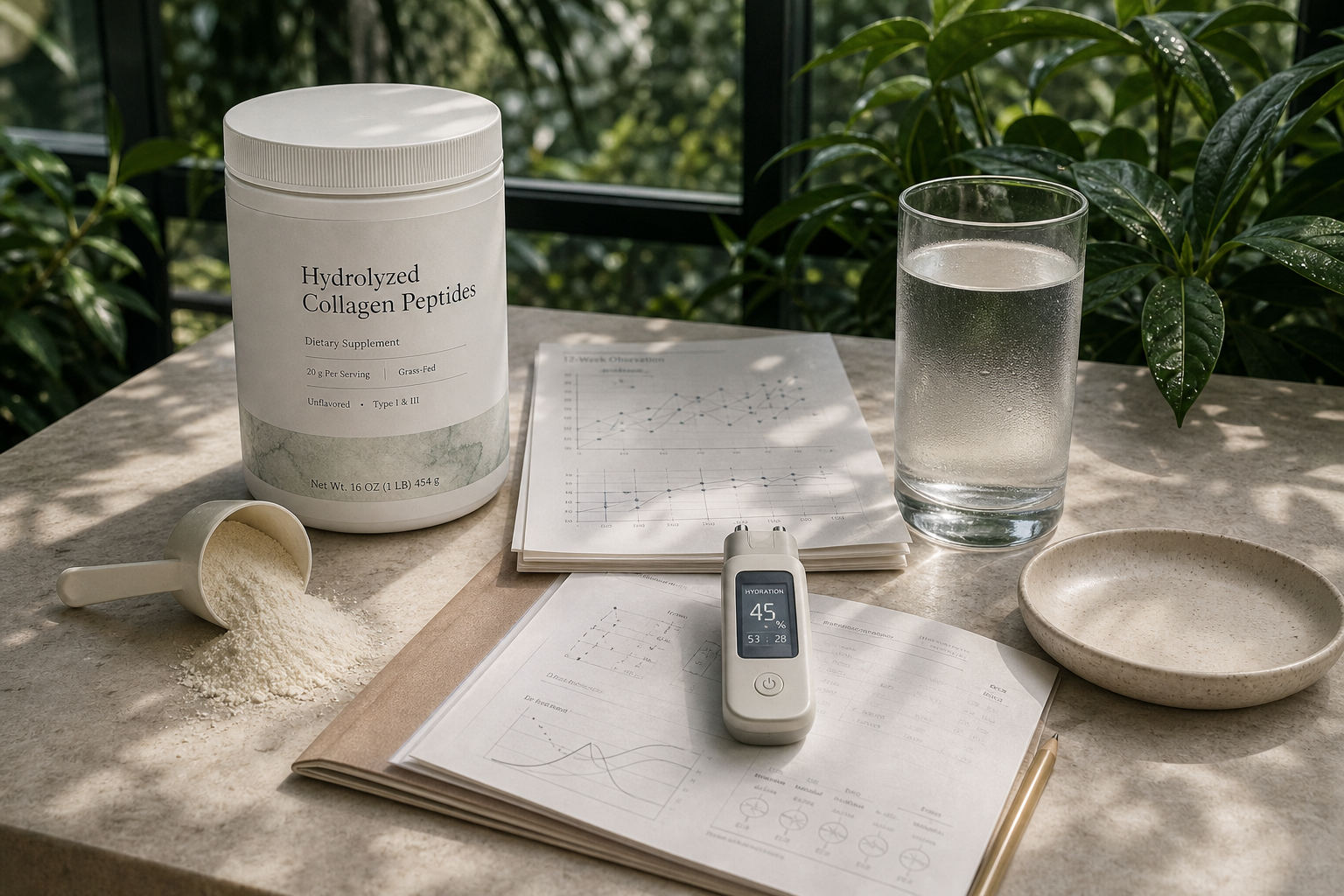
If you decide to try collagen, treat it as a low-stakes skin-support experiment rather than a replacement for proven skin care. Give it enough time to judge fairly, track realistic changes such as dryness or skin feel, and stop if it causes side effects or no longer seems worth the cost.
- Look for hydrolyzed collagen peptides, the form most skin studies use
- Choose a clear dose, usually within about 1-10 g/day
- Prefer third-party testing or transparent quality controls
- Be cautious with fish, shellfish, egg, or bovine allergies
How to Read the Collagen Evidence
The easiest way to read the collagen-skin evidence is to separate measurable skin changes from visible age reversal.
Best-supported outcomes
Hydration, elasticity, and barrier-function measures show the most consistent positive signal. These are instrument-based outcomes and may not translate into a visible wrinkle change that other people notice.
Weaker outcomes
Wrinkle reduction, dermal structure, and broad younger-looking skin claims are less consistent. Some trials report improvements, but newer analyses suggest these findings are sensitive to outliers, measurement differences, and study quality.
Who has been studied most
Most participants in the skin literature are women in midlife. Evidence is thinner for men, people under 35, very old adults, people with advanced skin thinning, and long-term daily users.