

 Deutsch
 Español
 Suomi
 Français
 Bahasa Indonesia
 Italiano
 日本語
 Português
 Tagalog
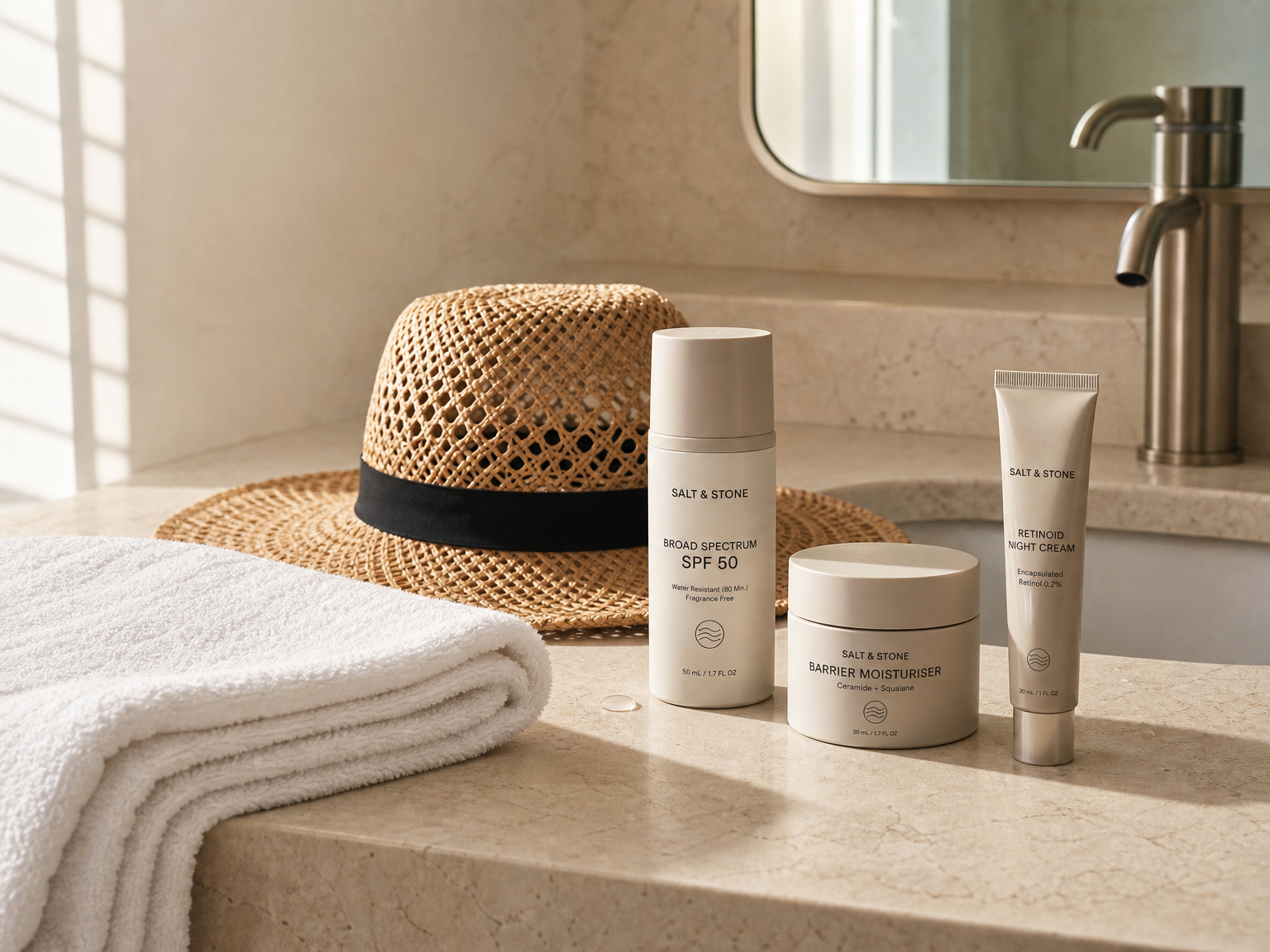

1. What makes skin look older?
Skin changes with age, even when you do everything “right”. Over time, it tends to become thinner, drier and less elastic. That is normal intrinsic aging — the part linked to time, genetics and hormonal changes.
Extrinsic aging is different. It comes from outside exposures, and the biggest one is ultraviolet radiation from the sun and tanning beds. UV exposure builds slowly over time, changing skin texture, deepening wrinkles, creating dark spots and increasing skin cancer risk. Smoking is another major factor. Large reviews link smoking with more visible wrinkles and other signs of skin aging, with a dose-response pattern: heavier or longer smoking is generally linked with more visible change.
That is the practical opening. You cannot pause time, but you can reduce the exposures that make skin age faster than it needs to.

2. The highest-value step: protect skin from UV light
If you choose just one “anti-aging” habit, make it daily sun protection. It is not the flashiest advice, but it is the most evidence-based.
In a randomized trial published in Annals of Internal Medicine, adults assigned to use broad-spectrum sunscreen daily had 24% less skin-aging progression over 4.5 years than those using sunscreen at their own discretion. A smaller one-year study also found that daily SPF 30 use was linked with visible improvement in photoaging measures such as texture, clarity and mottled pigmentation.
A practical sun-protection plan is simple:
- Use broad-spectrum sunscreen, ideally SPF 30 or higher, on exposed skin.
- Reapply when outdoors for long periods, especially after sweating or swimming.
- Use shade, hats, sunglasses and sun-protective clothing rather than relying on sunscreen alone.
- Avoid tanning beds. They expose skin to UV radiation and accelerate photoaging.
The benefit is not only cosmetic. UV exposure also raises skin cancer risk, so this is one of the rare beauty habits that overlaps strongly with long-term health.
3. Retinoids have the best evidence among topicals
Retinoids are vitamin A-derived ingredients applied to the skin. The group includes prescription options such as tretinoin and tazarotene, as well as over-the-counter retinol. They can encourage faster skin-cell turnover and affect collagen-related pathways, which is why dermatologists often use them for photoaged skin.
The evidence is strongest for prescription tretinoin. A systematic review and meta-analysis of randomized trials found that tretinoin improved signs of facial photodamage, including fine and coarse wrinkles, compared with inactive cream. A wider network meta-analysis of topical treatments also found retinoids among the most consistently effective options for fine wrinkles, texture and pigmentation.
Over-the-counter retinol can still be useful, but results are usually slower and less predictable. Retinol has to be converted in the skin before it becomes active, and products vary widely in concentration, stability and packaging.
 Sunscreen: Daily use has unusually direct evidence for slowing visible aging.
 Retinoids: Tretinoin is one of the best-supported topical options for photoaged skin.
 Extras: Vitamin C and collagen may help some people, but results vary.
Source details for these evidence points are listed in the References section below.
How to use a retinoid more comfortably:
- Start at night, two or three times per week.
- Use a pea-sized amount for the whole face.
- Apply moisturiser before or after if your skin gets dry.
- Increase slowly as tolerated.
- Use sunscreen every morning, because retinoids and sun-damaged skin do not mix well.
Retinoids are not a quick fix. Think in months, not days. Mild dryness, peeling or stinging is common at first, especially if you start too aggressively. Retinoids should not be used during pregnancy, and anyone trying to conceive or breastfeeding should check with a clinician.
4. Moisturisers help, but mostly on the surface
Moisturiser is still worth using. Dry skin can make fine lines look sharper, rougher and more uneven. A good moisturiser helps hold water in the outer skin layer, smooths the surface and can temporarily plump fine lines so skin looks fresher.
That does not mean moisturiser reverses structural aging. The FDA makes a useful distinction: if a product only makes wrinkles look less noticeable by moisturising, it is a cosmetic effect. Claims to remove wrinkles or change collagen are a different level of claim.
For everyday use, choose a texture you will actually apply. Ingredients such as glycerin, hyaluronic acid, ceramides, petrolatum, squalane and dimethicone can all be helpful depending on your skin type. Fragrance-free products are often better for sensitive or easily irritated skin.
The best routine is usually boring in the best way: gentle cleanser, moisturiser, sunscreen in the morning and, if appropriate, a retinoid at night.
5. Vitamin C, collagen and nutrition: useful, but keep expectations realistic
Topical vitamin C is popular because vitamin C is involved in collagen formation and can act as an antioxidant. Clinical evidence suggests some vitamin C products can improve wrinkles or signs of photodamage, but the formula makes a big difference. Vitamin C can be unstable, and not every serum penetrates skin well.
Oral collagen supplements are more complicated. Some trials report improvements in hydration, elasticity and wrinkles. However, a recent systematic review found that the apparent benefits became much less convincing when looking at non-industry-funded studies or higher-quality studies. In plain English: collagen may help some people, but it should not be treated as a first-line anti-aging strategy for photoaged skin.
Adequate nutrition still counts. Vitamin C is required for collagen biosynthesis, and adults need regular dietary intake. The NIH lists the recommended daily intake as 90 mg for men and 75 mg for women, with smokers needing more. But there is a difference between correcting a low intake and taking large doses in the hope of looking younger. For already well-nourished adults, megadoses have not been proven to meaningfully reverse skin aging.
6. Habits that protect your results
If you want a routine that is evidence-based and realistic, start here:
- Morning: gentle cleanse if needed, moisturiser if needed, broad-spectrum SPF 30 or higher.
- Daytime: hat, sunglasses and shade when UV exposure is high.
- Evening: gentle cleanse, moisturiser and a retinoid if tolerated and appropriate.
- Long term: avoid tanning beds and do not smoke.
If you smoke, stopping is one of the most meaningful skin-aging steps available. It also improves cardiovascular, lung and cancer risk, which makes it far more valuable than any serum.
