

 Deutsch
 Español
 Suomi
Suomi Français
 Bahasa Indonesia
 Italiano
 日本語
日本語 Português
 Tagalog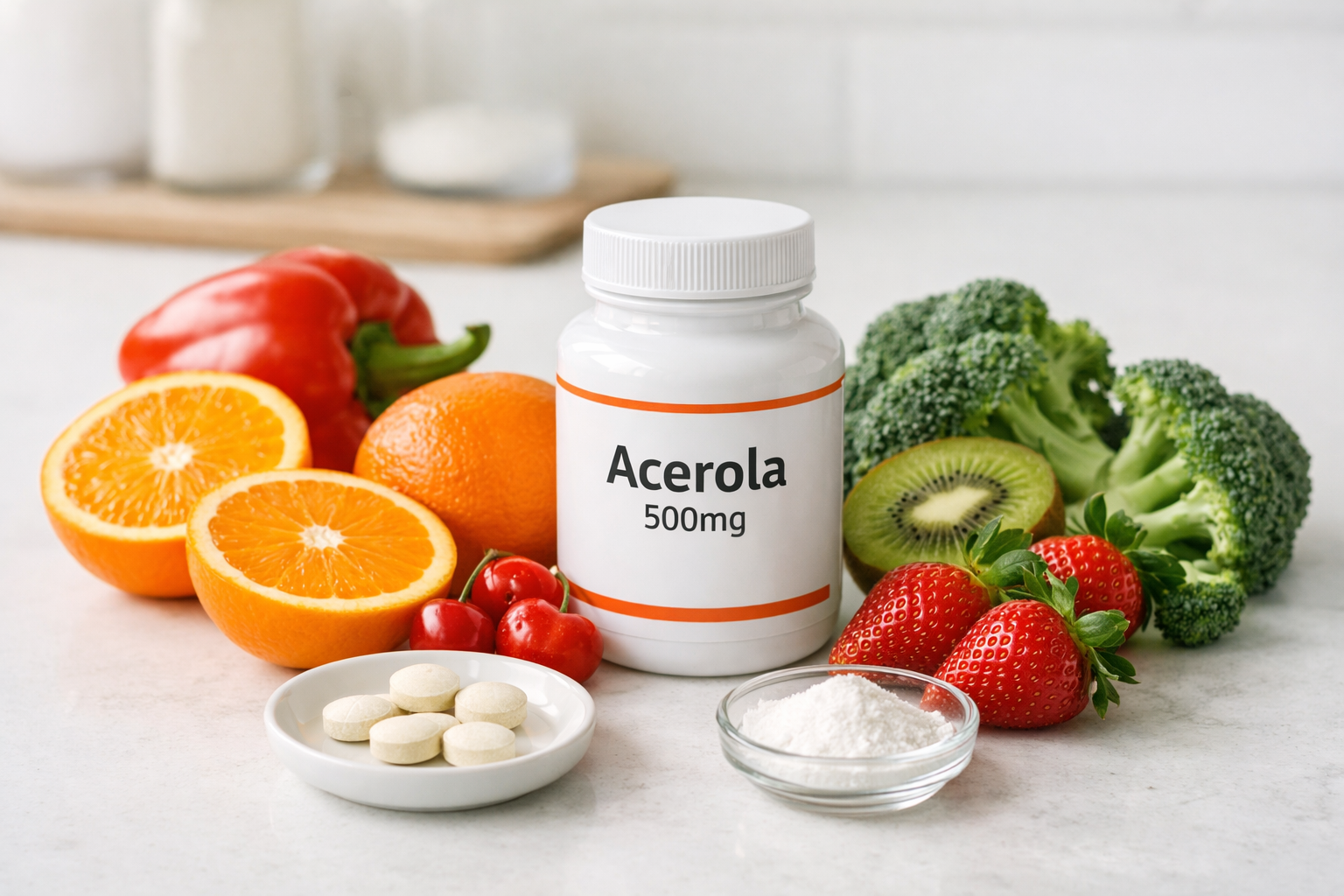
Summary
Vitamin C is an essential water-soluble nutrient that humans must obtain from food or supplements. Its established roles include collagen formation, antioxidant defense, support of normal immune-cell function, and improved absorption of non-heme iron. Supplementation is clearly useful for preventing or correcting low intake and deficiency.
The evidence for broader health claims is much narrower. In healthy adults, routine vitamin C does not prevent common colds overall, though regular use may modestly shorten symptoms and may help during brief extreme physical stress. Standard oral doses are generally well tolerated, while large doses have diminishing absorption and more gastrointestinal side effects.
Quick Facts
What is it useful for?
Vitamin C is useful for preventing or correcting deficiency, supporting normal collagen and immune function, and improving non-heme iron absorption.
Supplement types
Common forms include standard ascorbic acid, mineral ascorbates such as sodium or calcium ascorbate, slow-release products, and liposomal forms.
Interactions
Vitamin C increases iron absorption and may raise concerns in iron-overload states. The source also notes possible interactions involving statin-niacin combinations, chemotherapy or radiation settings, aluminum-containing medicines, estrogen therapy or contraceptives, and some protease inhibitors.
Side effects
Vitamin C is usually well tolerated, but higher oral intakes can cause diarrhea, nausea, abdominal cramps, and other gastrointestinal complaints. Kidney stones are a plausible concern with long-term high-dose use in susceptible people.
Other possible benefits
Regular vitamin C may modestly shorten common-cold duration and severity, and it is used in AREDS-style eye formulas. Broad disease-prevention benefits remain unproven.
Regulatory status
In the US, vitamin C is sold as a dietary supplement without FDA pre-approval. In the EU, authorised claims are limited to approved normal-function wording rather than disease-prevention claims.
What We Already Know About It
Core biology. Humans cannot synthesize vitamin C, so it must come from food or supplements. It is required for collagen formation and contributes to carnitine and catecholamine synthesis, antioxidant defense, and several enzyme systems involved in normal physiology. It also improves absorption of non-heme iron from plant foods and concentrates in immune cells, where it supports epithelial barriers and normal immune function. These roles are well established, and deficiency clearly causes scurvy. (Linus Pauling Institute — Vitamin C; Carr & Maggini — Vitamin C and Immune Function; NIH ODS — Vitamin C Fact Sheet)
Absorption limits. Pharmacokinetic work shows that oral vitamin C is absorbed very efficiently at lower intakes, but fractional absorption falls as doses rise. A 200 mg oral dose is essentially completely bioavailable, while higher doses push plasma toward saturation instead of producing endlessly higher body stores. This is why routine oral megadoses do not translate into proportionally greater physiological benefit. (Levine et al. — Vitamin C Pharmacokinetics; Linus Pauling Institute — Vitamin C)
Clinical meaning. The strongest evidence for supplementation is therefore in meeting requirements, correcting low status, and preventing deficiency. Clinical evidence for the common cold is modest: regular vitamin C may slightly reduce duration and may help people under brief severe physical stress, but it does not prevent colds overall in the general population. Evidence for heart-disease or cancer prevention with routine supplementation in well-nourished adults remains limited or unconvincing. (Cochrane Review — Vitamin C for the Common Cold; Böttger et al. — Umbrella Review; USPSTF Evidence Review)
Summary of Relevant Scientific Research
Reference values and deficiency basics — NIH ODS and EFSA
The NIH and EFSA summaries frame vitamin C as an essential nutrient first. They outline adult intake benchmarks, explain that scurvy can appear after sustained very low intake, and note that reference values are based mainly on maintaining adequate vitamin C body status rather than promising major chronic-disease prevention. (NIH ODS — Vitamin C Fact Sheet; EFSA — Dietary Reference Values for Vitamin C)
Why oral megadoses plateau — Levine et al.
This pharmacokinetic study showed that oral vitamin C is highly bioavailable at modest intakes, with about 200 mg essentially completely absorbed, but higher doses become progressively less efficient. Plasma approaches saturation rather than rising in a straight line, supporting the view that very large oral doses have diminishing returns. (Levine et al. — Vitamin C Pharmacokinetics)
Common cold evidence stays modest — Cochrane Review
Across prevention trials using regular daily supplementation of at least 200 mg/day, vitamin C did not reduce cold incidence in the general population. It did, however, modestly reduce duration and severity and appeared more useful in people exposed to brief severe physical stress such as marathon runners, skiers, and soldiers in cold environments. (Cochrane Review — Vitamin C for the Common Cold)
Mechanism supports normal immune function — Carr and Maggini
This review explains why vitamin C remains biologically plausible for immune support: it accumulates in immune cells, supports epithelial barrier integrity, helps neutrophil movement and microbial killing, and participates in lymphocyte function. The authors suggest supplementation may matter most when baseline status is low or physiological demands rise. (Carr & Maggini — Vitamin C and Immune Function)
Context-specific uses and limits — NCCIH, NCI, and higher-level reviews
Vitamin C has more context-specific evidence than broad wellness marketing suggests. NCCIH notes its role in AREDS-style eye formulas, while the NCI stresses that oral and intravenous vitamin C are not interchangeable in cancer discussions. Higher-level reviews do not support routine vitamin C supplements as proven tools for preventing cardiovascular disease or cancer in healthy adults. (NCCIH — Eye Conditions and Supplements; NCI PDQ — Vitamin C; Böttger et al. — Umbrella Review; USPSTF Evidence Review)
Beliefs, Myths & Unproven Claims
Myth: Daily vitamin C prevents most colds
The best evidence does not support vitamin C as broad cold prevention for the general population. Regular use may modestly shorten symptoms and may help under brief severe physical stress, but that is not the same as stopping most people from catching colds. (Cochrane Review — Vitamin C for the Common Cold; NCCIH — Myth-Busting Natural Products)
Myth: Natural vitamin C is superior to synthetic
Current evidence does not show a clinically meaningful difference in biological activity or bioavailability between natural and synthetic L-ascorbic acid. Products promoted with added flavonoids are also not clearly proven to improve vitamin C bioavailability enough to matter clinically for most users. (Linus Pauling Institute — Supplemental Forms of Vitamin C)
Myth: Premium forms are proven better absorbed and more effective
Ester-C, slow-release products, and liposomal forms are often marketed as gentler or superior, but the evidence is limited. Some short-term studies suggest liposomal products may alter acute uptake, yet current data do not show better long-term health outcomes than standard ascorbic acid. (Linus Pauling Institute — Supplemental Forms of Vitamin C; Recent PubMed Study — Liposomal Vitamin C; Recent PubMed Study — Vitamin C Form Comparisons)
Myth: Vitamin C supplements prevent cancer, heart disease, or “detox” the body
Trial-level evidence does not establish routine vitamin C supplementation as a way to prevent cardiovascular disease or cancer in healthy adults. EU authorised claims are much narrower, focusing on normal physiological functions rather than disease-prevention promises, and intravenous vitamin C should not be treated as equivalent to ordinary oral supplements. (Böttger et al. — Umbrella Review; USPSTF Evidence Review; EFSA — Vitamin C Immune Function Claim Opinion; NCI PDQ — Vitamin C)
Detailed Research Observations
Historical background and essential body functions
Vitamin C’s most firmly established story is deficiency prevention, especially scurvy. The historical record matters because it shows where the evidence is strongest: prolonged lack of vitamin C can damage connective tissue, gums, wound healing, and overall health, while restoring intake corrects the problem. This is why vitamin C is best understood first as an essential nutrient rather than a modern cure-all. The NIH summary still points to the anti-scurvy history as central to understanding the vitamin’s proven role. (NIH ODS — Vitamin C Fact Sheet)
Mechanistically, vitamin C is required for collagen synthesis and contributes to carnitine synthesis, catecholamine metabolism, antioxidant defense, and several enzyme systems. It also improves absorption of non-heme iron from plant foods, which gives it a practical nutritional role beyond simple deficiency prevention. These are core functions with strong biochemical support, and they explain why low intake can affect connective tissue, fatigue, and broader physiological status. (Linus Pauling Institute — Vitamin C)
Immune relevance and who may need supplementation most
Vitamin C accumulates in immune cells and helps support epithelial barriers, neutrophil migration, microbial killing, and lymphocyte function. That makes it scientifically reasonable to say that vitamin C contributes to normal immune function. At the same time, normal-function support is not the same as guaranteed antiviral activity or dramatic cold prevention in people who are already well nourished. The source material repeatedly makes this distinction between biochemical importance and clinically large effects. (Carr & Maggini — Vitamin C and Immune Function; EFSA — Vitamin C Immune Function Claim Opinion)
Most adults can get enough vitamin C from a balanced diet rich in fruit and vegetables, but deficiency has not disappeared. NHANES-based analysis suggests roughly 7% of US adults still meet biochemical criteria for deficiency, and risk is higher in some subgroups. Smokers also need more vitamin C than nonsmokers, reflecting higher oxidative burden and turnover. This makes supplementation more defensible for low intake, restricted diets, smoking exposure, or signs of inadequate status than as a blanket recommendation for everyone. (NHANES Status Paper — Vitamin C Deficiency in US Adults; NIH ODS — Vitamin C Fact Sheet; Mayo Clinic — Vitamin C)
Absorption, saturation, and why oral and IV data are not interchangeable
Pharmacokinetic research is one of the clearest checks on exaggerated vitamin C marketing. Oral vitamin C is very efficiently absorbed at lower doses, and a 200 mg dose is essentially completely bioavailable. As intake rises, fractional absorption falls and plasma approaches saturation rather than climbing without limit. In practical terms, this means that swallowing several grams a day does not automatically produce proportionally greater nutritional benefit, which is why the source repeatedly warns against assuming that more is always better. (Levine et al. — Vitamin C Pharmacokinetics; Linus Pauling Institute — Vitamin C)
The same section also stresses that consumer discussions often blur oral vitamin C with intravenous vitamin C, even though they are not interchangeable. IV dosing can produce much higher plasma concentrations, which is why cancer-related or experimental IV data cannot be used to justify ordinary oral supplement claims. The NCI notes that efficacy evidence for IV vitamin C in cancer remains mixed and that the safety profile differs, including concerns such as hemolysis in G6PD deficiency and interference with some glucose tests. (NCI PDQ — Vitamin C; Linus Pauling Institute — Vitamin C)
Supplement forms and what the evidence really says
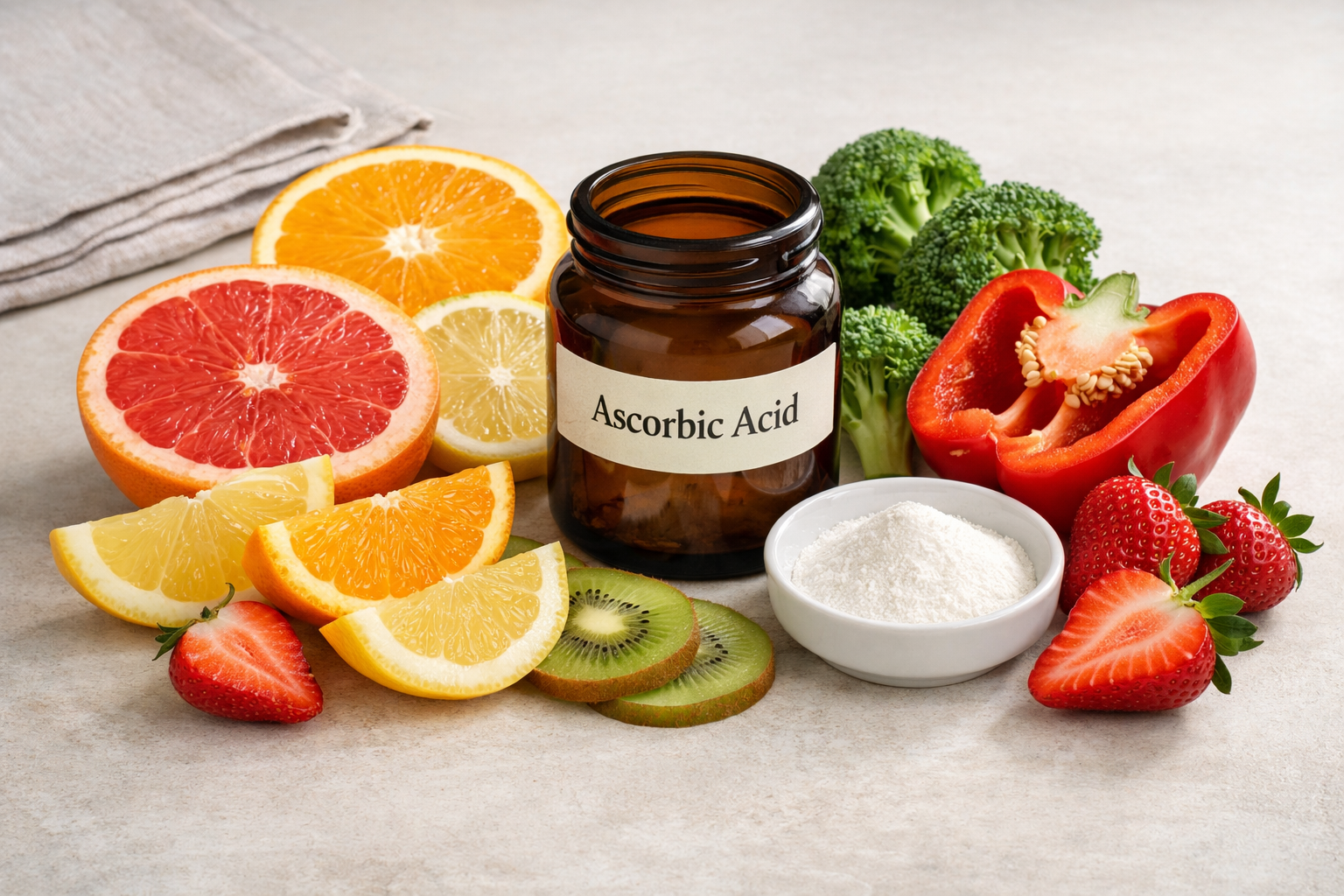
Standard ascorbic acid remains the reference form against which alternatives are compared. The source is clear that current evidence does not support a meaningful clinical advantage for “natural” over synthetic vitamin C, because the active L-ascorbic acid molecule is the same. Mineral ascorbates such as sodium ascorbate and calcium ascorbate may be easier for some users to tolerate, but at high doses they also add extra sodium or calcium. This makes form choice partly a tolerability and formulation question rather than proof of superior efficacy. (Linus Pauling Institute — Supplemental Forms of Vitamin C)
The premium-form market moves beyond what the evidence can firmly support. Slow-release formulas have uncertain benefit, Ester-C claims rely partly on limited or unpublished support, and liposomal products remain more interesting scientifically than clinically proven. Some short-term pharmacokinetic studies suggest liposomal formulations may improve acute plasma or leukocyte uptake, but the article notes that long-term health outcome evidence is still lacking. Price and marketing claims therefore should not be confused with proven superiority over ordinary ascorbic acid. (Linus Pauling Institute — Supplemental Forms of Vitamin C; Recent PubMed Study — Liposomal Vitamin C; Recent PubMed Study — Vitamin C Form Comparisons)
Where supplementation has the best support in practice
The clearest reason to use a vitamin C supplement is simple but important: preventing or correcting inadequate intake and deficiency. The source also highlights a practical supportive role in improving non-heme iron absorption, which can matter for people whose iron intake depends heavily on legumes, grains, and vegetables. These uses align with vitamin C’s established nutritional functions and do not depend on speculative disease claims. (NIH ODS — Vitamin C Fact Sheet; Linus Pauling Institute — Vitamin C)
Beyond adequacy, the article points to evidence in selected combination protocols rather than vitamin C as a solo hero ingredient. A good example is the AREDS-style eye formula, where vitamin C is one component of a multi-nutrient strategy that can slow progression to late age-related macular degeneration in selected patients. Common-cold evidence is also more limited than many people assume: regular daily supplementation does not reduce cold incidence overall, though it may modestly shorten duration and may help people under brief severe physical stress. Starting vitamin C only after symptoms begin does not appear reliably helpful. (NCCIH — Eye Conditions and Supplements; Cochrane Review — Vitamin C for the Common Cold; NCCIH — Myth-Busting Natural Products)
What the evidence does not establish, plus practical caution
The article repeatedly separates vitamin C-rich diets from vitamin C supplement claims. Observational studies linking higher vitamin C intake with better health do not prove that a pill alone creates the same effect, because foods rich in vitamin C come with fiber, potassium, polyphenols, and healthier overall dietary patterns. Higher-level evidence reviews do not support routine vitamin C supplementation as a proven strategy to prevent cardiovascular disease or cancer in healthy adults. That distinction between diet quality and isolated supplementation is one of the key interpretive points in the source. (Böttger et al. — Umbrella Review; USPSTF Evidence Review)
Safety and regulation add more realism. Vitamin C is generally safe at normal supplemental doses, but gastrointestinal complaints become more likely as intake approaches or exceeds the US upper intake level of 2,000 mg/day, and kidney stones are a plausible concern in susceptible people using high doses long term. In the US, products are sold under the dietary supplement framework without FDA pre-approval; in the EU, authorised claims are narrower than marketing often implies and focus on normal physiological contributions rather than disease treatment or prevention. (NIH ODS — Vitamin C Fact Sheet; JAMA Internal Medicine — Kidney Stones Study; FDA — Dietary Supplements Q&A; European Commission — EU Register of Health Claims)
Regulatory Status (EU and US)
United States
In the US, vitamin C products are regulated as dietary supplements under the Dietary Supplement Health and Education Act framework. The FDA does not pre-approve vitamin C supplements before they reach the market; manufacturers are responsible for compliant labeling and product quality. The current label Daily Value for vitamin C is 90 mg, which is a labeling reference rather than personalized medical guidance. (FDA — Dietary Supplements Q&A; FDA — Daily Value on Nutrition and Supplement Facts Labels)
European Union
In the EU, label reference intake and scientific dietary guidance are distinct. Regulation (EU) No 1169/2011 sets a label reference intake of 80 mg for vitamin C, while EFSA’s scientific dietary reference values for adults are higher. EU law allows specific authorised claims such as vitamin C contributing to the normal function of the immune system, but it does not permit disease-treatment or overreaching disease-prevention claims simply because a product contains vitamin C. (EUR-Lex — Regulation (EU) No 1169/2011; EFSA — Dietary Reference Values for Vitamin C; European Commission — EU Register of Health Claims; EFSA — Vitamin C Immune Function Claim Opinion)
Dosage and Standardization
Adults: US reference intakes are 90 mg/day for men and 75 mg/day for women; smokers need 35 mg/day more.
Studied doses: Common-cold trials used 200 mg/day or more; AREDS formulas include 500 mg in combination.
Upper limit: 2,000 mg/day due to gastrointestinal effects.
Safety And Interactions
At usual dietary and supplemental intakes, vitamin C is generally considered safe. The most common side effects at higher oral intakes are diarrhea, nausea, and abdominal cramping, especially as intake approaches or exceeds the adult upper intake level of 2,000 mg/day. (NIH ODS — Vitamin C Fact Sheet; Mayo Clinic — Vitamin C)
Kidney stones are a plausible concern with long-term high-dose use, especially in susceptible people or those with a history of stones. Vitamin C also increases iron absorption, so people with hereditary hemochromatosis or other iron-overload conditions should be cautious. (JAMA Internal Medicine — Kidney Stones Study; USPSTF Evidence Review)
The source also notes possible interaction concerns involving chemotherapy or radiation settings, statin-niacin combinations, aluminum-containing medicines, estrogen therapy or contraceptives, and some protease inhibitors. High-dose intravenous vitamin C has additional route-specific risks, including hemolysis in people with G6PD deficiency and interference with some strip-based glucose measurements. (NIH ODS — Vitamin C Fact Sheet; Mayo Clinic — Vitamin C; NCI PDQ — Vitamin C)
Conclusion
Vitamin C is essential and its best-supported uses are preventing deficiency, meeting increased needs in some people, supporting normal collagen and immune function, and improving non-heme iron absorption. Oral megadoses have diminishing absorption returns, so higher intake is not automatically better.
Evidence for routine common-cold prevention is limited, though regular use may modestly shorten symptoms and may help people under brief severe physical stress. Outside selected uses such as combination AREDS-style eye formulas, routine vitamin C supplementation has limited or unconvincing evidence for preventing cancer or cardiovascular disease.
Disclaimer
Disclaimer: We attempt to do our best to find relevant, accurate and most up to date information available in both, the public domain and in the clinical and medical research community. We recommend reviewing scientific sources for official information on the subject. This post is not intended as medical advice. Each individual person's health conditions vary and we advise to consult a doctor before taking any supplements.