

 Deutsch
 Español
 Suomi
 Français
 Bahasa Indonesia
 Italiano
 日本語
 Português
 Tagalog


1. What counts as enough exercise?
The main public-health target is straightforward: aim for 150 to 300 minutes of moderate-intensity aerobic activity each week, or 75 to 150 minutes of vigorous activity. Moderate activity means you are breathing faster, but you can still speak in full sentences. Brisk walking, easy cycling, dancing, water aerobics, gardening, and active household jobs can all count if they raise your effort level.
Vigorous activity feels harder. You can speak only a few words before you need a breath. Some people enjoy running, faster cycling, hill walking, or more intense swimming. Others prefer to stay in the moderate range, which is absolutely fine.
You can divide the weekly target in whatever way suits you. Thirty minutes on five days is one simple option, but it is not the only one. Ten-minute walks count. So do shorter bouts spread through the day. Current U.S. guidance no longer says exercise has to happen in long blocks to be useful.
2. Minutes are not the whole story
For healthy ageing, aerobic minutes are only one part of the picture. Ageing well also depends on keeping enough strength to get out of a chair, carry shopping, climb stairs, and recover from a stumble.
That is why WHO and U.S. guidance also recommend muscle-strengthening activities on at least 2 days a week. This can mean lifting weights, using resistance bands, doing bodyweight exercises, climbing stairs, or doing heavier garden work. The aim is to work the major muscle groups: legs, hips, back, chest, abdomen, shoulders, and arms.
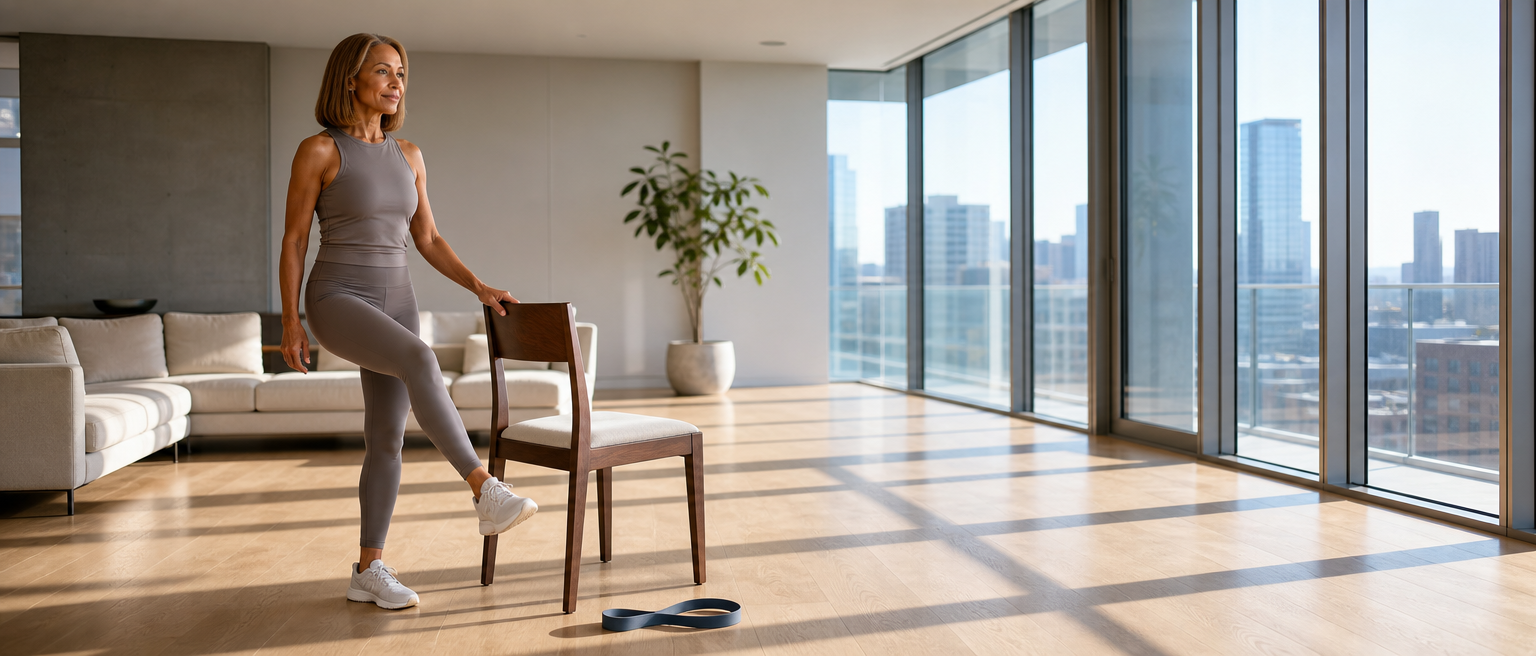
Balance work is the third piece. Older adults are advised to include varied, multicomponent activity that emphasizes strength and balance on 3 or more days a week. Examples include tai chi, yoga, heel-to-toe walking, standing on one foot near a stable surface, sit-to-stand practice, and structured fall-prevention classes.
This combination is useful because aerobic exercise alone does not fully train balance or strength. A 2024 systematic review found that multicomponent exercise improved physical function in both healthy and frail older adults. A global expert consensus on healthy longevity also emphasized combining aerobic, resistance, and balance training rather than relying on cardio alone.
3. What the evidence says
The overall pattern is consistent: people who move more tend to age better. That includes lower risks of early death, cardiovascular disease, disability, falls, and loss of physical function. Some evidence also links activity with better mood and a lower risk of cognitive decline, though the cognitive effects appear smaller and less predictable than the physical benefits.
 Mortality: Guideline-range activity was linked with about 19% to 30% lower all-cause mortality.
 Falls: Exercise reduced fall rates by about 23%; balance and functional training stood out.
 Steps: Each extra 1,000 steps per day was associated with lower mortality risk.
Walking deserves its own mention because it is simple, low-cost, and easy to adjust. You can make it gentler by walking on flat ground at a comfortable pace, or harder by adding hills, speed, or longer routes. A separate steps meta-analysis found that in adults aged 60 and over, mortality risk fell as daily steps rose up to roughly 6,000 to 8,000 steps per day, after which the curve tended to flatten.
Step counts are not official exercise prescriptions, and they are not magic numbers. But they can be helpful if minutes feel abstract. For many people, moving from 3,000 to 4,000 steps a day is a more realistic first goal than jumping straight to 150 minutes a week.
4. If you are starting from very little
The biggest relative gain often comes when someone moves from doing no activity to doing some. That is one of the most encouraging messages in the guidelines: you do not need to be fit before exercise can help.
Start small enough that you can repeat it. That might mean a 5-minute walk after lunch, standing up during TV adverts, doing five slow sit-to-stands from a chair, or practising balance while holding the kitchen counter. Once that feels normal, add a few minutes, another day, or a slightly harder version.
A newer individual-participant meta-analysis estimated that even small increases in moderate-to-vigorous activity, such as a few extra minutes per day, could prevent deaths at a population level, especially among the least active people. This does not mean five minutes is the final goal. It means five minutes is worth doing.
5. Practical ways to build a week
A balanced week does not need to be complicated. One simple version is:
- Brisk walking for 30 minutes on 5 days.
- Strength exercises on 2 days, with at least a day between harder sessions.
- Balance practice for 10 to 15 minutes on 3 days.
Another version is three longer walks, two resistance-band sessions, and one tai chi or yoga class. If you prefer gardening, dancing, swimming, or cycling, those can fit too. The best routine is one you can keep doing during normal weeks, not just ideal weeks.
Build up gradually. Add time before intensity. If you already meet the minimum target and feel good, more activity can bring additional benefit, especially up to about 300 minutes of moderate activity per week. But more is not always better for every person. Recovery, joint comfort, sleep, medications, chronic conditions, and fall risk all affect the right plan.
6. Safety and individual needs
Most healthy older adults can begin light or moderate activity without a medical check-up, especially if they increase gradually. But it is worth speaking with a clinician or physiotherapist if you have chest pain, unexplained shortness of breath, dizziness, recent falls, severe joint pain, a heart condition, poorly controlled diabetes, or a chronic condition that limits movement.
Stop exercising and seek advice if you feel chest pressure, faintness, sudden severe breathlessness, or new neurological symptoms. Mild muscle soreness can happen when you start strength work, but sharp pain is a sign to change course.
Frailty does not mean exercise is off the table. It usually means the plan should be more supervised, more gradual, and more focused on strength, balance, and safe function.