

 Deutsch
 Español
 Suomi
Suomi Français
 Bahasa Indonesia
 Italiano
 日本語
日本語 Português
 Tagalog
Summary
Taurine is a sulfur-containing amino sulfonic acid made in the body and obtained mainly from seafood, meat, dark poultry, and some dairy. It is not used to build proteins like standard amino acids, but it supports normal physiology through roles in bile acid conjugation, cell-volume regulation, membrane stability, and tissue function in the heart, muscle, retina, and nervous system.
For most healthy adults, taurine is not classically essential, although it can become conditionally essential in infancy and certain clinical settings. As a supplement, the strongest human evidence supports modest improvements in cardiometabolic markers such as blood pressure, triglycerides, and some glucose-control measures. Evidence for exercise, brain, eye, and anti-aging uses remains mixed or preliminary.
Quick Facts
What is it useful for?
Most consistently studied for modest improvements in cardiometabolic risk markers, especially blood pressure, triglycerides, and some glucose-control measures.
Supplement types
Most studies use plain taurine in capsules, tablets, powders, or drinks. Evidence for proprietary blends or special complexes is limited.
Interactions
Taurine may add to the effects of blood-pressure-lowering medicines. Stimulant-heavy products can also complicate safety interpretation, and a possible lithium interaction has been noted as a precaution.
Side effects
Taurine appears generally well tolerated at common studied doses. Many energy-drink adverse events are more strongly linked to caffeine or mixed exposures than taurine itself.
Other possible benefits
Beyond cardiometabolic markers, taurine has biologic relevance to muscle, retinal, and nervous-system tissues. Human evidence for these other uses remains limited or mixed.
Regulatory status
In the US, taurine supplements are sold under the dietary supplement framework rather than as approved drugs. In the EU, taurine can be used in foods and supplements, but taurine-specific health claims face substantiation hurdles.
What We Already Know About It
Core physiology. Taurine is a non-proteinogenic amino sulfonic acid found in especially high concentrations in excitable and metabolically active tissues, including skeletal muscle, heart, retina, and parts of the nervous system. It appears to help stabilize membranes, regulate cell volume, support bile acid conjugation, and influence redox balance, mitochondrial function, and ion handling. These roles make taurine biologically plausible in cardiovascular, metabolic, muscular, and retinal contexts. PubMed — Taurine physiology and therapeutic applications review
Essentiality depends on context. In most healthy adults, taurine is not considered an essential nutrient in the classical sense because the body can synthesize some of it and obtain more from food. However, the picture changes in infancy and certain clinical states. Reviews of infant nutrition and older parenteral-nutrition research support taurine as conditionally essential in these settings, where low taurine status and related dysfunction have been documented. PubMed — Taurine in infant nutrition review; PubMed — Taurine-free parenteral nutrition and retinal findings
Human evidence is uneven. The strongest present-day clinical signal is in cardiometabolic biomarkers, especially blood pressure, triglycerides, and some glycemic measures. Exercise evidence is mixed, with a somewhat better signal for endurance than for strength or power, while neurological, eye, and anti-aging uses remain much less mature in human trials. Overall, taurine looks most credible as a modest adjunct for cardiometabolic risk profiles rather than a universal performance or longevity supplement. Nutrition Reviews — meta-analysis of 34 taurine RCTs; Nature Reviews Endocrinology — metabolic syndrome meta-analysis; Waldron et al. — oral taurine and endurance meta-analysis; NIH — Taurine unlikely to be a good aging biomarker
Summary of Relevant Scientific Research
Cardiometabolic biomarkers improve modestly — Nutrition Reviews
A meta-analysis of 34 randomized clinical trials found that taurine significantly improved fasting glucose, HbA1c, fasting insulin, HOMA-IR, triglycerides, total and LDL cholesterol, blood pressure, inflammatory markers, oxidative-stress markers, and some liver enzymes. The review suggested 1.5 to 3.0 g per day and interventions of at least 8 weeks were often more favorable, but the outcomes were mainly biomarkers rather than hard clinical events. Nutrition Reviews — meta-analysis of 34 taurine RCTs
Blood pressure and metabolic risk — Nature Reviews Endocrinology and cardiovascular review
Another synthesis reported that taurine doses from 0.5 to 6 g per day for 5 to 365 days reduced systolic and diastolic blood pressure, fasting glucose, and triglycerides without a clear rise in adverse effects. A separate cardiovascular review also reported lower heart rate and blood pressure, with some improvements in heart-failure-related measures in cardiovascular populations. Nature Reviews Endocrinology — metabolic syndrome meta-analysis; PMC — cardiovascular systematic review of taurine
Exercise evidence is mixed — Waldron et al., JISSN, and cycling trial
Higher-level sports evidence suggests taurine may provide a small-to-moderate endurance benefit overall, often at about 1 to 6 g per day. But not all trials are positive: a trained-cyclist study using 1,000 mg taken 2 hours before a 4-km time trial found no performance benefit, reinforcing that dose, timing, training status, and exercise type likely matter. Waldron et al. — oral taurine and endurance meta-analysis; JISSN — taurine in sports and exercise review; PubMed — trained cyclist taurine trial
Conditional essentiality in special settings — Infant nutrition and parenteral nutrition studies
Taurine is not usually essential for healthy adults, but evidence becomes clearer in infancy and long-term parenteral nutrition. Reviews argue that taurine should be considered conditionally essential in infant nutrition, and older clinical work showed that taurine-free parenteral nutrition lowered plasma taurine and that abnormal electroretinograms improved when taurine was restored in some children. PubMed — Taurine in infant nutrition review; PubMed — taurine repletion and electroretinogram findings
Food patterns do not prove longevity effects — WHO-CARDIAC, Malmö cohort, and NIH
Analytical food research shows taurine comes mainly from animal foods, while ecological data from the WHO-CARDIAC study linked higher urinary taurine with lower ischemic heart disease mortality across populations. But newer human evidence did not support broad dementia or aging narratives: a Malmö cohort found no convincing dementia protection, and NIH researchers concluded taurine is unlikely to be a useful aging biomarker. PubMed — taurine content of foods; PubMed — WHO-CARDIAC taurine epidemiology; PubMed — Malmö cohort on taurine intake and dementia; NIH — Taurine unlikely to be a good aging biomarker
Beliefs, Myths & Unproven Claims
Taurine is a stimulant like caffeine
This is misleading. Taurine is commonly associated with energy drinks, but EFSA concluded that many acute adverse events reported with those products were more likely explained by caffeine than taurine at the exposure levels it assessed. Taurine may have physiologic effects, but it should not be confused with a central nervous system stimulant. EFSA — opinion on taurine and glucuronolactone in energy drinks
Taurine reliably boosts every workout
The evidence does not support a universal performance claim. Meta-analytic work suggests a small endurance benefit may be possible in some settings, but individual trials are inconsistent and benefits for strength, power, or short all-out performance are much less clear. Taurine is better viewed as a possible endurance aid in specific cases, not a guaranteed ergogenic. Waldron et al. — oral taurine and endurance meta-analysis; PubMed — trained cyclist taurine trial; JISSN — taurine in sports and exercise review
Taurine is proven for anti-aging and brain protection
That is not strongly supported in humans. NIH researchers reported that taurine is unlikely to be a good aging biomarker, and a human cohort study did not support a protective association between taurine intake and dementia risk. Mechanistic interest remains, but broad claims about longevity or dementia prevention are still unproven. NIH — Taurine unlikely to be a good aging biomarker; PubMed — Malmö cohort on taurine intake and dementia
Marketed benefits are the same as approved health claims
In Europe, taurine-related claims around oxidative protection, fatigue, energy metabolism, and physical performance have been formally reviewed rather than accepted by default. Popular marketing can therefore exceed the evidentiary standard needed for authorized claims, even when taurine itself remains legally available in foods and supplements. EFSA Journal 2009 — taurine-related health claims opinion
Detailed Research Observations
Dietary sources, intake, and what taurine actually is
Taurine is often grouped with amino acids, but technically it is an amino sulfonic acid rather than a standard protein-building amino acid. Even so, it is abundant in human tissues and participates in bile acid conjugation, osmoregulation, calcium handling, membrane stabilization, and redox balance. This broad physiologic role helps explain why researchers study taurine in muscle, heart, retina, liver, and nervous-system contexts rather than in only one organ system. PubMed — Taurine physiology and therapeutic applications review
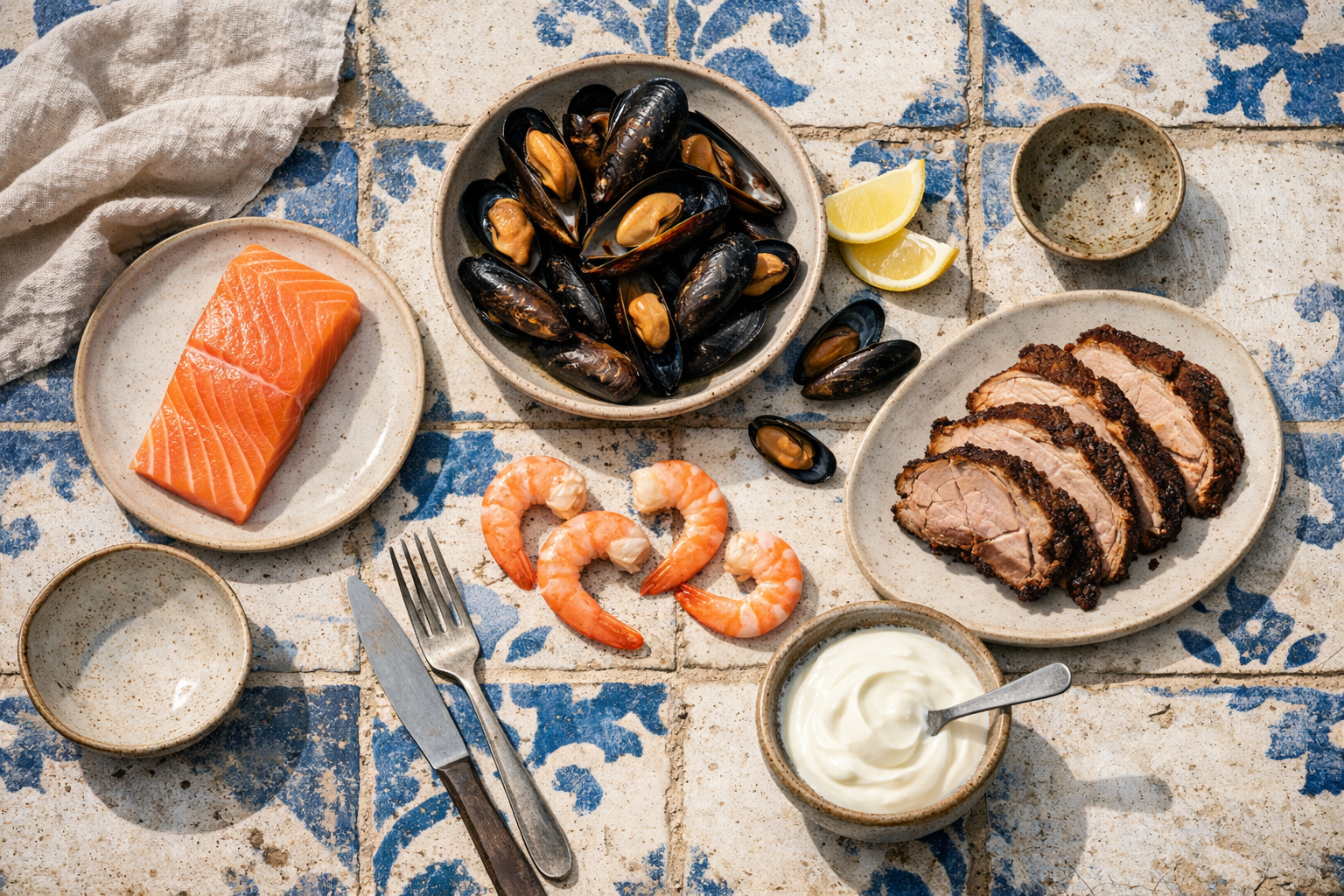
Preformed taurine comes mainly from animal foods. Analytical food research found meaningful amounts in meat, seafood, and dairy-containing foods, while plant foods contained little or none. FDA background material cited in a GRAS notice estimated that omnivorous diets may provide roughly 9 to 400 mg per day. This helps explain why seafood, shellfish, dark poultry meat, and other meats are practical dietary sources and why vegan diets are generally much lower in preformed taurine. PubMed — taurine content of foods; FDA — GRAS notice response letter for taurine; Memorial Sloan Kettering — Taurine monograph
Conditionally essential in infancy and clinical nutrition
For most healthy adults, taurine is not considered an essential nutrient because the body can synthesize some taurine from sulfur-containing amino acids. The clinical picture changes in special circumstances. Reviews of infant nutrition argue that taurine is conditionally essential in infancy, particularly in very-low-birth-weight infants and other high-dependency settings. This means physiologic importance becomes clearer when endogenous production and ordinary intake may not fully meet needs. PubMed — Taurine in infant nutrition review
Older clinical work on long-term taurine-free parenteral nutrition showed low plasma taurine levels and signs of deficiency-related dysfunction. In some pediatric patients, abnormal electroretinograms improved after taurine was reintroduced. These observations matter because they support taurine’s importance in development and retinal function, but they do not mean routine supplementation is necessary for the general population. The evidence is strongest for specific medical contexts rather than for universal supplementation. PubMed — taurine repletion and electroretinogram findings
Absorption, bioavailability, and why plain taurine dominates the evidence
FDA background material states that taurine is absorbed in the small intestine and that excess is excreted by the kidneys. This basic handling is important for two reasons. First, it supports the idea that oral taurine is readily available after ingestion. Second, it shows that the body regulates excess by urinary excretion rather than by unlimited storage. That makes taurine a nutrient with clear bioavailability but also with physiologic control over excess exposure. FDA — GRAS notice response letter for taurine
Most human intervention studies use plain oral taurine in capsules, powders, tablets, or drinks. There is currently little evidence that proprietary taurine blends or specialized delivery systems outperform standard forms. This matters in the supplement market because consumers are often exposed to multi-ingredient pre-workouts and energy drinks, but the taurine-specific evidence base is built mostly on plain taurine rather than stimulant-heavy or branded complexes. JISSN — taurine in sports and exercise review
Cardiometabolic findings are the strongest clinical signal
The most convincing human evidence currently centers on cardiometabolic risk markers. A recent meta-analysis of 34 randomized controlled trials reported improvements in fasting glucose, HbA1c, fasting insulin, HOMA-IR, triglycerides, total cholesterol, LDL cholesterol, blood pressure, inflammatory markers, oxidative-stress markers, and some liver enzymes. Another synthesis focused on metabolic syndrome risk also found significant reductions in systolic and diastolic blood pressure, fasting blood glucose, and triglycerides across doses ranging from 0.5 to 6 g per day. Taken together, these findings support taurine as a reasonable adjunct for improving cardiometabolic biomarker profiles, especially when baseline risk is already elevated. Nutrition Reviews — meta-analysis of 34 taurine RCTs; Nature Reviews Endocrinology — metabolic syndrome meta-analysis
At the same time, these benefits are mainly improvements in surrogate markers rather than proof of fewer heart attacks, strokes, diabetes complications, or deaths. Many studies are relatively small, short, or conducted in people with pre-existing metabolic or cardiovascular issues. Individual trial results can also differ. One placebo-controlled diabetes trial using 3,000 mg per day for 8 weeks reported broad metabolic improvements, while another study adding taurine to a low-calorie diet in diabetes produced a more mixed pattern. This is why the overall picture is best described as promising but adjunctive rather than definitive stand-alone therapy. PubMed — taurine trial in type 2 diabetes; Nutrition & Metabolism — taurine plus low-calorie diet trial; PMC — cardiovascular systematic review of taurine
Blood pressure, heart function, and inflammation deserve separate attention
Taurine’s blood-pressure signal appears comparatively consistent. A randomized prehypertension study reported that 1.6 g per day for 12 weeks lowered clinic and 24-hour ambulatory blood pressure. Broader meta-analyses also found significant reductions in systolic and diastolic pressure. In cardiovascular disease populations, the evidence may be somewhat stronger than in healthy adults: a cardiovascular review reported lower heart rate and improvements in some heart-failure-related measures such as NYHA class and left ventricular ejection fraction, although many of the included studies were small. Journal of Hypertension — prehypertension taurine study; PMC — cardiovascular systematic review of taurine
Shorter heart-failure studies also suggest taurine may affect inflammatory and anti-atherogenic markers. In one trial, 500 mg three times daily for 2 weeks increased taurine levels and favorably changed inflammatory markers around exercise testing. These findings are biologically interesting and align with taurine’s proposed redox and membrane effects, but they remain preliminary because the interventions were short and the outcomes were biomarker-based rather than major clinical events. PubMed — taurine supplementation in heart failure study
Exercise, eye health, aging claims, and epidemiology need careful interpretation
Taurine is often marketed as a sports supplement, but the literature is not uniformly positive. A meta-analysis found a small-to-moderate benefit for endurance performance overall, and a sports-nutrition review concluded that responses likely depend on dose, timing, exercise type, and training status. However, not all studies show benefit. In trained cyclists, 1,000 mg taken 2 hours before a 4-km time trial did not improve performance. The practical interpretation is that taurine may help in some endurance scenarios, but it should not be assumed to improve every workout, race, or strength session. Waldron et al. — oral taurine and endurance meta-analysis; PubMed — trained cyclist taurine trial; JISSN — taurine in sports and exercise review
Taurine also has strong biologic relevance to retinal and neural tissues, and some of the clearest human deficiency evidence comes from parenteral-nutrition settings where low taurine was linked to abnormal electroretinograms. But that is different from showing that routine supplementation improves eye disease, prevents dementia, or slows aging in the general population. The WHO-CARDIAC study found an inverse association between urinary taurine excretion and ischemic heart disease mortality, yet ecological evidence cannot isolate taurine from other features of seafood-rich diets. More recent human evidence has weakened broad neuroprotective and anti-aging narratives. PubMed — taurine repletion and electroretinogram findings; PubMed — WHO-CARDIAC taurine epidemiology; PubMed — Malmö cohort on taurine intake and dementia; NIH — Taurine unlikely to be a good aging biomarker
Regulatory Status (EU and US)
United States
In the United States, taurine supplements are sold under the dietary supplement framework, which means they are regulated as a category of food rather than as approved drugs. Manufacturers are responsible for safety and labeling before marketing, and taurine products are not FDA-approved to treat, prevent, or cure disease. FDA also reviewed a GRAS notice for taurine use in beverages, but that correspondence is not a therapeutic approval or an endorsement of efficacy claims. FDA — Dietary Supplements; FDA — GRAS notice response letter for taurine
European Union
In the EU, taurine is allowed in foods and supplements, and EFSA concluded that taurine exposure from typical assessed energy-drink consumption was not a safety concern in that context. However, EFSA also reviewed taurine-related claims involving oxidative protection, energy metabolism, fatigue, and physical performance, showing that taurine-specific health claims face a real substantiation hurdle. Market availability therefore should not be confused with broad authorization of health claims. EFSA — opinion on taurine and glucuronolactone in energy drinks; EFSA Journal 2009 — taurine-related health claims opinion
Dosage and Standardization
Studied range: 0.5 to 6 g/day.
Most consistent range: 1.5 to 3.0 g/day, often for at least 8 weeks in cardiometabolic studies.
Examples: 1.6 g/day for 12 weeks, 3 g/day for 8 weeks, or 500 mg three times daily for 2 weeks.
Safety And Interactions
General safety: Taurine appears generally well tolerated at common supplemental doses, and current meta-analytic evidence does not show a significant increase in adverse effects versus control. FDA background material cited 3,000 mg/day as an observed safe intake in humans, but very long-term high-dose data remain limited.
Interactions: The clearest practical concern is additive blood-pressure lowering with antihypertensive drugs. A possible lithium interaction has also been noted as a precaution. Pregnancy, breastfeeding, children outside medical nutrition settings, and stimulant-heavy energy drink products warrant extra caution.
Conclusion
Taurine is a biologically important amino sulfonic acid obtained from food and synthesized by the body. For most healthy adults it is not classically essential, but it becomes conditionally essential in some settings, including infancy and long-term parenteral nutrition.
The strongest current evidence supports taurine as a modest adjunct for cardiometabolic biomarkers such as blood pressure, triglycerides, and some glucose measures. Exercise results are mixed, and broader eye, brain, and anti-aging claims remain less certain. Taurine appears generally well tolerated at common studied doses, but long-term high-dose evidence and hard clinical-endpoint trials are still limited.
Disclaimer
Disclaimer: We attempt to do our best to find relevant, accurate and most up to date information available in both, the public domain and in the clinical and medical research community. We recommend reviewing scientific sources for official information on the subject. This post is not intended as medical advice. Each individual person's health conditions vary and we advise to consult a doctor before taking any supplements.