

 Deutsch
 Español
 Suomi
Suomi Français
 Bahasa Indonesia
 Italiano
 日本語
日本語 Português
 Tagalog
Summary
Boron is a trace element found in foods, water, and supplements. It is not officially recognized as an essential nutrient in humans because no clear deficiency syndrome or required biological function has been established. Even so, boron remains scientifically interesting because it may influence mineral metabolism, vitamin D-related pathways, inflammatory signaling, and some hormone markers.
The evidence is uneven. The clearest conclusions concern absorption, intake ranges, upper safety limits, and regulatory status, while clinical benefit claims remain limited. The most promising human findings are short-term studies of joint discomfort, especially with calcium fructoborate. Claims for testosterone, bone density, cognition, menopause relief, or athletic performance are still weak or inconsistent.
Quick Facts
What is it useful for?
Boron may influence mineral and vitamin D-related metabolism, but the clearest human benefit signal is only preliminary support for short-term joint comfort.
Supplement types
Common forms include boron citrate, boron glycinate or amino acid chelates, borates such as sodium borate, and calcium fructoborate.
Interactions
Boron may affect calcium, magnesium, phosphorus, and vitamin D biomarkers. Clinically relevant medication interactions are not known, but research remains limited.
Side effects
Typical supplement doses are often tolerated, but excessive intake can cause nausea, vomiting, diarrhea, rash, and more serious toxicity at high exposures.
Other possible benefits
Small studies suggest possible effects on inflammation and sex-hormone biomarkers, but evidence for bone, cognition, menopause, or performance remains weak.
Regulatory status
In the U.S., boron is sold as a dietary supplement without an RDA or Daily Value. In the EU, intake limits are stricter and broad health claims are not authorized.
What We Already Know About It
Trace element basics. The most established fact about boron is that it is a widely distributed trace element with measurable biological activity, not a proven disease treatment. It is found in foods, water, and supplements, with plant foods usually contributing most of the intake. After ingestion, much of it appears in the body as boric acid, and human absorption is estimated to be high. Even with this broad exposure, official guidance still does not classify boron as an essential nutrient for humans because no specific deficiency syndrome or obligatory biochemical role has been confirmed.
Biological plausibility. Research suggests boron can influence processes related to calcium, magnesium, phosphorus, vitamin D-related pathways, steroid hormones, and inflammatory signaling. That makes boron scientifically plausible for areas such as bone biology, mineral handling, and joint comfort. However, biological plausibility does not automatically mean reliable clinical benefit. Much of the literature is strongest at the mechanistic or biomarker level rather than at the level of meaningful long-term health outcomes.
Uneven evidence profile. Safety limits, absorption basics, and regulatory conclusions are better established than efficacy claims. Human outcome data for bone, cognition, menopause, and athletic performance remain limited or inconsistent. The most encouraging clinical signal so far is modest short-term improvement in joint discomfort and inflammatory measures in some calcium fructoborate studies, but even that evidence is still preliminary rather than definitive.
Summary of Relevant Scientific Research
Boron basics and upper limits — NIH ODS and EFSA
The NIH Office of Dietary Supplements describes boron as a trace element found in foods and supplements, notes estimated absorption around 85% to 90%, and states that no RDA, AI, EAR, or Daily Value has been established. EFSA adds an important regulatory contrast by setting a stricter adult upper limit of 10 mg/day, compared with 20 mg/day in the U.S. (NIH ODS — Boron Fact Sheet; EFSA — Boron UL opinion; EFSA — 2025 UL summary table)
Hormones and athletic performance — Human trials
Evidence for testosterone or gym-performance claims is inconsistent. A very small one-week study in eight healthy men reported changes in free testosterone, estradiol, inflammatory markers, and vitamin D-related measures with 10 mg/day. But an older placebo-controlled study in male bodybuilders found that 2.5 mg/day for seven weeks did not significantly improve testosterone, lean body mass, or strength. (PubMed — 1-week boron hormone study; PubMed — Bodybuilder boron trial)
Bone and mineral metabolism — Biomarkers versus outcomes
Boron has plausible links to calcium, magnesium, phosphorus, and vitamin D-related metabolism, and some human studies show biomarker changes when intake changes. However, outcome evidence remains weak. In female athletes, supplementation influenced mineral-handling markers without clearly establishing a direct bone-density benefit. (PubMed — Female athletes mineral study; NIH ODS — Boron Fact Sheet)
Joint discomfort and calcium fructoborate — Short-term clinical signal
Among boron-related products, calcium fructoborate has the most form-specific human evidence. A 14-day placebo-controlled study in adults with self-reported knee discomfort found improvements in pain and function scores. Reviews also describe possible anti-inflammatory actions, and a pilot rheumatoid arthritis study suggested benefit when calcium fructoborate or sodium tetraborate was added to etanercept. The findings are promising but still limited by short duration and small scale. (PubMed — Knee discomfort calcium fructoborate trial; PubMed — Calcium fructoborate inflammation review; PubMed — Rheumatoid arthritis pilot study)
Beliefs, Myths & Unproven Claims
Myth: Boron is a proven essential nutrient
This is overstated. Mainstream guidance does not classify boron as essential for humans, and no RDA, AI, EAR, or Daily Value has been established. The article describes boron as potentially beneficial and biologically active, but that is not the same as being an established essential nutrient like iodine or zinc. (NIH ODS — Boron Fact Sheet; PubMed — 2020 boron review)
Myth: Boron reliably boosts testosterone and performance
The evidence does not support confident anabolic claims. One very small short-term study found favorable hormone changes, but a placebo-controlled bodybuilder trial found no meaningful improvement in testosterone, strength, or lean mass. That makes testosterone and performance claims inconsistent rather than established. (PubMed — 1-week boron hormone study; PubMed — Bodybuilder boron trial)
Myth: Boron is proven for bones, cognition, and menopause relief
Boron may influence mineral metabolism, but clear clinical proof for stronger bones or better bone density is limited. Cognition claims also lack strong supplementation trials, and EFSA did not substantiate boron claims for bone, joints, or cognitive function. Menopause discussions in the article are mostly indirect and biomarker-based rather than symptom-based clinical evidence. (PubMed — Female athletes mineral study; EFSA — Bone and joint claims opinion; EFSA — Cognitive-function claim opinion)
Myth: Borax or boric acid are fine substitutes for supplements
This is a risky misunderstanding. The article warns that industrial or household boron compounds should not be treated as interchangeable with formulated dietary supplements. Toxicology reviews show that high or inappropriate exposures can cause harm, and safety limits are based largely on reproductive and developmental toxicity concerns. (PubMed — Boron toxicology review; PubMed — Boric acid safety review)
Detailed Research Observations
Dietary sources and usual intake
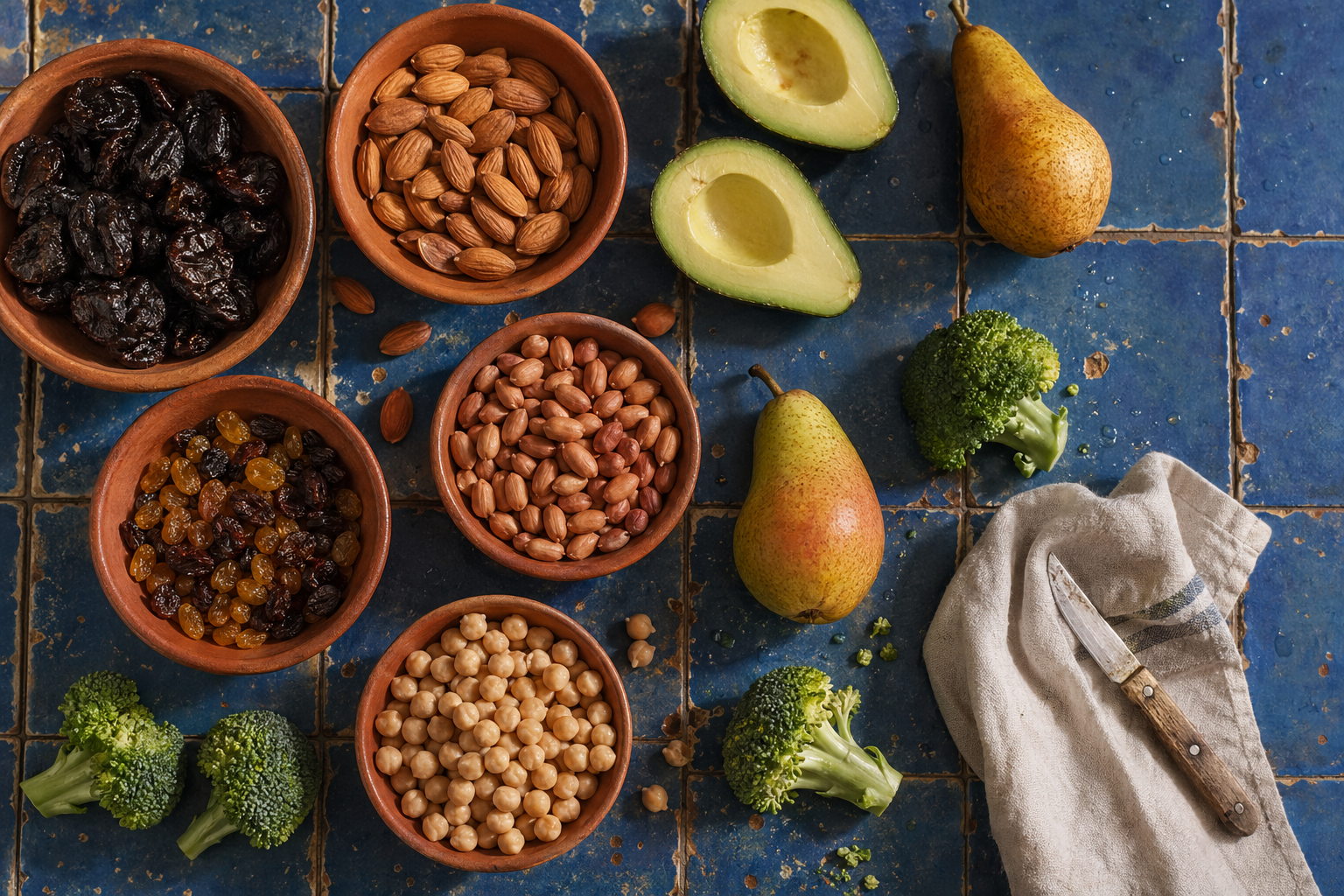
Boron is widely distributed in the food supply, but plant foods are usually the main contributors. The article highlights foods such as apples, potatoes, beans, prune juice, avocado, raisins, peaches, pears, peanuts, grape juice, coffee, and milk as meaningful sources in U.S. intake data. Food content is not fixed, because soil and water conditions influence how much boron ends up in plants. Drinking water can also contribute, although the WHO notes that levels in most drinking water worldwide are generally below 0.5 mg/L. In practical terms, people who eat more fruits, vegetables, legumes, nuts, and other plant foods often consume more boron than those with less plant-rich diets. (NIH ODS — Boron Fact Sheet; WHO — Boron in drinking-water fact sheet)
Habitual intake is usually modest. The article cites median U.S. dietary intake at roughly 0.87 to 1.35 mg/day, with higher intakes in vegetarians, and total intake from food plus supplements often around 1.0 to 1.5 mg/day. This matters because many supplements provide several milligrams per serving, so a single capsule can deliver several times what a person might normally get from food in a day. That difference does not automatically imply harm, but it explains why upper limits matter more for supplements than for ordinary diets. (NIH ODS — Boron Fact Sheet)
Not essential, but possibly bioactive
The article places boron in an in-between category. It is not officially recognized as an essential nutrient for humans because no clear deficiency syndrome or indispensable biochemical function has been conclusively established. That regulatory and scientific point is important because it prevents boron from being described as nutritionally required in the same way as iodine, zinc, or selenium. (NIH ODS — Boron Fact Sheet)
At the same time, several reviews argue that boron behaves like a bioactive trace element and may affect bone biology, central nervous system function, inflammatory responses, and hormone-related pathways. This is why boron remains a serious research topic despite lacking official essential-nutrient status. The key distinction is that “biologically interesting” or “potentially beneficial” is still weaker than “clinically established.” (PubMed — 2014 boron review; PubMed — 2020 boron review)
Absorption and supplement-form claims
One of the more useful practical findings is that boron from many foods and supplements appears to converge to boric acid in the gastrointestinal tract. The NIH Office of Dietary Supplements estimates absorption around 85% to 90%, and EFSA states that calcium fructoborate is fully hydrolyzed under gastrointestinal conditions. This weakens simple marketing claims that a common retail form necessarily stays uniquely intact or has dramatically superior systemic delivery. (NIH ODS — Boron Fact Sheet; EFSA — Calcium fructoborate safety opinion)
Common marketed forms include sodium borate or tetraborate, citrate, glycinate, amino acid chelates, picolinate, gluconate, and calcium fructoborate. Based on the article, the most important variable is usually total boron exposure rather than a proven unique advantage of one common form over another. Calcium fructoborate stands out mainly because it has the most form-specific human outcome data, especially for short-term joint comfort, not because current evidence proves across-the-board superior absorption. Comparative human bioavailability data among common forms are still lacking. (NIH ODS — Boron Fact Sheet; EFSA — Calcium fructoborate safety opinion)
Food boron versus supplement boron
The article emphasizes that the main difference between dietary boron and supplemental boron is dose delivery and context, not a simplistic natural-versus-synthetic divide. Foods provide smaller amounts of boron along with fiber, potassium, polyphenols, and many other nutrients, while supplements provide discrete elemental doses that are easier to standardize and often much higher than normal dietary exposure. This makes supplements useful in research or targeted use, but it also means they can approach upper-intake limits in a way that normal foods usually do not. (NIH ODS — Boron Fact Sheet; WHO — Boron in drinking-water fact sheet)
Bone health and mineral metabolism
Boron is often marketed for bone support because there is a plausible biochemical rationale. Research suggests links with calcium, magnesium, phosphorus, and vitamin D-related metabolism, and some human studies show biomarker shifts when intake changes. These findings support scientific interest in boron as a mineral-handling factor and help explain why it is often discussed in the context of bone biology. (NIH ODS — Boron Fact Sheet; PubMed — 2014 boron review)
However, the clinically important question is whether these mechanistic effects translate into better bone density, lower fracture risk, or other meaningful outcomes. The article says the answer is still unconvincing. In female athletes, supplementation altered mineral-related biomarkers but did not provide strong evidence for a direct improvement in bone mineral density. This makes boron a classic example of stronger mechanistic plausibility than outcome evidence. (PubMed — Female athletes mineral study; EFSA — Bone and joint claims opinion)
Vitamin D, hormones, and menopause-related claims
Boron is frequently discussed for hormone balance, particularly testosterone and estrogen-related pathways. The article notes a commonly cited one-week study in eight healthy men where 10 mg/day increased plasma boron and free testosterone while lowering estradiol and some inflammatory markers. These findings suggest a possible biological signal, but the study was extremely small, very short, and used a dose that sits at the adult EU upper limit. That makes the result interesting, not definitive. (PubMed — 1-week boron hormone study; EFSA — 2025 UL summary table)
More cautious evidence comes from a seven-week placebo-controlled study in bodybuilders using 2.5 mg/day, which did not improve testosterone, lean mass, or strength. The article therefore treats testosterone claims as weak and inconsistent. Menopause-related claims are described as even less certain, because symptom-focused clinical evidence is lacking and much of the discussion is indirect, based on biomarkers rather than demonstrated symptom relief. (PubMed — Bodybuilder boron trial)
Inflammation and joint discomfort
This is the most promising efficacy area in the article, although the evidence still remains preliminary. Calcium fructoborate has been tested in adults with self-reported knee discomfort, and a short 14-day placebo-controlled trial found improvements in WOMAC and McGill pain scores. Reviews also discuss possible anti-inflammatory actions, including effects on cytokine signaling, which gives the joint findings a plausible mechanistic backdrop. (PubMed — Knee discomfort calcium fructoborate trial; PubMed — Calcium fructoborate inflammation review)
A pilot rheumatoid arthritis study also suggested benefit when calcium fructoborate or sodium tetraborate was used alongside etanercept. Even so, the article stresses the limitations: studies are small, short-term, and in one case use an adjunctive-treatment design in an inflammatory disease population. These are enough to support cautious interest in short-term joint-discomfort relief, but not enough to justify broad claims that boron treats arthritis or modifies disease progression. (PubMed — Rheumatoid arthritis pilot study)
Cognition claims and central nervous system interest
Some reviews argue that low boron intake may affect alertness, psychomotor performance, or executive function, which is why cognition sometimes appears in boron marketing. The article accepts that central nervous system involvement is scientifically plausible, but it also makes clear that this area is underdeveloped from a clinical-trial standpoint. There is no robust supplementation literature showing reliable cognitive improvement in the general population. (PubMed — 2014 boron review)
Regulatory review aligns with that caution. EFSA did not substantiate a claim that boron contributes to normal cognitive function. In consumer terms, that means cognition is still a speculative or weakly supported claim category rather than an evidence-backed reason to supplement. (EFSA — Cognitive-function claim opinion)
Regulatory gaps and why borax deserves caution
The article points out that market availability should not be confused with proven efficacy. In the U.S., boron can be sold as a dietary supplement under the general supplement framework, and in the EU some form-specific products are permitted, but that does not mean broad health claims have been scientifically substantiated. Across both markets, the biggest evidence gap is still the lack of larger, longer, independently replicated human trials focused on clinically meaningful outcomes rather than short-term biomarkers alone. (FDA — Structure/function claims; EFSA — Bone and joint claims opinion)
The article also warns against blurring the line between regulated supplements and household or industrial boron compounds such as borax or boric acid. Toxicology reviews show that excessive boron exposure can cause harm, and reproductive and developmental toxicity findings in animals are central to current safety limits. Consumers therefore should not treat borax or boric acid as acceptable do-it-yourself substitutes for standard supplement products. (PubMed — Boron toxicology review; PubMed — Boric acid safety review)
Regulatory Status (EU and US)
United States
In the U.S., boron is sold as a dietary supplement rather than an approved drug. FDA allows structure/function claims if they are truthful, not misleading, and properly substantiated, but these claims are not pre-approved in the way drug indications are. Boron also has no Daily Value and no official essential-nutrient intake target in the U.S. framework. (FDA — Structure/function claims; FDA — Dietary supplements Q&A; NIH ODS — Boron Fact Sheet)
European Union
In the EU, boron does not have broadly authorized health claims for several heavily marketed uses. EFSA did not substantiate claims for maintenance of bone and joints, cognitive function, thyroid function, or prevention or treatment of prostate cancer. Calcium fructoborate is authorized as a novel food for adult food supplements at 220 mg/day, excluding pregnant and lactating women and with labeling against use by people under 18. A later EU consultation also concluded that boron glycinate and boron bisglycinate are novel foods. (EFSA — Bone and joint claims opinion; EFSA — Cognitive-function claim opinion; EUR-Lex — Calcium fructoborate authorization; EU consultation — Boron glycinate novel food status)
Dosage and Standardization
Typical intake: 0.87-1.35 mg/day from food; total intake often 1.0-1.5 mg/day.
Studied doses: 2.5 mg/day, about 3 mg/day, 10 mg/day for 1 week, and calcium fructoborate 110 mg twice daily.
Upper limits: 20 mg/day in the U.S.; 10 mg/day in the EU.
Safety And Interactions
The main safety issue is total dose. Official guidance sets the adult upper intake level at 20 mg/day in the U.S. and 10 mg/day in the EU. These limits are based largely on reproductive and developmental toxicology findings from animal data rather than on harms from normal food intake, so ordinary dietary boron is usually not the main concern. (NIH ODS — Boron Fact Sheet; EFSA — Boron UL opinion; EFSA — 2025 UL summary table)
Excess exposure can cause adverse effects including nausea, vomiting, diarrhea, rash, and more serious systemic toxicity at sufficiently high doses. Toxicology reports often involve boric acid or borax rather than standard supplement use, which is why industrial or household boron compounds should not be substituted for supplement products. (PubMed — Boron toxicology review; PubMed — Boric acid safety review)
As for interactions, the NIH Office of Dietary Supplements states that boron is not known to have clinically relevant interactions with medications. Still, interaction data are limited, and the article advises added caution for children, pregnant or breastfeeding women, and anyone considering high-dose or long-term use. (NIH ODS — Boron Fact Sheet; EUR-Lex — Calcium fructoborate authorization)
Conclusion
Boron is best understood as a nonessential but potentially beneficial trace element rather than a proven miracle supplement. It is found mainly in plant foods, is reasonably well absorbed, and appears to influence biological systems related to mineral handling, inflammatory signaling, and possibly hormone metabolism. But biological plausibility has not yet translated into reliable clinical benefit for most advertised uses.
The most defensible conclusions are practical ones: boron does not currently qualify as an essential nutrient in humans; most people get around 1 mg/day from food; most supplemental forms probably matter less than total boron dose; and claims of superior absorption for common forms are not well proven. The most promising efficacy signal remains preliminary short-term evidence for joint discomfort, especially with calcium fructoborate, while evidence for bone density, testosterone, cognition, menopause relief, or athletic performance is weak or inconsistent.
Disclaimer
Disclaimer: We attempt to do our best to find relevant, accurate and most up to date information available in both, the public domain and in the clinical and medical research community. We recommend reviewing scientific sources for official information on the subject. This post is not intended as medical advice. Each individual person's health conditions vary and we advise to consult a doctor before taking any supplements.