


The Acne DietFoods That HelpCalm Breakouts
Acne diet foods with the best evidence include low-glycemic meals, milk reduction trials, omega-3-rich foods, legumes, vegetables, whole grains, and steady, practical eating patterns.
Diet can calm acne biology for some people, but treatment still has a place.
Diet Can Influence Acne Pathways
Diet does not cause every case of acne, and no eating plan can promise clear skin. Acne comes from a mix of hormones, oil production, clogged pores, inflammation, bacteria, genetics, stress, sleep, and skin care. Still, food can affect some of those pathways, especially for people whose breakouts seem to flare after high-sugar, highly refined-carbohydrate meals or frequent milk intake. The strongest diet evidence points to a low-glycemic-load pattern, with milk reduction as a reasonable structured experiment for some people. The practical takeaway is not to chase one miracle anti-acne food, but to build meals that support steadier blood sugar, lower inflammatory pressure, and enough nutrition while using dermatologic care when acne is persistent or severe.
An Acne Diet Starts With the Whole Pattern
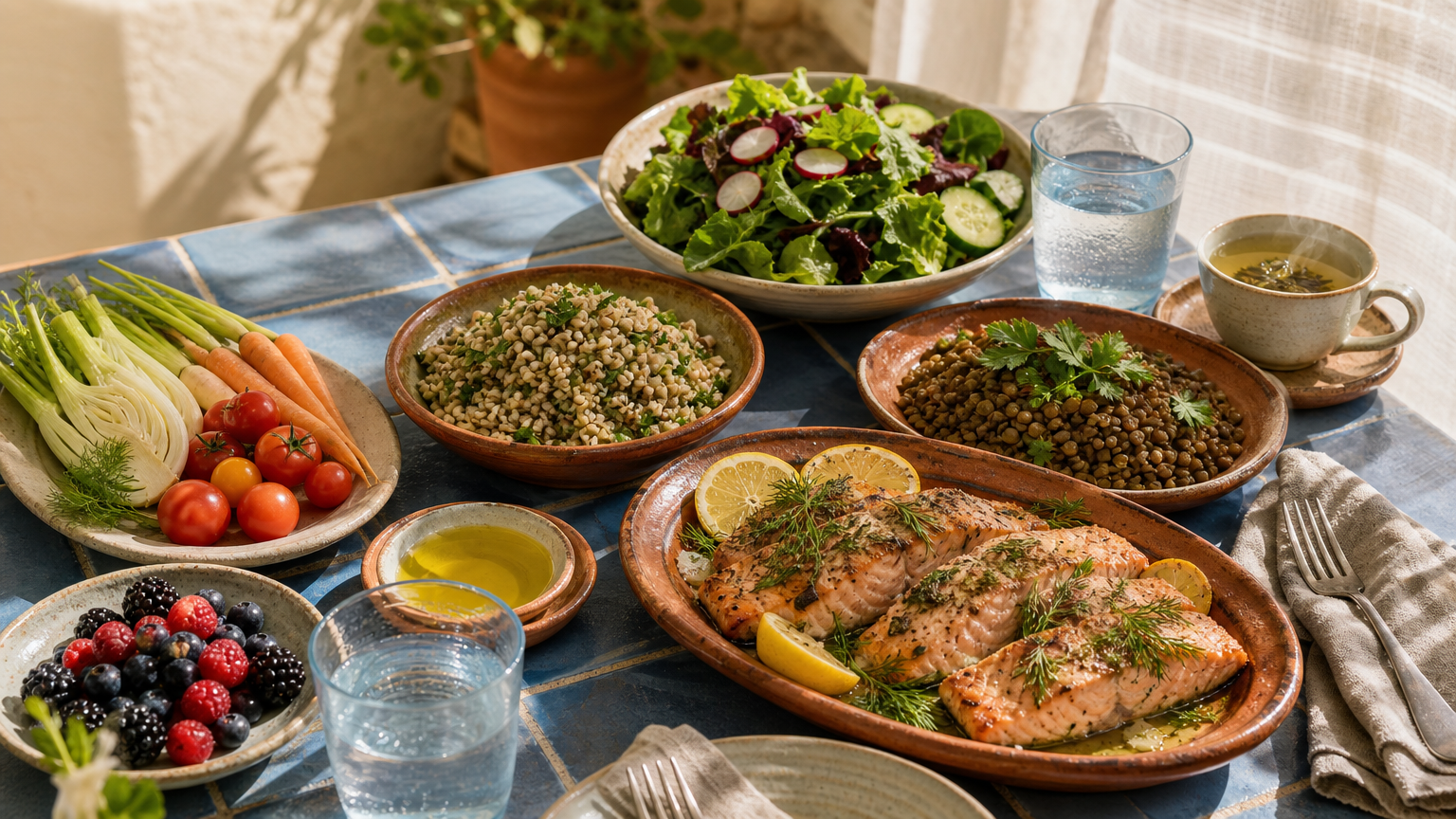
The most helpful acne diet is a pattern, not a list of banned foods. It keeps blood sugar steadier, favors fiber-rich plants and enough protein, and uses fats that support a calmer inflammatory tone. That is the same food-first direction covered in our broader guide to acne nutrition: build meals that make the skin’s hormonal and inflammatory environment less reactive, then test personal triggers like milk in a structured way rather than guessing from one bad breakout.

The strongest evidence favors lower glycemic load, not a single acne-clearing food.
How Diet May Influence Acne
Acne is not just a surface skin problem. Pores become blocked with sebum and dead skin cells, and inflammation then builds around the follicle. Diet may influence acne by affecting insulin and insulin-like growth factor-1, known as IGF-1, oil-gland activity, inflammatory signals, and possibly the gut-skin immune axis.
The glycemic index, or GI, ranks carbohydrate foods from 0 to 100 based on how much they raise blood sugar. Low-GI foods score 55 or below, medium-GI foods score 56 to 69, and high-GI foods score 70 or above. Glycemic load is more useful for real meals because it accounts for both the GI of a food and the amount of carbohydrate in a serving. This is why a large bowl of refined cereal or white rice can produce a much higher biological load than a smaller portion of a higher-GI fruit.
High-glycemic meals can raise blood glucose quickly, which increases insulin. Insulin and IGF-1 can stimulate androgen activity and oil-gland signaling, both of which may increase sebum production and pore blockage. Milk proteins may interact with some of the same pathways, while omega-3 foods such as fatty fish and algae-derived EPA and DHA may help shift inflammatory signaling in a more favorable direction.

Blood Sugar Load
Lower-glycemic meals reduce sharp glucose and insulin swings that can amplify acne signaling.

IGF-1 Signaling
Diet can influence IGF-1, a growth factor linked with oil-gland activity and pore blockage.

Inflammatory Tone
Fiber-rich plants and unsaturated fats may help shift the skin environment toward less inflammation.

Milk Response
Milk may affect insulin and IGF-1 pathways differently from fermented dairy in acne-prone people.
What the Clinical Evidence Shows
The best human evidence supports changing the overall carbohydrate pattern rather than adding one special food. Small randomized trials suggest that low-glycemic-load diets can reduce acne lesions and improve acne-relevant insulin markers. These studies are not huge, but they line up with a plausible mechanism and are more useful than older advice focused on avoiding isolated foods.
The dairy evidence is meaningful but mostly observational. That means it can show a repeated association between milk intake and acne, especially with skim or low-fat milk, but it cannot prove that milk causes acne in every person. This is why milk reduction is best used as a structured self-test, not as a universal rule to remove every dairy food.
Omega-3-rich and Mediterranean-style eating also look promising, especially for inflammatory acne, but acne-specific trials are still limited. The omega-3 and acne evidence is strongest when it is viewed as part of an anti-inflammatory dietary pattern rather than as a stand-alone cure.

Low-Glycemic Trials
Two randomized trials found fewer acne lesions and better inflammatory markers after low-glycemic-load diets.1, 2
Hormone Signals
A 2-week low-GI and low-GL intervention lowered IGF-1 in adults with moderate-to-severe acne.3
Milk and Dairy
Large observational evidence links dairy, especially low-fat or skim milk, with higher acne odds, while guidance stays cautious.4, 5
Omega-3 Pattern
A Mediterranean-style program with algae-derived EPA and DHA improved omega-3 status and acne lesion counts.6

How to Build an Acne-Supportive Plate
Build an acne-supportive diet by changing the usual pattern of your meals, not by adding one “skin food” to a high-sugar diet. Start with slower-digesting carbohydrates, enough protein, anti-inflammatory fats, and a clear decision about whether milk is worth testing.
- Choose legumes often: lentils, chickpeas, black beans, edamame, and hummus
- Use intact grains such as oats, barley, quinoa, rye, farro, and modest portions of brown rice
- Fill half the plate with non-starchy vegetables and choose whole fruit over juice
- If testing dairy, start with milk first, especially skim or low-fat milk
How to Build an Acne-Supportive Plate
Use these numbers and food rules to make the plan practical, measurable, and less restrictive than a long list of banned foods.
GI is food type; GL adds serving size
Low GI means a carbohydrate raises blood sugar more slowly. Low glycemic load is more useful for meals because a small portion of a higher-GI food may have less blood-sugar impact than a large portion of a medium-GI food.
The best carb swaps are simple
Swap sugary cereal for oats with berries and nuts. Swap white bread sandwiches for dense whole-grain bread, lentil soup, or a chickpea salad bowl. Swap sweet drinks and juice for water, sparkling water, or unsweetened green tea.
Do not megadose vitamin A for acne
Vitamin A is involved in skin biology, but high intakes of preformed vitamin A can be harmful, and acne medication forms of vitamin A need medical supervision. Food-first choices such as carrots, sweet potatoes, spinach, kale, and red peppers are safer than high-dose supplement experiments.
How to Use Diet Changes Without Overcorrecting
Choosing a lower-glycemic, Mediterranean-leaning pattern is the first step; using it consistently is what makes it possible to judge whether skin changes follow. Acne does not usually respond overnight because follicle blockage, sebum production, and inflammation build over time. A 10 to 12 week trial gives the diet enough time to show whether it is helping.
A Practical One-Day Acne-Supportive Menu
Breakfast could be steel-cut oats with berries, chia seeds, cinnamon, and walnuts, or eggs with spinach, tomatoes, avocado, and dense rye toast. Lunch could be lentil and vegetable soup with olive oil, or a chickpea salad bowl with quinoa, greens, cucumber, peppers, herbs, and salmon. Dinner could be trout or tofu with roasted vegetables and barley, followed by fruit if you want something sweet.
Snacks can follow the same pattern: apple slices with peanut butter, carrots with hummus, plain unsweetened yogurt if tolerated, roasted edamame, a handful of nuts, or berries with pumpkin seeds. Aim for steady blood sugar, fiber, protein, and healthy fats at most meals.
How to Test Milk Without Making the Diet Restrictive
If acne seems linked to dairy, run a clear experiment for 8 to 12 weeks. Remove milk first, especially skim or low-fat milk, and avoid whey-heavy shakes if you use them. Keep calcium and protein covered through foods such as fortified soy milk, calcium-set tofu, canned sardines with bones, leafy greens, beans, and, if tolerated, yogurt or cheese.
Do not change five things at once if you want useful feedback. If you cut milk and begin a low-glycemic pattern at the same time, you may not know which change helped most. If you need precision, test one change first, track breakouts, then add the next.
Where Zinc and Fermented Foods Fit
Zinc-rich foods such as oysters, beef, crab, pumpkin seeds, oats, turkey, lentils, beans, peanuts, and sardines can support normal immune and skin function. That does not prove that eating more zinc-rich foods will clear acne, but it is sensible nutrition, especially if the current diet is low in protein, seafood, legumes, nuts, and seeds.
Fermented foods such as yogurt, kefir, kimchi, sauerkraut, miso, and tempeh may support gut microbial diversity. Probiotic research in acne is promising but strain-specific and mixed, so fermented foods are best seen as supportive foods rather than reliable acne treatments. Supplement-focused claims also need separate evidence, including those around vitamin D, selenium, and vitamin B5.
When Diet Is Not Enough
Diet changes are most useful when acne is mild, inflammatory, or clearly affected by high-glycemic meals or milk. Painful cysts, scarring, widespread acne, or acne that affects mood and confidence should be treated promptly with a dermatologist or qualified clinician. A low-glycemic, anti-inflammatory diet can work alongside evidence-based skin care; it should not delay treatment that prevents scarring.
References
- Smith et al. 2007 randomized controlled trial — Low-glycemic-load diet and acne lesion counts.
- Kwon et al. 2012 randomized controlled trial — Clinical and histological effects of a low-glycemic-load diet in acne.
- Burris et al. 2018 randomized controlled trial — Low-GI and low-GL diet effects on IGF-1 in acne.
- Dairy intake and acne vulgaris meta-analysis — Systematic review of 78,529 children, adolescents, and young adults.
- American Academy of Dermatology patient education page — Can the right diet get rid of acne?.
- Guertler et al. 2024 prospective intervention study — Mediterranean-style diet plus algae-derived omega-3s in acne patients.
Disclaimer
Disclaimer: We attempt to do our best to find relevant, accurate and most up to date information available in both, the public domain and in the clinical and medical research community. We recommend reviewing scientific sources for official information on the subject. This post is not intended as medical advice. Each individual person's health conditions vary and we advise to consult a doctor before taking any supplements.