


Science Review Last updated 10 min read

What CausesMuscle Cramps?How to Stop Them

Muscle cramps are sudden, painful muscle contractions. They can be set off by fatigue, nerve reflexes, fluid shifts, medications, or health conditions — so the best fix depends on what was happening when the cramp started.

Runner stretching his calf on a misty forest trail after a cramp.

Most cramps are nerve-driven; the right fix depends on the trigger.

Why Muscle Cramps Need Context

Muscle cramps are common, painful, and often difficult to interpret. A calf can seize during a run, a foot can curl at night, or a hamstring can spasm after a long hike. The sensation is felt in the muscle, but the trigger can involve nerves, fatigue, fluids, medications, or health conditions. This article explains how to read the situation around a cramp before choosing the next step.

The evidence ladderBuilding confidence in the science
Early ExplanationDehydration, salt loss, and low minerals
Clinical ObservationMedications, illness, pregnancy, and circulation
Neurophysiology EvidenceMotor nerves and altered reflex control
Exercise ResearchFatigue, overload, and training mismatch
Practical ConsensusRelieve first, then match prevention to the trigger

Muscle cramps are more than tight muscles

At first glance, a cramp looks like a simple muscle problem: one area tightens, pain spikes, and movement stops. But the causes are wider than stiffness alone. Fatigue, nerve signaling, heat, sweat losses, medications, and underlying illness can all change how muscles contract and relax. That is why broad advice about electrolytes or stretching helps some people and misses others. A better plan starts with when the cramp happens, which muscle is involved, and what else is going on.

Woman gently massaging her calf at night after a leg cramp.
Lengthening the muscle is the first step; prevention depends on the pattern.

How Muscle Cramps Happen

A cramp happens when a muscle contracts suddenly and does not relax when you want it to. The pain is local, but the control system includes motor nerves, reflex sensors in muscle and tendon, circulation, fluid balance, and the chemical environment around cells. During fatigue or overload, the signals that tell a muscle to contract can outweigh the signals that help it relax. During heavy sweating or illness, shifts in water and minerals such as sodium, potassium, calcium, and chloride can make nerve and muscle cells more irritable. Other cramps are linked to medicines, pregnancy, diabetes, thyroid, kidney, liver, nerve, or vascular disease. That is why the same symptom can have several different causes.

Nerve-Driven Overcontraction

Motor nerves keep firing, so the muscle stays contracted even when you try to relax it.

Fatigue and Reflex Control

Overloaded muscles can lose the normal balance between contraction signals and relaxation signals.

Fluid and Electrolyte Shifts

Heavy sweat, illness, dialysis, or certain drugs can change the minerals muscles use to fire normally.

Medical and Medication Triggers

Some cramps reflect nerve compression, circulation problems, pregnancy, chronic disease, or medication effects.

What the Evidence Shows

The evidence does not support one universal cramp story. Reviews of clinical and exercise research point to overlapping pathways: nerve excitability, fatigue, local overload, fluid loss, disease, and medications. Immediate care is more consistent than prevention: lengthen the muscle, massage if useful, then consider heat or cold based on whether the spasm is active or the area is sore afterward. Prevention is more contextual. A runner cramping late in a hot race may need training, pacing, recovery, and a sweat plan; a person with repeated night cramps may benefit more from a bedtime stretching routine than routine magnesium.

Nerves Are Central

Clinical reviews describe ordinary cramps as sustained involuntary contractions involving motor-nerve signaling and several overlapping risk factors.1

Fatigue Explains Many Exercise Cramps

For exercise cramps, recent reviews favor fatigue-related neuromuscular control over dehydration or electrolytes as a single explanation.2

Stretching Has Practical Support

Guidance supports gentle stretching and massage, while a 6-week trial found bedtime calf and hamstring stretching reduced night cramp frequency and pain.3, 5

Supplements and Fluids Need Context

Routine magnesium is unlikely to help most idiopathic night cramps, electrolyte fluid may matter in hot heavy-sweat settings, and quinine is not advised for routine use.4, 6, 7
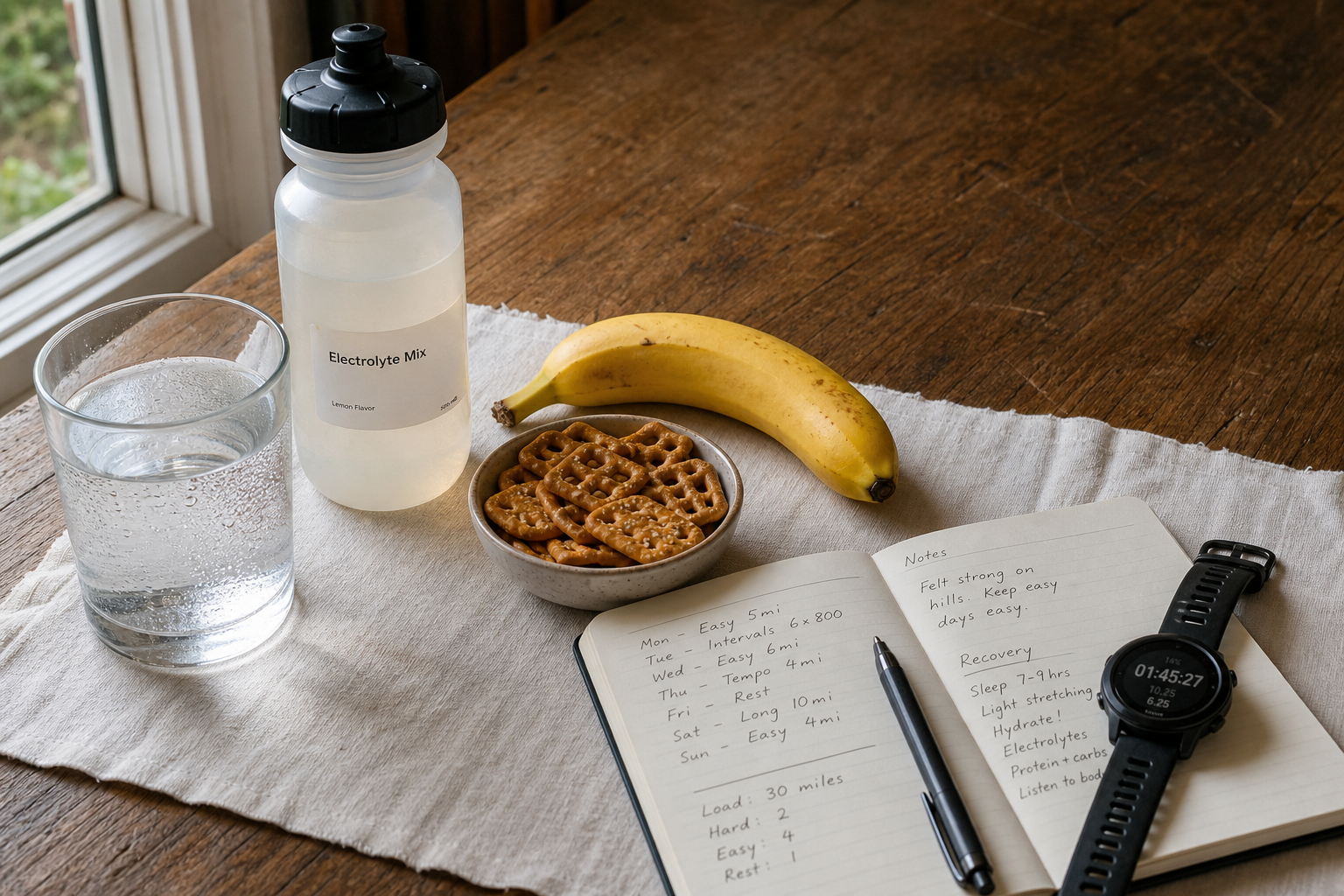
Hydration, electrolytes, snacks, and training notes arranged for muscle cramp prevention.

How to Respond When Cramps Keep Happening

Most occasional cramps are not dangerous, but repeated cramps are easier to manage when you separate immediate relief from longer-term prevention. First, get the muscle to release. Then look at the pattern: timing, activity, heat, sweat, sleep, recent training changes, medicines, and any symptoms that do not behave like a simple cramp.

What to do during a cramp

The fastest practical step is usually to put the muscle in a lengthened position. For a calf cramp, straighten the knee and pull the toes gently toward the shin, or stand facing a wall with the cramped leg behind you and the heel down. For a hamstring cramp, sit or lie down and slowly straighten the knee. For a foot cramp, gently pull the toes upward and massage the arch.

Do not force the stretch. A cramp is already painful, and aggressive pulling can irritate the muscle. Use steady pressure for 15–30 seconds, ease off slightly, then repeat. Massage can help the muscle relax and make the stretch easier to tolerate. Warmth may help during the spasm; ice is more useful afterward if the area feels sore or bruised.

How to prevent exercise-related cramps

Exercise-associated muscle cramps often show up when the workload exceeds your current capacity. That might mean racing faster than you trained for, climbing more hills than usual, exercising in heat, returning after time off, or repeating one movement until a specific muscle fatigues.

The fix is usually simple rather than dramatic: progress training gradually, include rest days, practice in similar heat or terrain before an event, and strengthen the muscles that repeatedly cramp. If your calves cramp late in runs, look at weekly mileage jumps, downhill running, shoe changes, calf strength, sleep, and race pace before assuming a mineral deficiency.

Hydration still matters, especially when sweat losses are large. A practical approach is to drink to thirst for normal activity, but plan fluid and sodium more deliberately for long hot sessions, heavy sweaters, or events lasting more than about an hour. Avoid overcorrecting by drinking large volumes of plain water, which can dilute blood sodium in extreme cases.

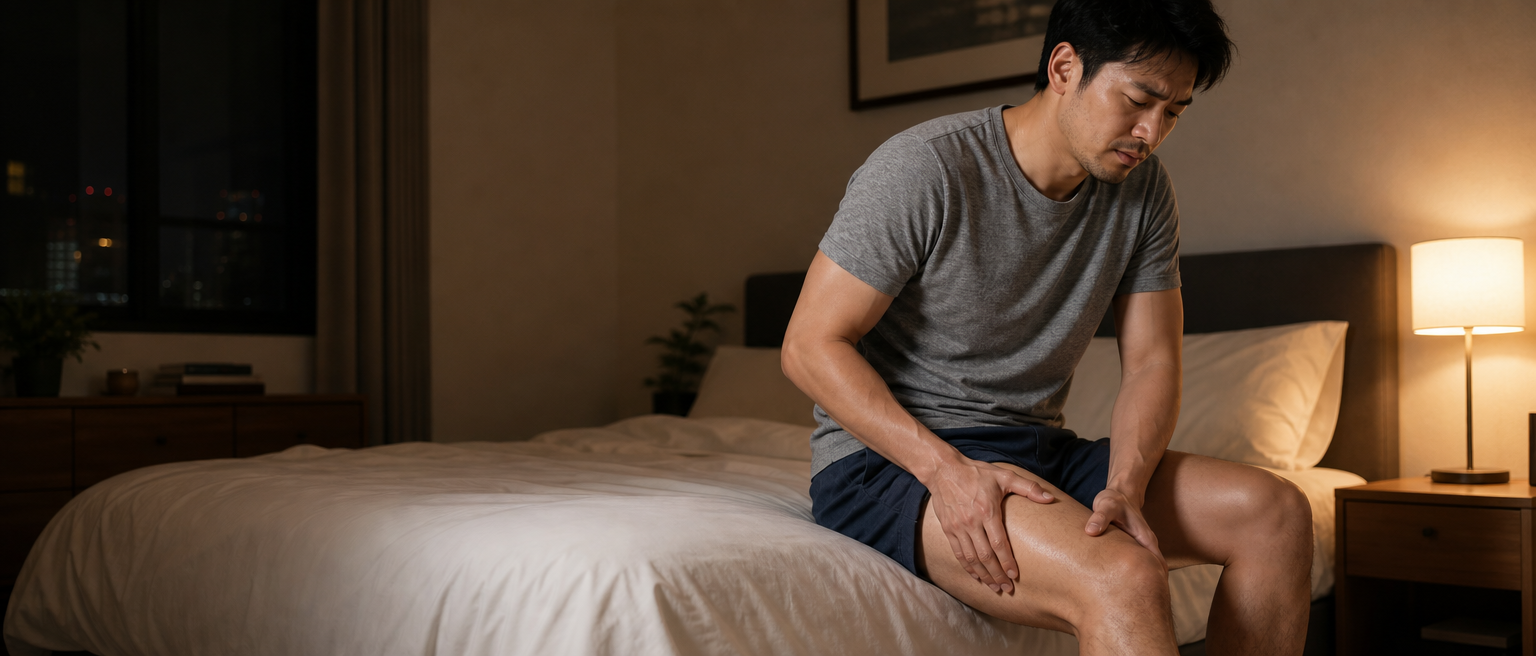
How to handle recurring nighttime cramps

Night cramps often affect the calves or feet and may happen without obvious exercise. A simple bedtime routine is worth trying: stretch both calves and hamstrings gently for about 5 minutes before sleep. Keep the knee straight for one calf stretch, then slightly bent for another to target deeper calf muscles. Add light ankle circles or a short walk if your legs feel stiff.

Also look for patterns: alcohol intake, dehydration from illness, long sitting, standing all day, new exercise, and medications. Magnesium may be reasonable only when intake is low or deficiency risk is higher, such as gastrointestinal disease, type 2 diabetes, alcohol dependence, older age, or certain medication use. Even then, persistent cramps are a reason to discuss testing or supplementation with a clinician.

When cramps need medical attention

Get checked if cramps are severe, frequent, prolonged, worsening, or not improving with stretching and basic care. Seek prompt medical advice if one leg is swollen, red, warm, or very tender; if cramps come with weakness, numbness, or loss of coordination; or if they begin after a medication change.

Also pay attention to exertional patterns. Calf or foot pain that appears predictably while walking and improves with rest may reflect circulation problems rather than a simple cramp. Symptoms that worsen with walking and improve when sitting or bending forward can suggest spinal nerve compression. In these cases, the right treatment is diagnosis, not more electrolyte powder.

Avoid self-treating routine cramps with quinine. It may reduce cramps in some studies, but the safety concerns are significant enough that it is not recommended for ordinary leg cramp prevention.

References

  1. StatPearls / NCBI Bookshelf — Muscle Cramps.
  2. Journal of Athletic Training — Evidence-Based Review of Exercise-Associated Muscle Cramps.
  3. Mayo Clinic — Muscle cramp: Diagnosis and treatment.
  4. Cochrane — Magnesium for muscle cramps.
  5. Journal of Physiotherapy — Stretching before sleep reduces nocturnal leg cramps.
  6. Journal of the International Society of Sports Nutrition — Oral rehydration solution versus water and cramp susceptibility.
  7. FDA — Serious risks associated with using Quinine to prevent or treat nocturnal leg cramps.

Stay in balance

Science-backed wellness tips and exclusive offers.

Disclaimer

Disclaimer: We attempt to do our best to find relevant, accurate and most up to date information available in both, the public domain and in the clinical and medical research community. We recommend reviewing scientific sources for official information on the subject. This post is not intended as medical advice. Each individual person's health conditions vary and we advise to consult a doctor before taking any supplements.