

 Deutsch
 Español
 Suomi
Suomi Français
 Bahasa Indonesia
 Italiano
 日本語
日本語 Português
 Tagalog

1. What are electrolytes?
Electrolytes are not a new wellness ingredient. They are everyday minerals that become electrically charged in body fluids such as blood, sweat, and the fluid around cells.
The electrolytes most often discussed in nutrition are:
Each one has its own role. Sodium and chloride are especially important for fluid balance outside cells. Potassium is central to fluid and electrical balance inside cells. Calcium and magnesium help nerves and muscles work properly. Phosphorus is part of DNA, cell membranes, bones, teeth, and ATP, the molecule cells use to store and transfer energy.
You lose electrolytes through urine, stool, and sweat, and you replace them through food and drink. For most people, that everyday exchange happens quietly in the background.
2. What do electrolytes do in the body?
Electrolytes help keep water in the right places. Your cells do not simply need “more water”; they need the right balance of water and dissolved minerals inside and outside the cell.
They also allow nerves and muscles to communicate. Nerve signals depend on charged minerals moving across cell membranes. Muscle contraction, including the steady rhythm of the heart, relies on those electrical gradients too.
Electrolytes also play a role in acid-base balance, which means keeping blood within a narrow pH range. They help move nutrients into cells and waste products out of cells.
This is why an electrolyte imbalance can be serious. Too little or too much sodium, potassium, calcium, or magnesium can affect energy, confusion, weakness, heart rhythm, blood pressure, and muscle function. That does not mean everyone needs an electrolyte supplement. It means your body works hard to keep electrolyte levels within a safe range.
3. When do electrolyte products actually help?
The clearest use is dehydration from illness. When diarrhea or vomiting causes rapid fluid loss, the body loses water and electrolytes together. In this setting, an oral rehydration solution is not just flavored water. It is made with glucose and electrolytes, especially sodium, to help the gut absorb water more effectively.
That sodium-glucose pairing is the reason proper oral rehydration solutions work. The World Health Organization and other medical bodies use this approach because it can prevent or treat dehydration in many cases, especially mild to moderate dehydration.
Electrolytes may also help during prolonged exercise, hot weather, or any situation where someone sweats heavily for a long time. Sweat contains sodium and chloride as the main electrolytes, with smaller amounts of potassium, magnesium, and calcium. If you are exercising lightly for 30 minutes, water and normal meals are usually enough. If you are running for hours, working in heat, or seeing salt marks on your clothes, sodium-containing fluids may be more useful.
For exercise-associated dehydration, research suggests carbohydrate-electrolyte drinks can be reasonable rehydration tools, but the evidence is not strong enough to say they are always better than water. The formula makes a difference. A product with a sensible sodium level and appropriate carbohydrate concentration is very different from a trace-mineral drink that contains tiny amounts of several minerals.
 Oral rehydration solutions are most clearly useful during illness-related fluid loss.
 Sodium-containing fluids are more relevant when sweat losses are high or prolonged.
 Daily electrolyte drinks and trace-mineral blends depend heavily on the formula and situation.
4. Do electrolytes help muscle cramps?
Sometimes, but the marketing is often more confident than the science.
Muscle cramps can happen for many reasons: fatigue, unfamiliar exercise, high intensity, neuromuscular factors, heat, dehydration, or medical issues. Electrolyte loss may contribute in some cases, especially during heavy sweating, but exercise cramps are not explained by electrolyte loss alone.
Research reviews have found that hydration status and blood electrolyte levels are not consistently linked with exercise-associated muscle cramps. Magnesium is a good example. It is often sold for cramps, but Cochrane evidence suggests magnesium supplementation is unlikely to provide meaningful prevention for common skeletal muscle cramps in older adults, and there is not strong randomized-trial evidence showing benefit for exercise-associated cramps.
That does not mean magnesium or electrolytes never help anyone. If a person is deficient, ill, sweating heavily, or not eating well, replacing what is missing can be important. But a magnesium-heavy electrolyte powder should not be treated as a proven cramp cure. For a fuller look at why cramps happen and how to stop them, see what causes muscle cramps.
5. How should you use electrolytes?
Use them for a specific reason, not by default.
For normal desk days, short workouts, or casual walks, water plus regular meals is usually enough. Foods such as dairy, vegetables, fruit, beans, nuts, grains, and salted meals provide electrolytes naturally.
Consider an electrolyte product when fluid and salt losses are higher than normal, such as:
- Diarrhea or vomiting, especially if appetite is low
- Long exercise sessions, particularly over about 60–90 minutes
- Heavy sweating in heat or humidity
- Outdoor work or endurance events
- Repeated training sessions with limited time to rehydrate
- Situations where you are drinking a lot of plain water but still losing salt through sweat
For illness-related dehydration, choose a proper oral rehydration solution rather than guessing with a homemade mix. Homemade versions can end up too strong or too weak. For severe dehydration, persistent vomiting, blood in stool, confusion, fainting, or dehydration in infants, older adults, or medically vulnerable people, medical advice is important.
During exercise, drink to thirst rather than forcing large volumes. Drinking too much fluid, even sports drink, can dilute blood sodium and contribute to exercise-associated hyponatremia, a potentially dangerous low-sodium state.
6. What should you look for on the packaging?
Start with the serving size. Many products look impressive until you realize the listed minerals apply to two tablets, two scoops, or a large bottle.
Then check sodium. If your goal is sweat replacement, sodium is usually the main electrolyte to look for because sodium and chloride are the major electrolytes lost in sweat. A product that advertises “electrolytes” but contains only tiny amounts of sodium may be less useful for heavy sweating than its branding suggests.
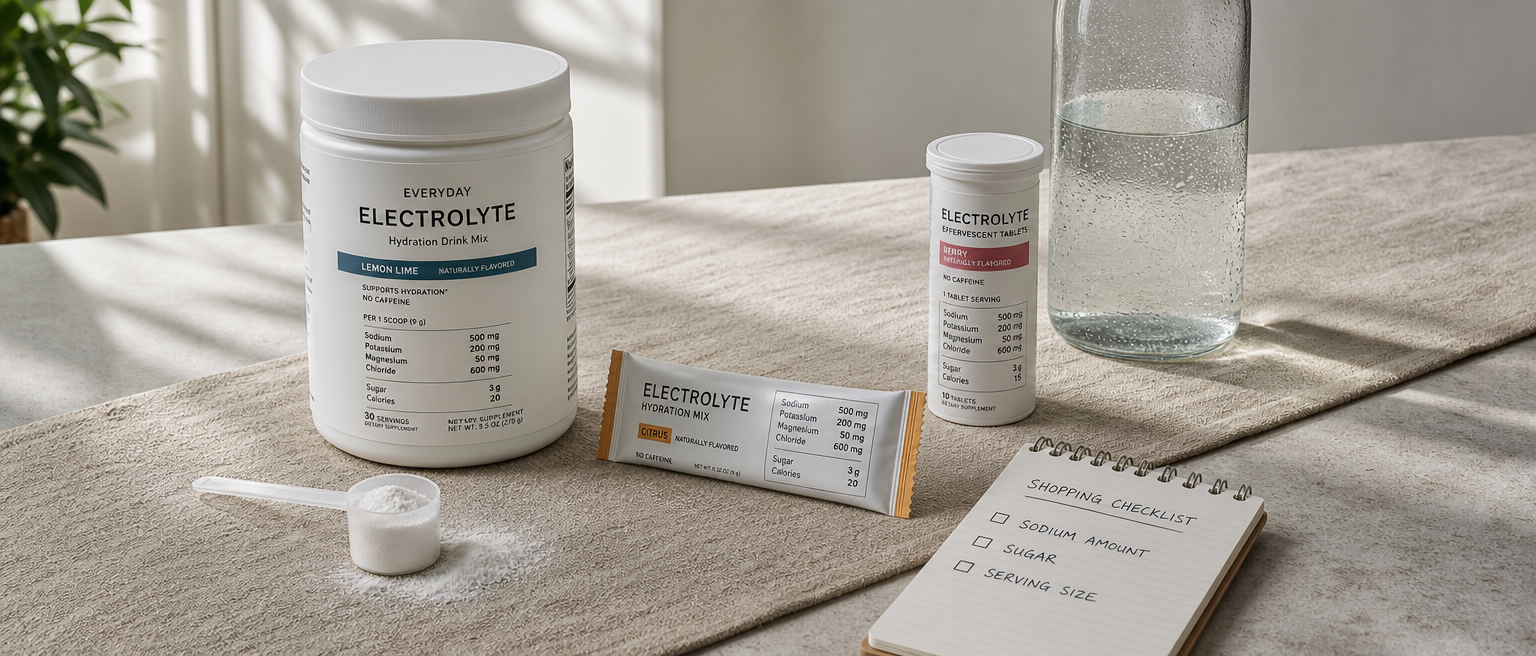
Next, look at carbohydrate or sugar. Sugar is not automatically bad in an electrolyte drink. In oral rehydration solutions, glucose helps with sodium and water absorption. During longer exercise, carbohydrate can also provide fuel. But if you are just looking for casual hydration during a normal day, a high-sugar drink may be unnecessary.
Check the mineral forms too. For magnesium, forms such as magnesium citrate, chloride, lactate, and aspartate tend to be better absorbed than magnesium oxide or sulfate. High supplemental magnesium can also cause diarrhea or stomach upset, which is the opposite of what you want if you are already dehydrated.
Be wary of dramatic claims. In the United States, dietary supplements are not approved by the FDA before sale, and supplement labels cannot legally claim to treat, prevent, or cure disease. Phrases such as “supports hydration” or “supports muscle function” are not the same as proof that a product works better than water for your situation.
A good electrolyte product should list mineral amounts clearly in milligrams, show an easy-to-understand serving size, make realistic claims, and have a formula that fits your use case. Third-party testing from groups such as NSF, USP, or ConsumerLab can be a useful quality signal, though it does not prove the product will work for your goal.