

 Deutsch
 Español
 Suomi
Suomi Français
 Bahasa Indonesia
 Italiano
 日本語
日本語 Português
 Tagalog
1. What does “elemental magnesium” mean?
Magnesium supplements usually are not made from pure magnesium by itself. Instead, magnesium is attached to another substance so it can be used in a stable supplement form, such as:
- magnesium citrate
- magnesium glycinate
- magnesium oxide
- magnesium chloride
- magnesium malate
“Elemental magnesium” means the magnesium part only. The rest of the compound adds weight, but it is not counted as magnesium.
So when a product says it contains magnesium citrate, the full magnesium citrate compound weighs more than the magnesium it actually provides. The magnesium amount on the label is there to show the useful magnesium dose, not the total weight of that compound.
2. How is elemental magnesium measured?
Elemental magnesium is measured in milligrams, usually written as “mg.” In the U.S., the Supplement Facts panel lists the amount of magnesium per serving.
For example, a label might say:
- Serving size: 2 capsules
- Magnesium: 200 mg
- Form: magnesium glycinate
That means one serving provides 200 mg of elemental magnesium from magnesium glycinate. It does not mean each capsule contains 200 mg unless the serving size is one capsule.
Serving size is where many people get tripped up. If the serving is 2 capsules and the label says 200 mg magnesium, each capsule would provide about 100 mg elemental magnesium, assuming the dose is evenly split.
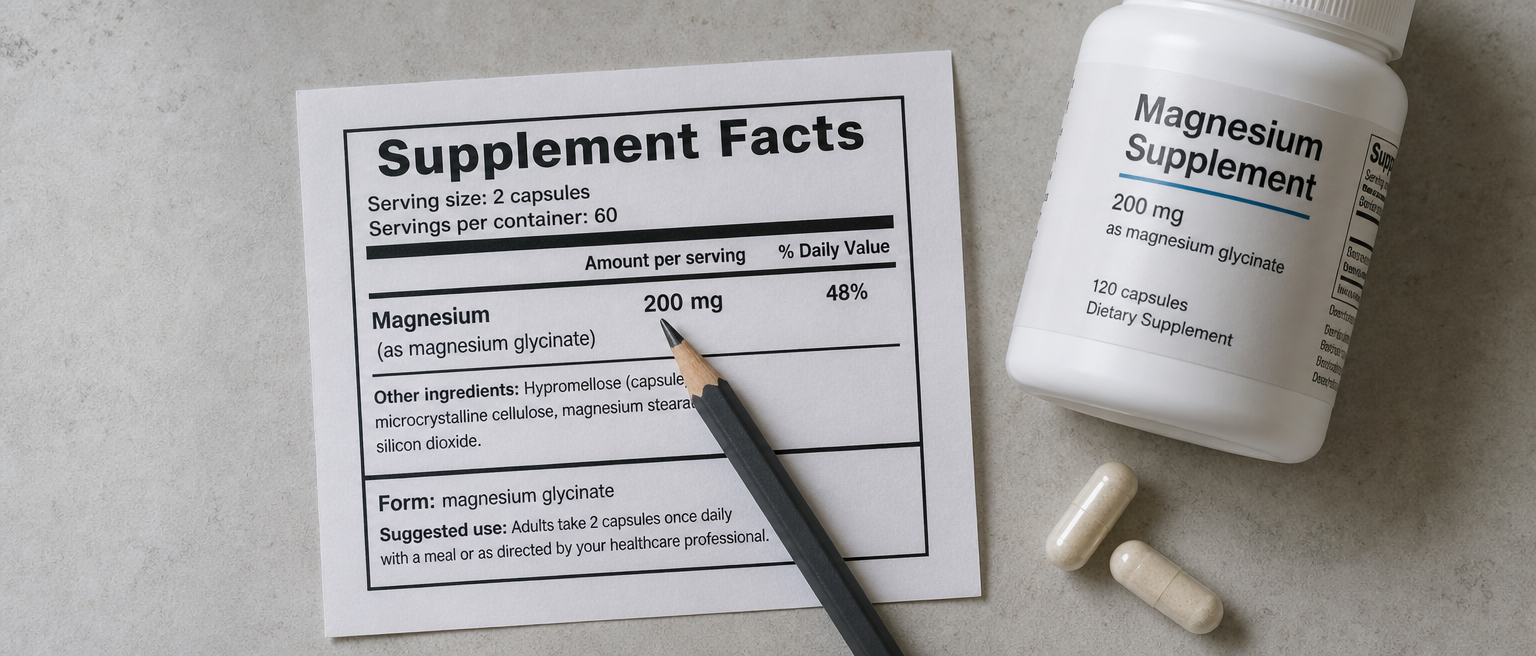
3. Is it as simple as looking at the magnesium number?
Yes — for the stated dose, it is usually that simple. Find the “Magnesium” line in the Supplement Facts panel, then check the serving size.
A simple label-reading rule:
- Find “Serving Size.”
- Find “Magnesium.”
- Read the mg amount as elemental magnesium per serving.
- Check the form name separately to understand the source.
 Supplement Facts lists the elemental magnesium amount per serving.
 Serving size tells you whether that amount is for 1 capsule, 2 capsules, or another serving.
 The form name helps with source, absorption, and stomach tolerance.
The form name is still useful, but it answers a different question. “Magnesium citrate” or “magnesium oxide” tells you what magnesium is bound to. That can affect absorption and stomach tolerance. It does not replace the elemental magnesium number.
4. Elemental amount vs absorption
Two supplements can both list 200 mg elemental magnesium, but they may not feel the same or absorb the same way. NIH notes that magnesium forms that dissolve well in liquid — such as citrate, chloride, lactate, and aspartate — tend to be better absorbed than less soluble forms like oxide in small studies.
That is why it helps to keep two questions separate:
- “How much magnesium is in this serving?” → Check the Supplement Facts magnesium amount.
- “How well might this form absorb or suit my stomach?” → Look at the magnesium form.
We cover magnesium formats and absorption in more detail in our separate Supplete article on best magnesium forms.
5. What about % Daily Value?
The % Daily Value is based on the magnesium amount per serving. In the U.S., the adult Daily Value for magnesium is 420 mg. So a supplement with 100 mg magnesium per serving provides about 24% Daily Value.
That percentage can help with a quick comparison, but the mg amount is usually clearer when you are comparing products side by side.
6. Can you know the amount “exactly”?
The label gives you the manufacturer’s declared elemental magnesium amount per serving. But “exactly” can mean two different things.
If you mean “What dose is the product claiming to provide?” — use the Supplement Facts panel.
If you mean “Has someone independently confirmed the bottle contains that amount?” — look for extra quality signals, such as third-party verification. FDA does not approve dietary supplements before they are sold and does not routinely test every product for content before sale. A verification mark, such as USP Verified, can add confidence that the product contains the listed ingredients in the stated amounts.
7. Safety
Magnesium from food is not usually a concern, but higher-dose magnesium supplements can cause diarrhea, nausea, and abdominal cramping. NIH lists the adult upper limit for supplemental magnesium at 350 mg per day, unless a healthcare professional advises otherwise.
Be especially cautious if you have kidney disease, take medications, are pregnant, or are considering higher doses.
For broader context on magnesium dosage, compare the label amount with your total daily intake and any advice from your healthcare professional.