

 Deutsch
 Español
 Suomi
Suomi Français
 Bahasa Indonesia
 Italiano
 日本語
日本語 Português
 Tagalog
Absorption
Soluble forms such as citrate, chloride, lactate and aspartate have the strongest direct support. Oxide and sulfate lag because they dissolve poorly.
The salt attached to magnesium can change absorption, bowel effects and cost. This comparison ranks citrate, glycinate, chloride, malate, L-threonate, taurate, oxide and sulfate by evidence, tolerance and real-world use.

Magnesium is an essential nutrient and one of the most widely used mineral supplements. It supports normal muscle and nerve function, energy metabolism, blood pressure regulation, glucose handling and hundreds of enzyme reactions. For the broader evidence on benefits, dosing and safety, see our magnesium guide.
A magnesium supplement is usually a magnesium salt or chelate: magnesium bound to another compound such as citrate, oxide, chloride, glycine, malate or threonate. The label lists elemental magnesium, meaning the actual magnesium content, not the full weight of the compound. Two products can both say 200 mg magnesium and still behave very differently in the gut.
The strongest overall pattern is simple: forms that dissolve well tend to be better absorbed. The NIH Office of Dietary Supplements magnesium fact sheet notes that magnesium aspartate, citrate, lactate and chloride are generally better absorbed than magnesium oxide and sulfate, and a 2021 systematic review reached a similar broad conclusion that inorganic forms tend to be less bioavailable than organic forms.
A safety note belongs near the start. High supplemental magnesium can cause diarrhea, nausea and abdominal cramping, and very high intakes can be dangerous, especially for people with impaired kidney function. The US adult tolerable upper intake level for supplemental magnesium is 350 mg/day; EFSA uses 250 mg/day for readily dissociable magnesium salts and magnesium oxide from supplements, water or fortified foods. These limits do not apply to magnesium naturally present in food, and clinician-directed doses may exceed them for specific conditions.
This ranking uses five criteria: absorption, GI tolerance, elemental efficiency, goal fit, and cost. Absorption asks how well a form raises magnesium availability. GI tolerance looks at loose stools, cramps or nausea. Efficiency separates impressive label numbers from usable magnesium.
Goal fit asks whether a form suits common reasons people supplement, such as general repletion, bedtime use, sensitive digestion, cognition-focused self-experimentation or constipation. Cost considers whether the form is easy to find and affordable per useful dose. The ranking reflects a generally healthy adult choosing an oral magnesium supplement for routine nutrition support, not medical bowel preparation, pregnancy care, severe deficiency treatment or hospital use.
Soluble forms such as citrate, chloride, lactate and aspartate have the strongest direct support. Oxide and sulfate lag because they dissolve poorly.
Oxide and sulfate are more bowel-active. Citrate sits in the middle, while glycinate or bisglycinate is usually chosen when gentleness is the priority.
High elemental magnesium on the label is not enough. Usable magnesium depends on solubility, dose size and how much stays in the gut.
The best form changes by use case: repletion, sleep-focused routines, soluble dosing, cognition experiments or constipation support.
Citrate and oxide are cheap and common. Glycinate costs more, chloride is less glamorous, and L-threonate is usually the premium option.
Magnesium is a nutrient first and a supplement second. US adult RDAs are 400 to 420 mg/day for men and 310 to 320 mg/day for women. Food sources include pumpkin seeds, chia seeds, almonds, cashews, legumes, spinach, whole grains and fortified foods. The NIH ODS estimates that about 30% to 40% of dietary magnesium is typically absorbed, although absorption varies with dose, current magnesium status and the food matrix.
Food-first advice is not just a slogan. Magnesium-rich foods also bring fiber, potassium, polyphenols and other nutrients that supplements do not replace. Supplements are most useful when intake is consistently low, dietary restrictions reduce magnesium-rich foods, digestive losses are high, medicines affect status, or a clinician recommends a trial for a specific reason.
The most important label detail is elemental magnesium. Magnesium citrate, magnesium glycinate and magnesium L-threonate are not interchangeable gram for gram. A 2 g dose of magnesium L-threonate may provide far less elemental magnesium than a smaller-looking dose of magnesium oxide. That does not automatically make oxide better, because oxide is poorly soluble. It does mean shoppers need to compare elemental magnesium, serving size and form together.
The second label detail is that absorption is dose dependent. Larger single doses leave more magnesium in the intestine, where it can pull water into the bowel and cause loose stools. Splitting a dose and taking it with food often improves tolerance. In practice, that can matter more than chasing the most exotic form.
There are also two overstatements to avoid. First, magnesium glycinate is often marketed as the best-absorbed form, but direct human evidence proving superiority over citrate or chloride is thin. It may be gentler and practical, but that is not the same as proven absorption dominance. Second, magnesium L-threonate is often sold as a brain-specific upgrade, but it is not proven to be the best form for correcting ordinary low magnesium intake.
Readers usually buy magnesium supplements for five goals: general repletion, sleep or sensitive digestion, reliable oral repletion with a soluble form, cognition-focused self-experimentation, and constipation relief on a budget. Those goals drive the picks below.
The cleanest direct human absorption evidence among common retail forms.
Often better tolerated, with a recent sleep trial but limited head-to-head absorption data.
Consistently grouped with better-absorbed soluble forms.
A narrow but interesting option for brain and sleep self-experimentation.
Poor absorption is a drawback for repletion but can be useful when a bowel effect is the goal.
Column 6 uses GI tolerance rather than a composite score because evidence strength, cost, elemental density and laxative effect move in different directions across magnesium forms.
| Rank | Supplement form | Best for | Evidence | Absorption | GI tolerance |
|---|---|---|---|---|---|
| 1 | Magnesium citrate | General repletion | ★★★☆☆ | High | Moderate laxative risk |
| 2 | Magnesium glycinate or bisglycinate | Sleep or sensitive gut | ★★☆☆☆ | High | Often gentle |
| 3 | Magnesium chloride | High-solubility repletion | ★★★☆☆ | High | Moderate |
| 4 | Magnesium malate | Daytime use | ★★☆☆☆ | Moderate | Usually moderate |
| 5 | Magnesium L-threonate | Cognition experiments | ★★☆☆☆ | Variable | Usually good |
| 6 | Magnesium taurate | Cardio-focused readers | ★☆☆☆☆ | Variable | Probably good |
| 7 | Magnesium oxide | Constipation and budget | ★★☆☆☆ | Low | High laxative risk |
| 8 | Magnesium sulfate | Bowel effects | ★★☆☆☆ | Low | High laxative risk |
Select a form to open a deeper comparison.
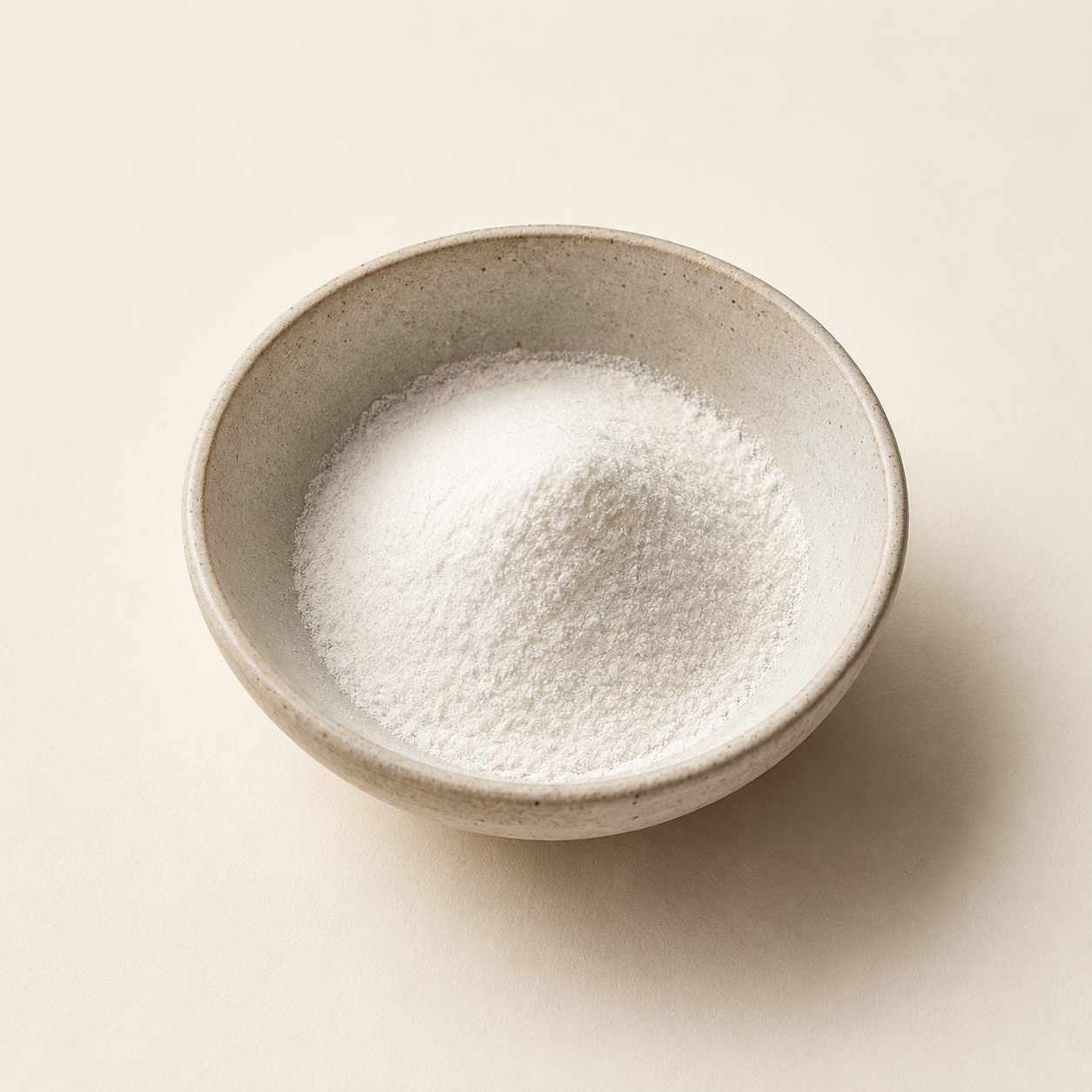
General repletion




Best-supported all-round retail form for raising magnesium intake.
More likely than glycinate to loosen stools.

Sleep or sensitive gut
Often the most practical choice when diarrhea limits other forms.
Its best-absorbed reputation is stronger than the direct comparative evidence.
High-solubility repletion
A well-supported soluble form for straightforward repletion.
Taste, tablet format and diarrhea risk can limit adherence.

Daytime use
Reasonable organic salt with a daytime, fatigue-oriented positioning.
Muscle and energy claims are only lightly supported.
Cognition experiments
Most relevant form for readers specifically testing brain or sleep claims.
Expensive and often low in elemental magnesium.
Cardio-focused readers
Plausible choice for people drawn to taurine and cardiovascular wellness.
Popularity exceeds the quality of direct form-specific evidence.
Constipation and budget
Cheap, widely available and useful when constipation relief is desired.
Poor default choice when the main goal is efficient magnesium repletion.
Bowel effects
Effective for bowel effects and used medically in specific contexts.
Not a good everyday form for raising magnesium status.
Magnesium citrate is an organic magnesium salt and the best-supported all-round option for routine oral supplementation. It has direct human evidence showing better absorption than magnesium oxide and is widely available at reasonable cost.
Citrate is a practical default when the goal is to improve magnesium intake or correct likely low intake. It dissolves well, has several human studies behind it and usually provides a useful elemental magnesium dose without premium pricing.
Its main limitation is GI tolerance. Citrate can pull water into the intestine, especially at higher doses, so it may loosen stools. That can be helpful if mild constipation is also a goal, but inconvenient for people with sensitive digestion.
Human studies repeatedly show that magnesium citrate produces better urinary or serum magnesium responses than magnesium oxide. That does not prove citrate is uniquely superior to every soluble form, but it gives citrate a stronger evidence base than most forms consumers actually see on shelves.
One 2012 crossover trial found stronger intracellular magnesium effects from oxide than citrate, but the oxide arm used a higher elemental dose and the intracellular endpoint was less standard than urinary excretion. The broader evidence still favors soluble forms for routine repletion.
Magnesium glycinate or bisglycinate is magnesium bound to glycine. It is a strong practical choice for bedtime use and sensitive digestion, but direct proof that it is the best-absorbed form is still limited.
Glycinate is popular because many users tolerate it better than citrate, oxide or chloride. The glycine component also fits the bedtime positioning, although most benefits should still be viewed as magnesium repletion unless a study tests the form directly.
The key distinction is practical rather than proven superiority. Glycinate may be the better supplement for someone who stops citrate because of diarrhea, even if citrate has stronger direct absorption evidence.
A recent randomized placebo-controlled trial using 250 mg/day elemental magnesium as bisglycinate found modest improvements in adults with self-reported poor sleep. This supports glycinate as a credible sleep-focused option, but it does not prove that the form works uniquely or that it is best for all sleep problems.
The chelate structure makes glycinate plausible as a well-tolerated and bioavailable form. However, the strongest comparative absorption evidence for magnesium supplements still more clearly supports citrate, chloride, lactate and aspartate over oxide. Glycinate needs more modern head-to-head trials in healthy adults.
Magnesium chloride is a soluble form with solid support for oral repletion. It is less trendy than glycinate but has better direct absorption logic than oxide.
Chloride belongs in the upper tier because it dissolves well and is repeatedly grouped with better-absorbed magnesium forms. It can be used in tablets, liquids and slow-release preparations.
The trade-offs are taste and GI tolerance. Some magnesium chloride products have a strong taste, and diarrhea can still occur if the dose is too high or taken all at once.
Older comparative human research found chloride, lactate and aspartate had much higher and roughly equivalent bioavailability than oxide. ODS also lists chloride among better-absorbed forms. That makes chloride a strong evidence-backed choice, even if it receives less marketing attention.
If using chloride, start with a modest elemental dose and increase only if tolerated. Slow-release products may improve comfort for some people, but total supplemental magnesium should still be considered alongside dietary intake and safety limits.
Magnesium malate pairs magnesium with malic acid and is commonly marketed for energy, muscle comfort and daytime use. It is a reasonable magnesium source, but form-specific efficacy claims are weak.
Malate is an organic salt, which gives it a plausible absorption profile, and EFSA has accepted bioavailability from di-magnesium malate in a regulatory context. That supports malate as a legitimate magnesium source.
The issue is not legitimacy. It is overclaiming. Fibromyalgia and fatigue-related marketing often leans on small or mixed studies, and the positive signals are not strong enough to rank malate above citrate, glycinate or chloride for most readers.
A classic Super Malic pilot trial did not show a clear benefit during the low-dose blinded phase, while later open-label dose escalation suggested improvement. A later evidence summary concluded magnesium and malic acid made little or no difference for pain and depressive symptoms in fibromyalgia. This is low-certainty territory.
Malate can still be a reasonable supplement form if it is well tolerated and provides an appropriate elemental dose. It should be chosen as a magnesium source, not because it has proven special effects for energy.
Magnesium L-threonate is a premium magnesium form marketed for brain delivery. It has emerging sleep and cognition evidence, but it is expensive and usually provides relatively little elemental magnesium.
L-threonate is different from most forms because its marketing is built around brain magnesium rather than simple repletion. It has direct recent trial activity, including sleep outcomes, which gives it a more credible niche than many exotic forms.
The drawback is that it is not an efficient general magnesium supplement. A serving may provide only around 72 to 144 mg elemental magnesium, depending on the product. If overall magnesium intake is low, L-threonate may not supply enough by itself.
A 2024 randomized trial reported that 1 g/day magnesium L-threonate for 21 days improved several objective sleep metrics and some subjective awakening or daytime-function measures versus placebo. This is promising, but short duration and brand-linked context limit how broadly it should be applied.
EFSA has assessed magnesium L-threonate in a novel-food safety framework and considered magnesium from the form bioavailable under proposed conditions. That supports legitimacy, but it is not proof that L-threonate is better than citrate or chloride for routine repletion.
Magnesium taurate combines magnesium with taurine and is marketed mainly to heart-focused users. The rationale is plausible, but direct human evidence on the combined salt is sparse.
Taurine has biological roles relevant to cardiovascular function, so magnesium taurate is appealing to people interested in blood pressure, rhythm or general heart wellness. However, evidence for taurine alone or magnesium alone should not automatically be treated as proof for magnesium taurate.
This form sits low in the ranking because popularity has outpaced data. It may be tolerated well and may be a legitimate source, but it is not a proven upgrade over citrate, glycinate or chloride.
Regulatory review supports magnesium taurate as a nutritional source, but this is different from proving heart benefits. Until direct trials compare magnesium taurate with other forms for relevant outcomes, it should be framed as plausible but unproven.
Magnesium oxide is cheap, common and high in elemental magnesium by weight, but it is poorly soluble and generally less useful for efficient repletion. It makes more sense when constipation relief or low cost is the main goal.
Oxide is the form many shoppers buy because it is inexpensive and the label often shows a large elemental magnesium number. The problem is that poor dissolution limits absorption, leaving more magnesium in the gut.
That gut-retained magnesium is not always bad. It can help draw water into the bowel, which is why oxide can be useful for constipation. The same feature makes it a poor default for people trying to raise magnesium status without GI side effects.
Human comparisons have reported poor fractional absorption for oxide, including one study estimating about 4% absorption, while chloride, lactate and aspartate performed significantly better. Dissolution research also shows that poor in vitro dissolution can translate into poor in vivo serum response.
A 2012 crossover trial found stronger intracellular magnesium changes with oxide than citrate, but the oxide dose provided more elemental magnesium and used a less common endpoint. This is enough to avoid saying oxide never works, but not enough to overturn the broader pattern.
Magnesium sulfate is best understood as Epsom salt or a medical magnesium salt rather than a first-line oral nutrition supplement. Oral use is more bowel-active than repletion-focused.
Magnesium sulfate has important medical uses, but that does not make it the best everyday oral supplement. For routine nutrition, it is less attractive because it is generally grouped with poorer absorbed forms and is more likely to act as a laxative.
If the goal is to improve magnesium intake, citrate, glycinate or chloride usually provide a better balance of absorption and tolerability. If the goal is bowel clearing or medical therapy, dosing should be clinician-directed.
Sulfate ranks last for routine oral supplementation because the goal of a nutrition supplement is usually steady intake support, not a strong bowel effect. Its place is mainly in medical contexts or short-term laxative use, not everyday repletion.
For most adults choosing a magnesium supplement for routine nutrition support, magnesium citrate is the best-supported all-round form. It has the clearest direct human absorption evidence among common retail choices, good availability and a reasonable cost. Magnesium glycinate or bisglycinate is the most sensible alternative when sleep focus or GI tolerance is more important than having the strongest head-to-head absorption data.
Magnesium chloride is also a strong repletion option and deserves more attention than it gets. Magnesium malate, L-threonate and taurate are more goal-specific and should be chosen with realistic expectations. Magnesium oxide and sulfate are better thought of as bowel-active forms than elite absorption forms, although oxide can make sense for constipation or budget use.
Start with intake
Magnesium-rich foods such as seeds, nuts, legumes, leafy greens and whole grains should be the base.
Match the form to the goal
Choose citrate for general use, glycinate for sensitive digestion or bedtime use, chloride for soluble repletion, and oxide mainly for constipation.
Dose gently
Split doses, take magnesium with food if needed, and be careful with supplemental doses above routine upper limits unless a clinician is supervising.
Disclaimer: We attempt to do our best to find relevant, accurate and most up to date information available in both, the public domain and in the clinical and medical research community. We recommend reviewing scientific sources for official information on the subject. This post is not intended as medical advice. Each individual person's health conditions vary and we advise to consult a doctor before taking any supplements.