

 Deutsch
 Español
 Suomi
Suomi Français
 Bahasa Indonesia
 Italiano
 日本語
日本語 Português
 Tagalog
Summary
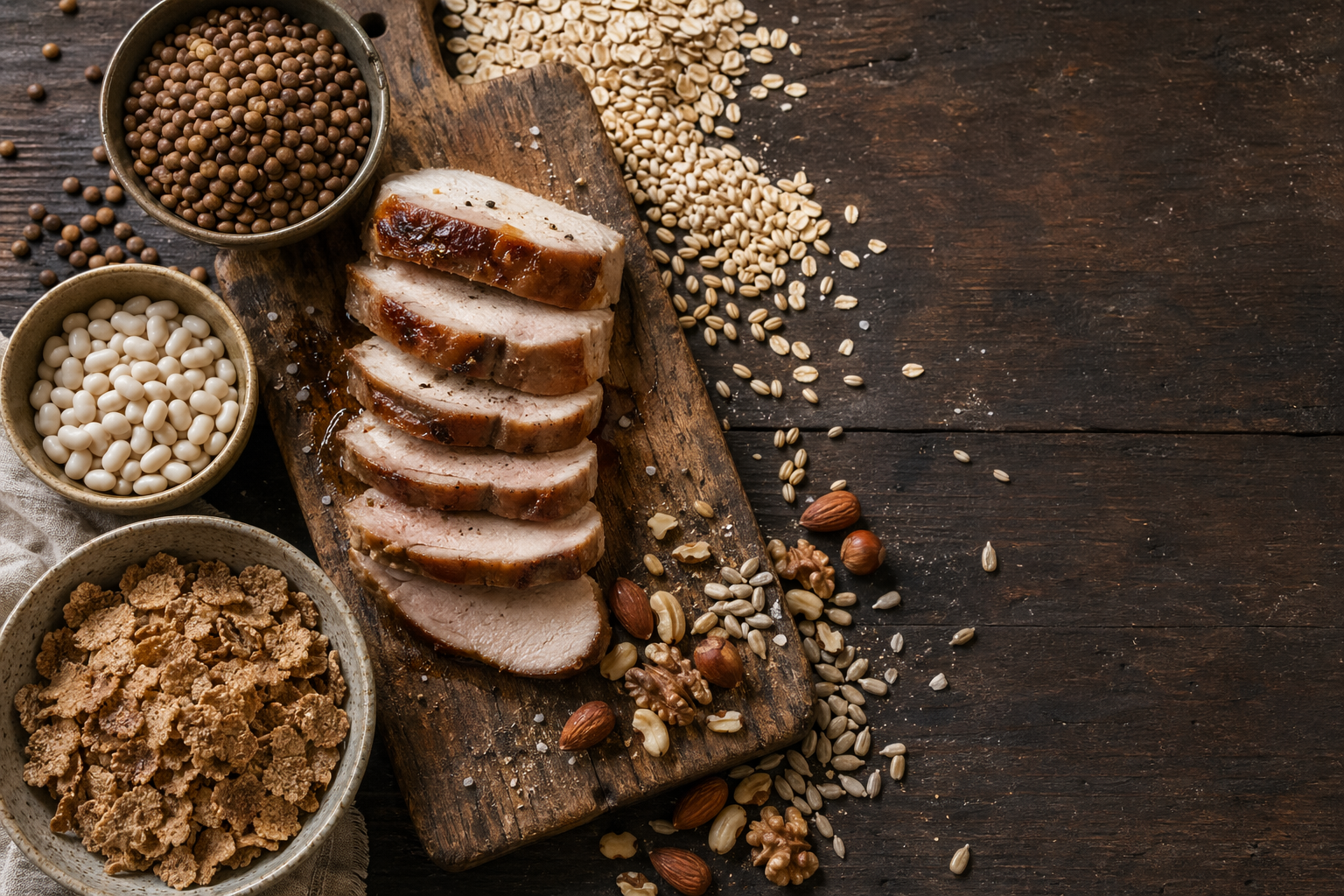
Vitamin B1, or thiamine, is an essential water-soluble nutrient that helps the body use carbohydrates for energy and supports normal nervous system and heart function. It occurs naturally in foods such as pork, legumes, whole grains, nuts, and fortified cereals, and it is sold in common supplement forms including thiamine hydrochloride, thiamine mononitrate, and benfotiamine.
The strongest reason to supplement is to prevent or treat deficiency. Severe deficiency can lead to beriberi and contribute to Wernicke-Korsakoff syndrome, especially in higher-risk groups. Claims that extra thiamine improves energy, heart failure, diabetic complications, or other chronic conditions are much less certain, and stronger modern trials have often failed to show clear clinical benefit.
Quick Facts
What is it useful for?
It is best supported for preventing and treating vitamin B1 deficiency and for maintaining normal energy metabolism, nerve function, and heart function.
Supplement types
Common forms include thiamine hydrochloride and thiamine mononitrate. Benfotiamine is a synthetic derivative with higher measured bioavailability.
Interactions
Loop diuretics such as furosemide may increase urinary thiamine losses, and alcohol misuse can reduce intake, absorption, storage, and utilization. Some anti-thiamin food factors can also affect status.
Side effects
Oral thiamine is generally well tolerated, and no formal upper limit was set because adverse effects from high oral intakes are poorly documented. Injectable use requires supervision because rare hypersensitivity reactions can occur.
Other possible benefits
Heart failure and diabetic complications have been studied, but results are inconsistent and recent stronger trials are often negative.
Regulatory status
In the EU, thiamine has authorized normal-function claims. In the US, it is a lawful dietary supplement ingredient, but disease-treatment claims are not allowed.
What We Already Know About It
Established role. Thiamine is an essential nutrient, not an optional performance booster. Its active coenzyme form, thiamine diphosphate, supports key enzymes involved in carbohydrate metabolism and cellular energy production, which helps explain its importance for normal nervous system function and cardiac function. The clearest clinical consequences of low status are deficiency diseases such as beriberi and thiamine-related neurological syndromes, especially in settings like alcohol misuse, severe malnutrition, bariatric surgery, dialysis, or prolonged vomiting. Dietary reference values in the US and Europe are based mainly on preventing deficiency and maintaining normal physiology rather than pushing blood levels far above adequacy. NIH ODS — Thiamin Fact Sheet; Linus Pauling Institute — Thiamin; National Academies — Dietary Reference Intakes for Thiamin; EFSA — Dietary Reference Values for Thiamin
What remains uncertain. The less settled question is whether extra thiamine, especially in high-dose or benfotiamine form, improves outcomes in people who are not clearly deficient. Benfotiamine does show better measured bioavailability than standard thiamine salts, but modern clinical evidence has not consistently shown better outcomes in chronic heart failure, diabetic nephropathy, or long-term diabetic neuropathy. So the evidence is strong for deficiency prevention and treatment, more moderate for understanding form differences and pharmacokinetics, and weak to preliminary for many of the broader therapeutic claims often used in marketing. PubMed — Xie et al. 2014 Benfotiamine Bioavailability Study; PubMed — He et al. 2024 Meta-analysis in Chronic Heart Failure; PMC — Alkhalaf et al. 2010 Diabetic Nephropathy Trial; BMJ Open Diabetes Research & Care — BOND Study
Summary of Relevant Scientific Research
Nutrition and deficiency fundamentals — NIH Office of Dietary Supplements
The NIH fact sheet gives the most practical overview of thiamine’s established role in energy metabolism, food sources, common supplement forms, intake recommendations, and major deficiency-risk groups. It is strongest for basic nutrition and deficiency management, not for proving benefits of high-dose use in people who already meet their needs. NIH ODS — Thiamin Fact Sheet
Authorized normal-function claims — European Food Safety Authority
EFSA concluded that thiamine contributes to normal energy-yielding metabolism, normal nervous system function, and normal cardiac function, while also setting a European intake framework tied to energy intake. These opinions support normal-physiology claims, but not broad disease-treatment claims in the general population. EFSA — Dietary Reference Values for Thiamin; EFSA — Thiamine Health Claims Opinion; EFSA — Thiamine Source and Function Opinion
Heart failure trials do not show clear benefit — He et al. 2024 and Xu et al. 2022
Two meta-analyses of randomized controlled trials found that thiamine supplementation did not clearly improve major chronic heart-failure outcomes such as ejection fraction, exercise capacity, symptom class, or natriuretic peptide markers versus placebo, even when thiamine status itself improved. PubMed — He et al. 2024 Meta-analysis in Chronic Heart Failure; PubMed — Xu et al. 2022 Meta-analysis in Chronic Heart Failure
Severe neurological deficiency matters, but dosing remains debated — Cochrane and Sato et al. 2024
Reviews of Wernicke-Korsakoff syndrome and Wernicke’s encephalopathy show that thiamine is central to prevention and treatment of severe deficiency-related neurological syndromes. However, randomized dose-finding evidence is limited, so uncertainty remains about the best regimen rather than about the importance of treatment itself. Cochrane Review — Thiamine for Wernicke-Korsakoff Syndrome; PubMed — Sato et al. 2024 Review of Wernicke’s Encephalopathy
Benfotiamine raises biomarkers more than outcomes — BENDIP and BOND
An earlier neuropathy trial suggested some short-term symptom improvement, especially at higher doses, but the more rigorous 12-month BOND study found that benfotiamine 300 mg twice daily improved thiamine biomarkers without improving the primary morphometric endpoint or multiple secondary neuropathy outcomes. PubMed — Stracke et al. 2008 BENDIP Trial; BMJ Open Diabetes Research & Care — BOND Study
Diabetic kidney and vascular claims remain mixed — Alkhalaf et al. 2010 and Carresi et al. 2025
In diabetic nephropathy, benfotiamine improved thiamine status but did not significantly reduce urinary albumin excretion or another kidney injury marker over 12 weeks. A later review noted some potentially favorable signals in diabetes-related cardiovascular dysfunction, while also emphasizing the need for larger and longer human trials. PMC — Alkhalaf et al. 2010 Diabetic Nephropathy Trial; International Journal of Molecular Sciences — Carresi et al. 2025 Review
Beliefs, Myths & Unproven Claims
More vitamin B1 automatically means more energy
Thiamine is required for normal energy-yielding metabolism, but that does not mean high-dose supplementation boosts energy in healthy people who already meet their needs. In a nutritionally replete person, extra B1 is not the same as creating extra metabolic capacity. EFSA — Thiamine Health Claims Opinion; NIH ODS — Thiamin Fact Sheet
Benfotiamine is clinically superior for everyone
The narrower and better-supported claim is that benfotiamine is often more bioavailable than standard thiamine salts. That pharmacokinetic advantage does not automatically translate into better real-world outcomes, and longer studies in diabetic neuropathy and nephropathy have not confirmed dramatic universal benefits. PubMed — Xie et al. 2014 Benfotiamine Bioavailability Study; BMJ Open Diabetes Research & Care — BOND Study; PMC — Alkhalaf et al. 2010 Diabetic Nephropathy Trial
Thiamine is an established treatment for major chronic diseases
Claims that vitamin B1 is a proven treatment for chronic heart failure, Alzheimer’s disease, or broad diabetic complications go beyond the evidence reviewed here. Its strongest evidence base remains prevention and treatment of deficiency diseases such as beriberi and Wernicke-related syndromes, while many broader therapeutic claims remain limited, inconsistent, or low quality. PubMed — He et al. 2024 Meta-analysis in Chronic Heart Failure; PubMed — Xu et al. 2022 Meta-analysis in Chronic Heart Failure; Cochrane Review — Thiamine for Wernicke-Korsakoff Syndrome; PMC Review — Thiamine Deficiency and Anti-thiamin Factors
Detailed Research Observations
Essential nutrient first, supplement second
Thiamine’s history is rooted in classic deficiency disease, not in modern wellness marketing. It was one of the earliest vitamins identified as essential, and its medical importance was established through beriberi and later Wernicke-Korsakoff syndrome. That historical context matters because it shows where the evidence is strongest: when thiamine is missing, replacement can be clinically meaningful and sometimes lifesaving. It also helps explain why public-health measures such as food fortification and grain enrichment became so important after processing practices reduced natural vitamin content in staple foods. NIH ODS — Thiamin Fact Sheet; PMC Review — Thiamine Deficiency and Anti-thiamin Factors
This background supports a conservative interpretation of supplementation. The strongest rationale is maintaining adequacy and correcting deficiency, not using vitamin B1 as a broad performance enhancer. That distinction runs through the entire evidence base: prevention of deficiency is well supported, while many advertised uses outside clear deficiency remain much less certain. NIH ODS — Thiamin Fact Sheet
Mechanism is clear, but mechanism is not the same as proof of benefit
Thiamine works mainly through phosphorylated coenzyme forms, especially thiamine diphosphate, which help enzymes involved in carbohydrate metabolism and cellular energy production. This biochemical role explains why tissues with high energy demand, especially the nervous system and heart, are vulnerable when thiamine status drops. It also underpins the authorized normal-function claims around energy-yielding metabolism, nervous system function, and cardiac function. Linus Pauling Institute — Thiamin; EFSA — Thiamine Source and Function Opinion
But the article repeatedly separates plausible mechanism from proven outcome. A nutrient can be essential to metabolism without becoming a proven therapy for every condition linked to energy production, nerve signaling, or oxidative stress. That is why strong mechanistic reasoning does not automatically validate high-dose supplementation in nondeficient adults. EFSA — Thiamine Health Claims Opinion; NIH ODS — Thiamin Fact Sheet
Food sources and processing still matter in real life
For most adults, the best-supported strategy is simply adequate intake from food and fortified staples. Major sources listed in the article include pork, fish, legumes, nuts, whole grains, yeast, and enriched breads and cereals. This is not just a dietary side note: processing can materially affect thiamine intake. Milling removes thiamine-rich grain layers, while prolonged heating and discarding cooking water can reduce thiamine content. NIH ODS — Thiamin Fact Sheet; Linus Pauling Institute — Thiamin
The article also notes practical anti-thiamin issues. Raw freshwater fish, raw shellfish, and some plant compounds can interfere with thiamine activity or status, although these are usually relevant only in specific dietary patterns or higher exposures. The broader point is that day-to-day thiamine status is often shaped more by diet quality, food processing, and risk factors such as alcohol misuse than by whether someone chooses a premium supplement form. PMC Review — Thiamine Deficiency and Anti-thiamin Factors
Supplement form differences are real, but outcome advantages are not established
Standard supplement forms include thiamine hydrochloride and thiamine mononitrate, both of which are widely used in multivitamins and single-ingredient products. The article also mentions thiamine monophosphate chloride and thiamine pyrophosphate chloride in European discussions, while highlighting benfotiamine as a different, synthetic derivative designed to improve absorption characteristics. That matters because products sold under the same “vitamin B1” label are not chemically identical. NIH ODS — Thiamin Fact Sheet; EFSA — Dietary Reference Values for Thiamin; University of Bologna Repository — EFSA Benfotiamine Source Opinion
Comparative studies do support a pharmacokinetic difference. Benfotiamine produced higher blood thiamine exposure and higher erythrocyte thiamine diphosphate than standard salts in healthy-volunteer research. However, the article emphasizes that better biomarker performance is not the same as proof of better clinical outcomes. This is one of the most important interpretation points in the whole review: absorption data can explain form differences, but clinicians and regulators still judge usefulness mainly by patient outcomes. PubMed — Xie et al. 2014 Benfotiamine Bioavailability Study; PubMed — Schreeb et al. 1997 Bioavailability Study
Deficiency treatment is the core clinical use
The best-supported role of supplementation is preventing and treating deficiency, especially in people at higher risk. Groups named in the article include those with alcohol dependence, older adults, people with diabetes, HIV/AIDS, bariatric surgery patients, people on hemodialysis, and those with persistent vomiting, malnutrition, or severe illness. In these cases, supplementation is not framed as optimization or extra wellness support, but as replacement of a nutrient that may be inadequate or rapidly depleted. NIH ODS — Thiamin Fact Sheet
The neurological end of deficiency is especially important. Suspected Wernicke’s encephalopathy or other severe deficiency states are treated as medical urgencies, and the review notes that parenteral thiamine is often required under supervision. At the same time, randomized trial evidence is limited for defining the best exact regimen. The uncertainty is therefore about dose-finding and protocol details, not about whether severe thiamine deficiency is clinically serious. PubMed — Sato et al. 2024 Review of Wernicke’s Encephalopathy; Cochrane Review — Thiamine for Wernicke-Korsakoff Syndrome
Heart failure and diabetes claims remain restrained by outcome data
Thiamine has a plausible rationale in chronic heart failure because loop diuretics may increase urinary losses and cardiac tissue has high energy demands. Yet when tested in randomized trials, the results are not persuasive enough to support routine high-dose use as an established heart-failure therapy. The two meta-analyses highlighted in the article did not show convincing improvements in major outcomes such as ejection fraction, symptoms, walking distance, or biomarkers, even though thiamine status itself improved. PubMed — He et al. 2024 Meta-analysis in Chronic Heart Failure; PubMed — Xu et al. 2022 Meta-analysis in Chronic Heart Failure
The same caution applies to diabetes-related uses. Benfotiamine is often marketed for neuropathy, nephropathy, and vascular complications, but the human outcome evidence is mixed. The earlier BENDIP study suggested some symptom improvement in certain analyses, while the longer BOND study did not show meaningful benefit on the primary structural endpoint or many secondary neuropathy outcomes over 12 months. Likewise, a placebo-controlled nephropathy trial did not find significant kidney benefit, and later reviews still call for larger and longer trials. PubMed — Stracke et al. 2008 BENDIP Trial; BMJ Open Diabetes Research & Care — BOND Study; PMC — Alkhalaf et al. 2010 Diabetic Nephropathy Trial; International Journal of Molecular Sciences — Carresi et al. 2025 Review
Regulation and evidence gaps support a cautious practical message
The article notes that EU and US regulation differ mainly in claim framework rather than in underlying biology. In the EU, thiamine has authorized claims for normal energy-yielding metabolism, nervous system function, and cardiac function when products meet the conditions for use. In the US, thiamine is a lawful dietary supplement ingredient, but structure/function claims cannot cross into disease-treatment claims without triggering drug-style regulation. EFSA — Thiamine Health Claims Opinion; EFSA — Thiamine Source and Function Opinion; FDA — Structure/Function Claims for Supplements
Source-form issues also matter. Standard salts are established, while EFSA viewed some alternate forms more favorably than benfotiamine in one source-form opinion and also reported that it could not assess a thiamine-enriched yeast dossier because the file was inadequate. Taken together with the clinical evidence gaps, that regulatory picture supports a practical takeaway: food and standard supplementation are the most defensible tools for adequacy, while aggressive or innovative high-dose strategies still need stronger long-term outcome data. University of Bologna Repository — EFSA Benfotiamine Source Opinion; EFSA — Thiamine-enriched Yeast Opinion; PMC Review — Thiamine Deficiency and Anti-thiamin Factors
Regulatory Status (EU and US)
European Union
In the EU, thiamine has a relatively clear health-claim framework. EFSA has supported claims that thiamine contributes to normal energy-yielding metabolism, normal function of the nervous system, and normal cardiac function, provided a food or supplement meets the conditions required to be considered a source of thiamine. This allows normal-function nutrition claims on compliant products, but not disease-treatment claims. EFSA — Thiamine Health Claims Opinion; EFSA — Thiamine Source and Function Opinion
United States
In the US, thiamine is a lawful dietary supplement ingredient, but claims are regulated through the supplement structure/function framework. FDA does not pre-approve standard structure/function claims; companies are responsible for ensuring that claims are truthful and not misleading, and disease claims would move a product toward drug regulation. Standard salts such as thiamine hydrochloride and mononitrate are well established, while some alternate source forms have faced more limited supporting data in European evaluations. FDA — Structure/Function Claims for Supplements; University of Bologna Repository — EFSA Benfotiamine Source Opinion; EFSA — Thiamine-enriched Yeast Opinion
Dosage and Standardization
Routine intake: 1.1 mg/day for adult women, 1.2 mg/day for adult men, and 1.4 mg/day in pregnancy and lactation.
Mild deficiency: 10 mg/day for 1 week, then 3–5 mg/day for at least 6 weeks.
Severe deficiency/Wernicke risk: supervised parenteral treatment, with cited neurologic guidance using 200 mg IV three times daily.
Safety And Interactions
Oral use: Thiamine is generally well tolerated, and no formal upper intake level was established because adverse effects from high oral intakes are poorly documented.
Parenteral use: Injectable thiamine can be essential in severe deficiency or suspected Wernicke’s encephalopathy, but rare hypersensitivity reactions, including anaphylaxis, are part of the risk-benefit picture, so intravenous use belongs in supervised care.
Interactions and depletion risks: Loop diuretics such as furosemide may increase urinary thiamine losses, fluorouracil has case-report links to thiamine-related neurologic complications, and alcohol misuse can reduce intake, absorption, storage, and utilization. Higher-risk groups include people with bariatric surgery, dialysis, persistent vomiting, malnutrition, HIV/AIDS, diabetes, and some older adults.
Conclusion
Vitamin B1 is best understood first as an essential nutrient. The strongest evidence supports maintaining adequate intake and correcting deficiency, not using high-dose products as a general answer for fatigue, chronic heart disease, diabetic complications, or cognitive decline.
Standard forms such as thiamine hydrochloride and mononitrate are well established for basic supplementation, while benfotiamine appears more bioavailable but has not consistently shown superior patient-centered outcomes in stronger long-term trials. For most people, the balanced takeaway is simple: prioritize food and fortified sources, supplement when intake is low or deficiency risk is real, and be cautious about broad marketing claims that go beyond current research.
Disclaimer
Disclaimer: We attempt to do our best to find relevant, accurate and most up to date information available in both, the public domain and in the clinical and medical research community. We recommend reviewing scientific sources for official information on the subject. This post is not intended as medical advice. Each individual person's health conditions vary and we advise to consult a doctor before taking any supplements.