
 Deutsch
 Español
 Suomi
Suomi Français
 Bahasa Indonesia
 Italiano
 日本語
日本語 Português
 Tagalog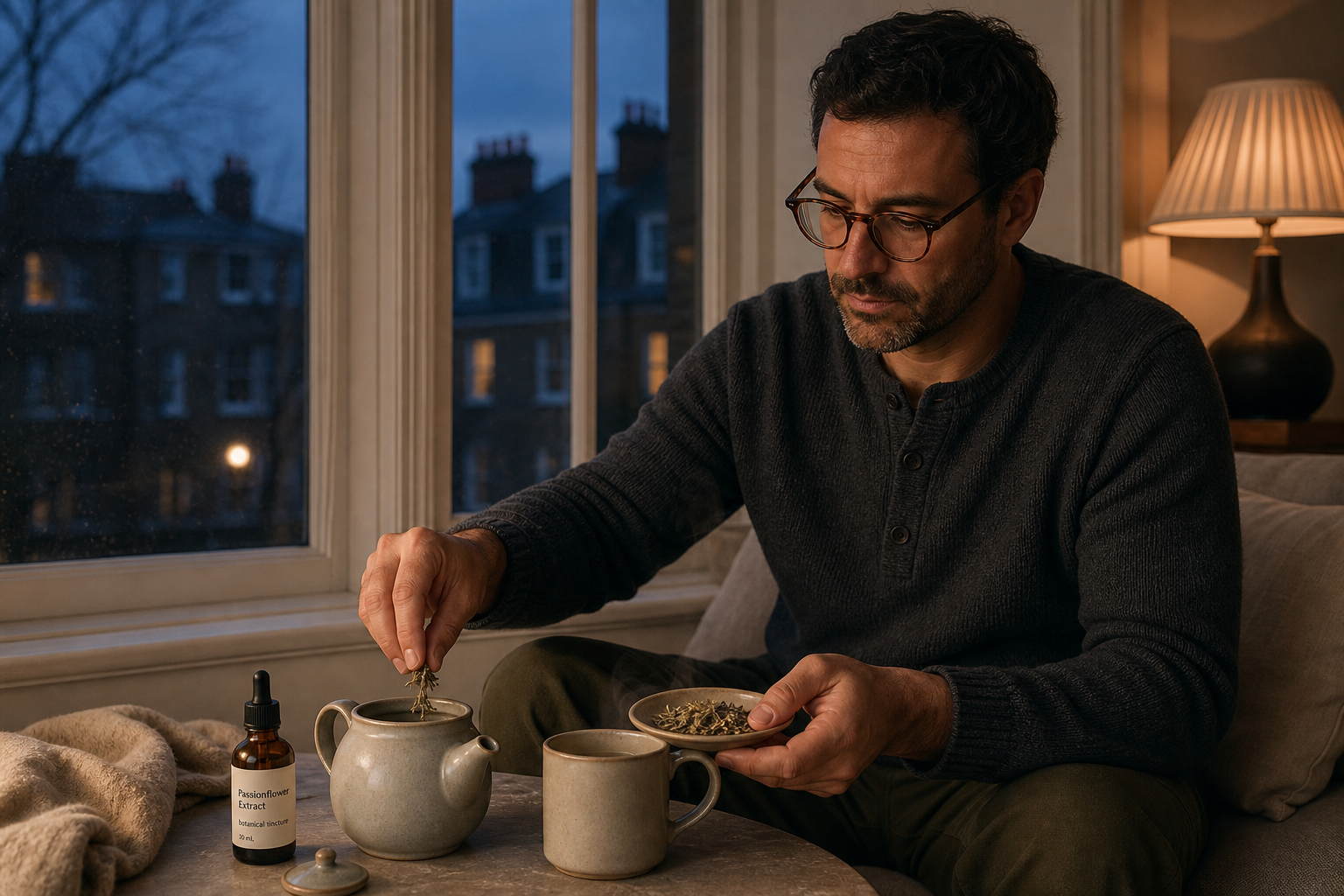
Summary
Passionflower supplements usually contain Passiflora incarnata aerial parts, not edible passionfruit. They are mainly used for mild stress, nervous restlessness, situational anxiety, and gentle sleep support. Traditional use is strong, but modern clinical evidence is still limited and products vary substantially by species, plant part, extraction method, and standardization.
Small human studies suggest benefits are most plausible for short-term procedure-related anxiety and possibly modest sleep improvement in some adults. The evidence is not strong enough to treat passionflower as a proven therapy for chronic anxiety disorders or insomnia, and safety, dosing, and product comparability remain important practical concerns.
Quick Facts
What is it useful for?
Mainly mild stress, nervous restlessness, situational anxiety, and gentle sleep support. The best-supported human use is short-term calming in procedure-related settings.
Supplement types
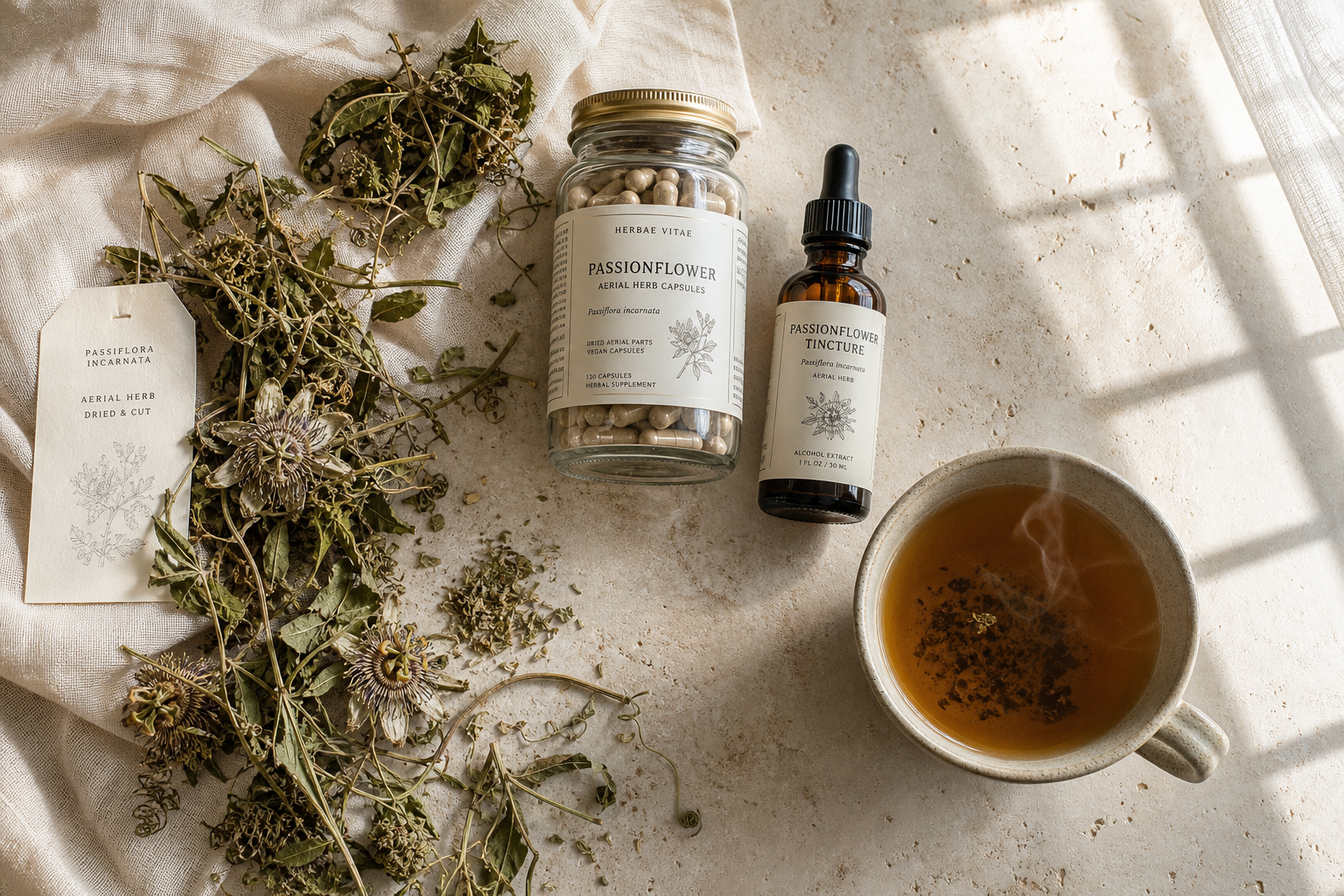
Tea-cut herb, powdered herb, tinctures, glycerol liquids, hydroethanolic extracts, and dry extract capsules. It also appears in multi-ingredient calm or sleep blends.
Interactions
It may add to sedative effects of alcohol, anesthetics, benzodiazepines, barbiturates, valerian, and other calming products. Laboratory data also suggest possible OATP transporter interactions, but clinical significance is unclear.
Side effects
Short-term use appears generally tolerated, but drowsiness, dizziness, impaired alertness, and occasional stomach upset can occur. Rare serious adverse events have also been reported.
Other possible benefits
Early research suggests possible help with pre-procedure anxiety and some aspects of sleep quality. Evidence for broader psychiatric or long-term therapeutic use remains limited.
Regulatory status
In the EU, Passiflora incarnata herb has traditional herbal medicinal use status for mild mental stress and sleep support. In the U.S., it is sold as a dietary supplement without FDA pre-approval for efficacy.
What We Already Know About It
Best-supported view. The most defensible scientific position is that passionflower has plausible calming and sleep-support effects, but the clinical evidence is uneven. Human findings are strongest for short-term, situational anxiety, especially before surgery or dental procedures, and there is some support for modest sleep benefit in small studies. By contrast, evidence for chronic anxiety disorders, broad mental-health treatment, or dependable insomnia therapy remains limited. Major reviews and official summaries repeatedly describe the clinical base as small, mixed, and methodologically weak. (NCCIH — Passionflower; Cochrane Review — Passiflora for Anxiety Disorders in Adults; PMC — Neuropsychiatric Systematic Review)
Mechanism remains nuanced. Passionflower is often discussed as a simple GABA herb, but the chemistry is more complicated. EMA reports that the main constituents are largely C-glycosyl flavones, while beta-carboline alkaloids are only trace constituents and are often undetectable in commercial material. Preclinical work also suggests extraction method can change pharmacological behavior, helping explain why tea, tincture, and standardized extract products may not be clinically interchangeable. Overall, the evidence level is best described as moderate to preliminary for mild calming or sleep-support use, and limited for stronger therapeutic claims. (EMA Assessment Report — Passiflora incarnata Herb; PMC — Extraction Method and GABA Activity; Biological & Pharmaceutical Bulletin — Passionflower Chemotypes)
Summary of Relevant Scientific Research
Limited Clinical Base for Anxiety — Cochrane Review and NCCIH
Major evidence summaries agree that passionflower is widely promoted for anxiety and sleep, but the clinical base is small and not definitive. The Cochrane review found only two eligible anxiety-disorder studies with 198 participants, too little to establish effectiveness or safety with confidence. (Cochrane Review — Passiflora for Anxiety Disorders in Adults; NCCIH — Passionflower)
Traditional Use, Not Proven Efficacy — European Medicines Agency
EMA recognizes Passiflora incarnata herb for traditional herbal medicinal use to relieve mild mental stress and aid sleep, but explicitly separates this from well-established medicinal efficacy. Its assessment report also notes serious methodological deficiencies in published clinical studies. (EMA — Passiflorae herba; EMA Assessment Report — Passiflora incarnata Herb)
Insomnia Trial Shows a Mixed Signal — PubMed 31714321
A randomized placebo-controlled insomnia study found improvements in some objective sleep measures, including total sleep time, after passionflower treatment. However, sleep efficiency and wake-after-sleep-onset results were mixed, so the study supports interest but does not settle the question. (PubMed — Insomnia Trial 31714321)
Best Human Signal Is Procedure-Related Anxiety — PubMed and PMC Trials
In ambulatory surgery patients, a single oral dose reduced preoperative anxiety versus placebo without clear psychomotor impairment. Dental and oral-surgery studies also reported anxiolytic effects or improved stress biomarkers, suggesting the most practical evidence is for short-term, situational use. (PubMed — Preoperative Anxiety Trial 18499602; PMC — Dental Extraction Study; PMC — Triple-Blind Oral Surgery Study)
Source and Extraction May Change the Product — Chemistry and Phytochemical Studies
Laboratory and chemotype papers show that cultivated P. incarnata can have distinct flavonoid patterns, and extraction method can alter GABA-related and animal-model effects. Comparative metabolite work also found P. incarnata richer in C-flavonoids than other Passiflora species. (Biological & Pharmaceutical Bulletin — Passionflower Chemotypes; PMC — Extraction Method and GABA Activity; PubMed — Passiflora Species Metabolite Study)
Beliefs, Myths & Unproven Claims
Myth: It is a proven natural treatment for chronic anxiety or insomnia
The current evidence does not support that level of certainty. Better research suggests a narrower picture: small, sometimes positive studies for short-term anxiety and possible sleep support, with major limitations in study size, duration, and product consistency. (Cochrane Review — Passiflora for Anxiety Disorders in Adults; EMA Assessment Report — Passiflora incarnata Herb)
Myth: All passionflower products are basically the same
Species, plant part, solvent, extract ratio, chemotype, and whether a product is single-ingredient or blended can all change the chemistry of the final supplement. Tea, tincture, powder, and dry extract products should not be assumed to behave identically. (EMA Assessment Report — Passiflora incarnata Herb; Biological & Pharmaceutical Bulletin — Passionflower Chemotypes)
Myth: It works because it is rich in harmala alkaloids and acts like a strong MAOI
The EMA assessment report does not support this common narrative for commercial P. incarnata material. It states that beta-carboline alkaloids are trace constituents and usually undetectable, so the standard marketing story oversimplifies the chemistry. (EMA Assessment Report — Passiflora incarnata Herb)
Myth: Passionfruit research proves passionflower supplements work and are risk-free
Food-based research on Passiflora species such as P. edulis does not automatically apply to P. incarnata herb-top supplements. The idea that “natural” means harmless is also misleading, given pregnancy warnings, sedation cautions, anesthesia concerns, and rare serious adverse-event reports. (PMC — Passiflora Species Review; NCCIH — Passionflower; PubMed — Case Report on Adverse Event 10696928)
Detailed Research Observations
Botanical Identity and Traditional Background
Passionflower supplements are usually based on Passiflora incarnata, an accepted species native to parts of the United States and Bermuda and later introduced elsewhere. In official herbal monographs, the medicinal material is defined as the herb or aerial parts rather than the edible fruit. This matters because many consumer assumptions start with the wrong plant material. Traditional North American and European herbal practice used P. incarnata for nervousness, restlessness, and sleep support, which helps explain why it still holds an important place in herbal medicine even though modern clinical evidence remains limited. (POWO — Passiflora incarnata; EMA — Passiflorae herba; EMA Monograph — Passiflora incarnata Herb)
Food Passionfruit Is Not the Same as Medicinal Passionflower
Consumers often assume passionflower supplements are just concentrated versions of passionfruit foods, but the evidence base does not support that shortcut. Reviews of the Passiflora genus show that P. edulis and other species are often studied as foods for fruit, fiber, pectin, or polyphenol uses, while the anxiolytic and sleep-support tradition is centered on P. incarnata herb tops. Comparative metabolite work also suggests that P. incarnata is especially rich in C-flavonoids compared with other Passiflora species, which helps explain why official monographs focus on it. Evidence from one species therefore should not be casually transferred to another. (PMC — Passiflora Species Review; PubMed — Passiflora Species Metabolite Study)
Forms, Chemistry, and Interchangeability Problems
Official European guidance lists tea-cut herb, powdered herb, and several liquid or dry extracts, including hydroethanolic and glycerol-based preparations. Health Canada likewise recognizes dried herb top, powdered forms, non-standardized ethanolic preparations, and aqueous preparations. These are related forms of the same herb, but they are not interchangeable in a simple milligram-for-milligram way because solvent, extract ratio, and concentration alter the mix of compounds delivered. (EMA Monograph — Passiflora incarnata Herb; Health Canada Monograph — Passionflower)
The EMA assessment report notes that passionflower chemistry is dominated mainly by flavonoids, especially C-glycosyl flavones, and that the European Pharmacopoeia uses total flavonoids expressed as vitexin as a quality marker. It also reports that beta-carboline alkaloids are trace constituents and often undetectable in commercial material. A chemotype study identified at least two distinct flavonoid patterns within cultivated P. incarnata, reinforcing that one supplier’s material may not chemically match another’s even when the plant name looks identical on the label. (EMA Assessment Report — Passiflora incarnata Herb; Biological & Pharmaceutical Bulletin — Passionflower Chemotypes)
Mechanisms Are Plausible but Not Fully Settled
Passionflower is often marketed as a simple “GABA herb,” yet the science is more nuanced. Preclinical work found GABA-related activity in vitro and showed that anxiolytic, anxiogenic, and anticonvulsant effects in vivo varied by extraction method. That means a tea, tincture, and dry extract may all be sold as passionflower while still behaving differently in biological systems. The mechanistic story is therefore plausible, but not simple enough to justify sweeping claims about all products working the same way. (PMC — Extraction Method and GABA Activity; EMA Assessment Report — Passiflora incarnata Herb)
A more recent in-vitro study also found interactions with OATP2B1 and OATP1A2 transporters, which raises the possibility of drug-transport interactions beyond simple sedation stacking. However, the real-world meaning of that finding is not yet established because it remains laboratory-level evidence. At the same time, there is still very little direct human bioavailability research showing which preparations best deliver active compounds. This is an important evidence gap when comparing products or trying to define a best extract. (PubMed — OATP Transporter Interaction Study; PMC — Neuropsychiatric Systematic Review)
Anxiety: Best Evidence for Short-Term, Situational Use
The strongest practical case for passionflower is not as a proven treatment for generalized anxiety disorder, but as a short-term calming aid in specific settings. In ambulatory surgery patients, a single oral dose lowered preoperative anxiety versus placebo without obvious psychomotor impairment. Small dental and oral-surgery studies also reported anxiolytic effects, with one study finding results comparable to midazolam in that particular setting and another showing reductions in biochemical stress markers during oral surgery. These studies are encouraging because they match a real-world use case, but they are still small and procedure-specific. (PubMed — Preoperative Anxiety Trial 18499602; PMC — Dental Extraction Study; PMC — Triple-Blind Oral Surgery Study)
The limits matter as much as the positive signals. These trials do not show that passionflower is an established therapy for chronic anxiety disorders, and major reviews still describe the literature as too small and methodologically weak to support confident claims. The strongest interpretation is therefore narrow: passionflower may help selected adults in short-term anxiety contexts, but broader psychiatric use is not well established. (Cochrane Review — Passiflora for Anxiety Disorders in Adults; NCCIH — Passionflower)
Sleep: Possible Benefit, but Outcomes Are Mixed
Sleep is the second major reason people take passionflower. NCCIH states that short-term oral passionflower may help sleep in some contexts, but effects on sleep latency and sleep maintenance are mixed. In a randomized placebo-controlled insomnia study, some objective outcomes such as total sleep time improved, while others did not clearly outperform placebo. This makes the trial clinically interesting but not decisive. (NCCIH — Passionflower; PubMed — Insomnia Trial 31714321)
Older public-facing discussions often point to short-term tea use around 2 g dried herb before bed, which suggested modest subjective improvement in sleep quality rather than dramatic insomnia reversal. Taken together, the sleep literature supports plausibility more than certainty. Passionflower may offer gentle sleep support in some adults, but the current evidence base is still preliminary and too inconsistent to support strong claims for insomnia treatment in general. (PubMed — Insomnia Trial 31714321; NCCIH — Passionflower)
Overall Strength of Evidence and Remaining Gaps
The Cochrane review remains a useful corrective because it found too little high-quality evidence to conclude that passionflower is effective or safe for anxiety disorders in adults. A broader neuropsychiatric review reached a similar conclusion: there are positive signals, especially for anxiety and sleep, but the literature is small, heterogeneous, and difficult to compare because trials use different extracts, doses, populations, and outcomes. This is one reason the overall evidence is better described as limited to moderate rather than strong. (Cochrane Review — Passiflora for Anxiety Disorders in Adults; PMC — Neuropsychiatric Systematic Review)
Important questions also remain unanswered. There is limited long-term safety data, little direct human bioavailability work, no strong evidence defining an optimal standardized extract, and not enough comparative research showing whether one chemotype or solvent system performs better clinically. Evidence is also insufficient for routine use in children, pregnancy, breastfeeding, or complex psychiatric care. For now, the most scientifically honest summary is that passionflower may be useful as a short-term calming or sleep-support herb in selected adults, but larger, better-designed, product-specific trials are still needed. (NCCIH — Passionflower; PMC — Neuropsychiatric Systematic Review; EMA Assessment Report — Passiflora incarnata Herb)
Regulatory and Shopping Implications
In Europe, the clearest official framing is as a traditional herbal medicinal product for mild mental stress and sleep support, not as a well-established clinically proven anxiety medicine. In the United States, passionflower is generally sold as a dietary supplement under DSHEA, meaning products are not preapproved by FDA for efficacy before marketing. This contrast helps explain why U.S. consumers may encounter wider variability in labeling and formulation, especially in blended calm or sleep products. (EMA — Passiflorae herba; FDA — Dietary Supplements)
For consumers, the most practical quality questions are straightforward: Is the ingredient truly Passiflora incarnata? Does the label specify herb top or aerial parts? Is the form tea-cut herb, powder, tincture, or dry extract? Is there an extract ratio or dried-herb equivalent? Is the formula single-ingredient or mixed with other sedating compounds? The NIH Dietary Supplement Label Database can help compare how U.S. products describe their forms and amounts, but it does not verify label accuracy or clinical effectiveness. (NIH ODS — Dietary Supplement Label Database; FDA — Dietary Supplements)
Regulatory Status (EU and US)
European Union
In the EU, passionflower is mainly framed through the EMA/HMPC system as a traditional herbal medicinal product. The official position for Passiflora incarnata herb is use for relief of mild symptoms of mental stress and as a sleep aid. EMA also states that published clinical evidence was insufficient for well-established medicinal use, so the recognition is based on long-standing use and acceptable safety in that context rather than strong modern efficacy trials. (EMA — Passiflorae herba; EMA Assessment Report — Passiflora incarnata Herb)
United States
In the U.S., passionflower is generally marketed as a dietary supplement under DSHEA. FDA does not pre-approve supplements for efficacy before sale, and manufacturers are responsible for safety and truthful labeling, with most oversight occurring after products reach the market. Health Canada provides a more prescriptive monograph-based framework, which highlights how regional availability does not equal the same regulatory standard or the same certainty of effectiveness. (FDA — Dietary Supplements; Health Canada Monograph — Passionflower)
Dosage and Standardization
Traditional-use guidance: EMA lists tea made from 1-2 g comminuted herb in 150 mL boiling water 1-4 times daily, and powdered herb at 0.5-2 g 1-4 times daily for adults and adolescents over 12. Health Canada allows roughly 0.25-8 g/day dried-herb-top equivalents for dry, powdered, or non-standardized ethanolic forms, and 1-8 g/day for aqueous preparations. Research has also used about 2 g tea before bed or single pre-procedure extract doses.
Safety And Interactions
Short-term use of passionflower appears generally tolerated in many studies and official summaries, but the safety database is limited. The most commonly noted concerns are drowsiness, dizziness, and reduced alertness, so caution is advised before driving or operating machinery. Long-term safety is much less clear because many studies have been small and short. (NCCIH — Passionflower; EMA Monograph — Passiflora incarnata Herb; MSKCC — Passionflower)
The main interaction concern is additive sedation with alcohol, benzodiazepines, barbiturates, anesthetics, or sedating supplements such as valerian. NCCIH also advises caution around anesthesia and surgery. A separate in-vitro study found OATP transporter interactions, which suggests theoretical broader drug-interaction potential, although its clinical significance is still unclear. (NCCIH — Passionflower; MSKCC — Passionflower; PubMed — OATP Transporter Interaction Study)
Pregnant or breastfeeding women should avoid self-prescribing unless a clinician advises otherwise, and EMA does not recommend use in children under 12. A rare case report described severe nausea, vomiting, prolonged QTc, and nonsustained ventricular tachycardia after therapeutic self-use, showing that serious adverse events are possible even if uncommon. (EMA Monograph — Passiflora incarnata Herb; PubMed — Case Report on Adverse Event 10696928; Health Canada Monograph — Passionflower)
Conclusion
Passionflower is a legitimate botanical supplement with a real traditional history, but its modern evidence base is best described as limited to moderate rather than strong. The main supported use is short-term calming support, particularly for mild stress or situational anxiety, with a secondary possibility of modest sleep benefit in some adults. That is a more measured conclusion than many marketing claims suggest.
For consumers, the biggest practical lesson is that source differences matter. A product made from true Passiflora incarnata herb top, with a clear extraction method or dried-herb equivalent, is easier to evaluate than a vague proprietary blend. Until larger product-specific trials are available, passionflower is best viewed as a plausible short-term option for selected adults, not a proven cure-all or interchangeable ingredient.
Disclaimer
Disclaimer: We attempt to do our best to find relevant, accurate and most up to date information available in both, the public domain and in the clinical and medical research community. We recommend reviewing scientific sources for official information on the subject. This post is not intended as medical advice. Each individual person's health conditions vary and we advise to consult a doctor before taking any supplements.