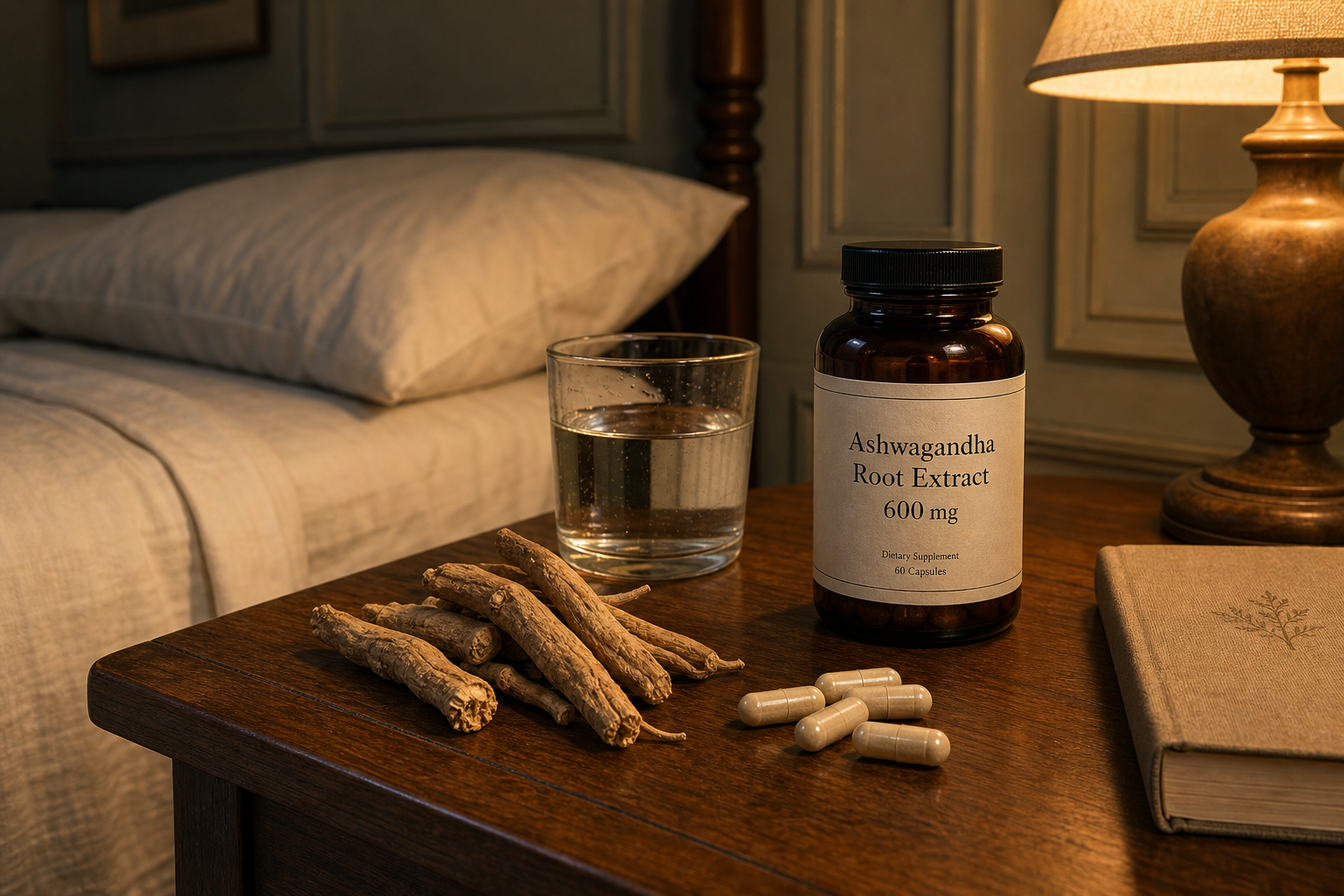
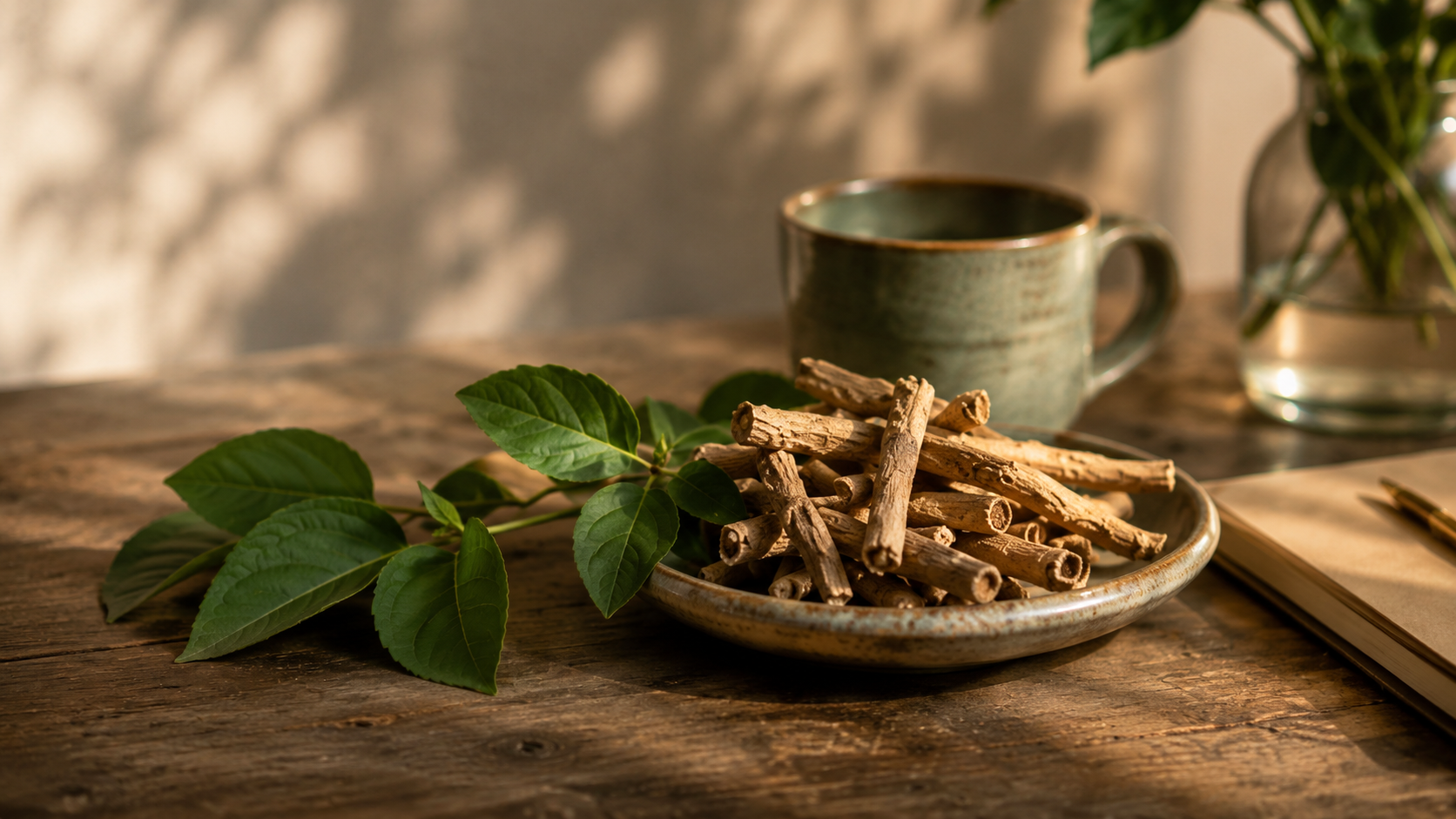
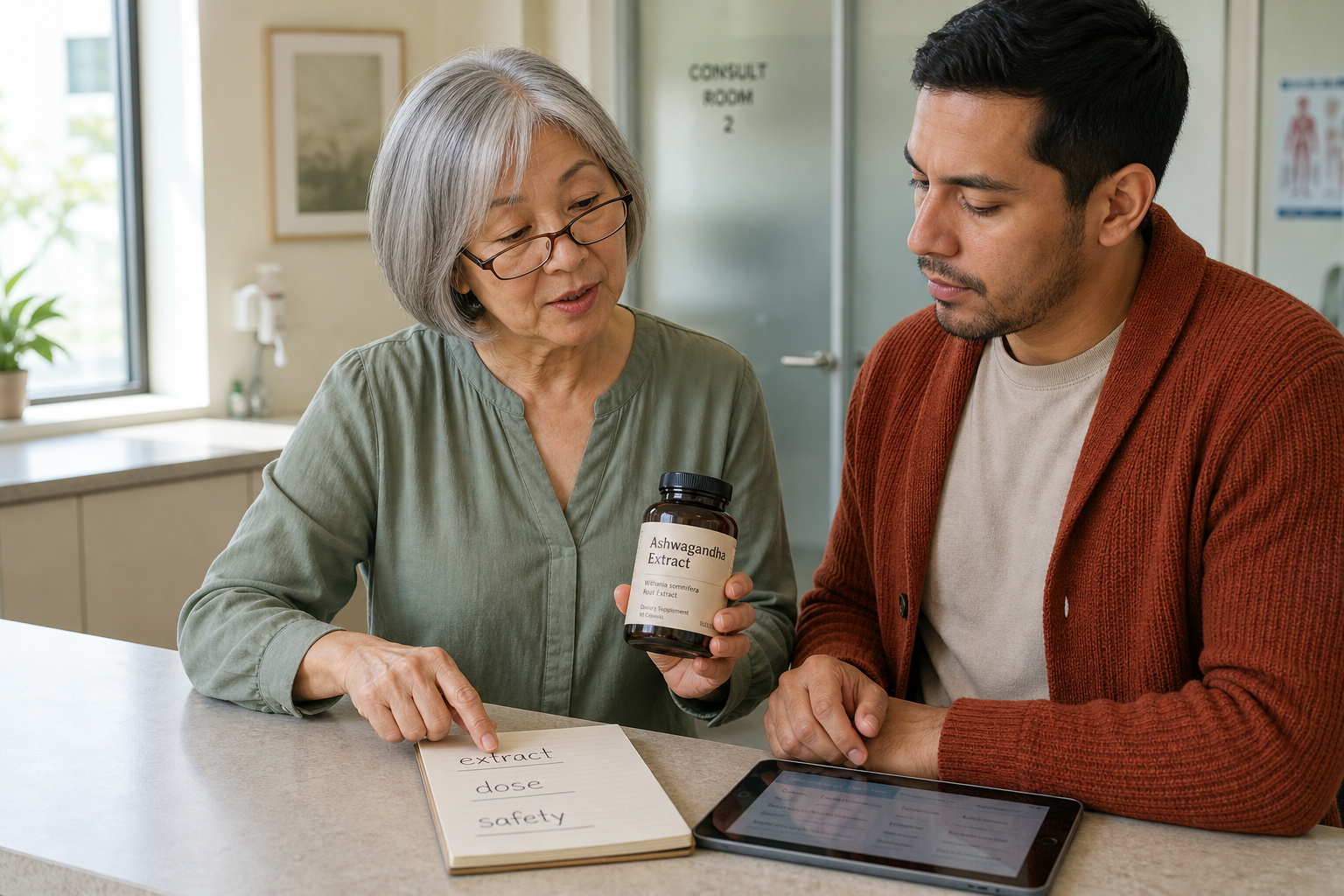
Ashwagandha may help stress and stress-linked sleep in some adults, but the real answer depends on extract form, dose, study quality, and safety risks.
Form and dose shape what ashwagandha can realistically do for stress and sleep.
Ashwagandha, Stress, and Sleep
Ashwagandha is one of the best-known botanicals marketed for stress, anxiety-like tension, and sleep. It is also one of the easiest to oversimplify, because supplements sold under the same name can use different plant parts and extracts. This review explains what ashwagandha is, why the form matters, and how to read the evidence without treating every product as interchangeable.
The evidence ladderBuilding confidence in the science
Traditional UseAyurvedic history, not modern dose proof
Early Human TrialsSmall randomized studies in stressed adults
Extract-Specific TrialsRoot-only and root-plus-leaf products differ
Meta-AnalysesModest support with methodological limits
Current ConsensusShort-term, form-specific stress and sleep support
A familiar root. A product-specific science.
Ashwagandha, or Withania somnifera, is often described as an adaptogen, a broad term for substances that may help the body adapt to stress. That promise is why it appears in formulas for tension, recovery, and sleep. The careful reading is narrower: modern trials usually test specific extracts, not the whole category. To understand ashwagandha, the key question is not only whether it works, but which form was studied.
The strongest signal is gradual stress support, not an immediate sedative effect or cure.
How Ashwagandha May Work
Ashwagandha does not appear to work through one single pathway. The most relevant idea is stress-response modulation: the plant may influence systems that connect the brain, hormones, immune signaling, and sleep regulation. The HPA axis, the body’s main stress-command system, is central because it controls cortisol release from the adrenal glands. Calming brain messengers such as GABA may also be involved, although much of that evidence is preclinical. Some studies report changes in serotonin or inflammatory markers, but those findings are often tied to specific products. This is why ashwagandha should be compared carefully with other supplements for stress and sleep: similar marketing claims can sit on very different evidence.
Stress-Command System
It may help calm HPA-axis activity and support healthier cortisol patterns in stressed adults.
Calming Brain Signaling
Preclinical data suggest some extracts influence GABA-A receptors involved in relaxation and sleep.
Mood Pathways
One product-specific trial linked a root extract plus piperine with higher serum serotonin.
Extract Chemistry
Withanolide measures vary by product, so percentages should not be compared blindly.
What the Clinical Evidence Shows
The strongest human evidence points to modest short-term effects, mainly in adults with high stress, anxiety symptoms, or sleep complaints. This matters because ashwagandha is often marketed as if any capsule can be expected to behave like any other. In practice, many trials use defined branded extracts, specific plant parts, and defined doses for only 6 to 8 weeks. Reviews generally find a signal for stress, anxiety, and sleep, but they also flag small study sizes, short duration, and mixed methods. The evidence is promising enough to take seriously, but not strong enough to treat ashwagandha as a sedative, anxiety treatment, or universal sleep solution.
Official Reviews
US review bodies describe promising but limited evidence, with important safety cautions and product-specific findings.1, 11, 12
Stress and Cortisol
A classic 60-day KSM-66 trial and recent reviews show lower cortisol and stress scores, though pooled stress findings are not uniform.2, 3, 4
Sleep Outcomes
Sleep trials and meta-analysis find small benefits, especially when sleep is already disturbed and studies last longer.5, 6
Anxiety and Form
Anxiety trials are encouraging, but absorption and extract chemistry differ enough that results cannot be generalized across products.7, 8, 9, 10
How to Choose an Ashwagandha Product
A good label should make it easy to see what was tested, which part of the plant was used, and how the extract was standardized. Vague labels are a red flag because the evidence is not for generic ashwagandha in the abstract.
Check whether the product is root-only, root-plus-leaf, or whole plant
Look for an exact extract name or clear standardization method
Match the dose to human trials where possible
Do not compare withanolide percentages blindly
Prefer third-party testing for identity, heavy metals, and contaminants
Read the quick facts →
Ashwagandha Label Quick Facts
Use these points to read ashwagandha labels more clearly and set realistic expectations before comparing products.
6 to 8 weeksCommon trial length for stress and sleep outcomes
300–600 mg/dayCommon range for many standardized root-extract trials
Form-specificResults from one extract do not automatically apply to another
Sleep terms to know
Sleep onset latency means how long it takes to fall asleep. Wake after sleep onset means time spent awake after first falling asleep. Sleep efficiency means the share of time in bed actually spent asleep.
Cortisol is not a toxin
Cortisol helps you wake up, respond to stress, regulate blood sugar, and control inflammation. The realistic goal is not to drive cortisol as low as possible, but to help an overactive stress response settle.
Industry links matter
Many modern ashwagandha trials test branded ingredients, and some include manufacturer funding or company-employed authors. That does not erase the findings, but independent replication would make the evidence stronger.
The most consistent signal for ashwagandha is stress support in people who are already stressed. In practical terms, that means lower scores on stress questionnaires and, in several studies, lower cortisol. The effect is not immediate. Most trials measure outcomes after 6 to 8 weeks, so ashwagandha is better understood as a gradual stress-response supplement than as an acute rescue tool.
The mixed evidence matters. Some reviews find clear improvements in perceived stress, while others find cortisol changes without a matching improvement in how stressed people feel. That gap makes sense. Cortisol is a biological marker, but stress is also shaped by workload, sleep debt, relationships, trauma, finances, and mental health. A supplement cannot remove those drivers.
Sleep effects may be indirect and direct
Ashwagandha may support sleep in two ways. The indirect route is stress reduction: if someone feels less wired at night, they may fall asleep faster and wake less often. This may explain why sleep benefits appear stronger in people with insomnia-like symptoms or non-restorative sleep than in people who already sleep well.
The direct route is more tentative. Preclinical studies suggest certain ashwagandha preparations may influence GABA-related pathways and other sleep-signaling systems. That could help explain why some people describe ashwagandha as calming. But animal data do not prove the same effect in humans, and different extracts may contain different sleep-relevant compounds. If the main issue is circadian timing rather than stress-linked arousal, evidence around sleep problems and melatonin may be more relevant than an adaptogen.
Anxiety is related to stress, but not identical
Everyday stress and anxiety overlap, but they are not the same thing. Stress usually points to pressure from a specific demand. Anxiety can persist even when the immediate demand is gone and may involve worry, panic sensations, avoidance, or intrusive thoughts.
Ashwagandha has a plausible anxiety signal. Trials and reviews show improvements on anxiety scales, including in some people with diagnosed mental-health conditions. Still, the evidence is not at the level of standard psychiatric treatments. People with severe anxiety, panic disorder, trauma-related symptoms, bipolar disorder, or suicidal thoughts should not use ashwagandha as a substitute for professional care.
The form question is not a minor detail
Traditional root powder is historically important, but most modern positive trials use standardized extracts. Root-only extracts such as KSM-66 are central to the classic stress evidence and are often studied around 300 to 600 mg/day. Root-plus-leaf extracts such as Sensoril and Shoden have different chemistry and are often used at lower doses, especially when highly concentrated. For practical product comparison, a broader ashwagandha dosage guide can help place these trial ranges in context.
Sustained-release and enhanced-absorption formulas add another layer. A sustained-release capsule is designed to release compounds more gradually. Piperine is used to increase absorption of some compounds. These designs may be useful, but they also make the evidence more product-specific. A trial of ashwagandha plus piperine does not prove the same effect for plain root powder.
Who might benefit most, and who should be cautious
The most likely candidates are adults with ongoing perceived stress, mild anxiety symptoms, or sleep problems that feel stress-linked. People who feel tired but wired, take a long time to fall asleep, or wake during stressful periods may be closer to the populations studied than people who already sleep well.
People should be more cautious if they are pregnant or breastfeeding, have liver disease, thyroid disease, autoimmune disease, or are preparing for surgery. Caution is also warranted with sedatives, anticonvulsants, thyroid medication, diabetes drugs, blood-pressure medication, and immunosuppressants. Rare liver injury is not common, but it is serious enough that jaundice, dark urine, unusual itching, severe fatigue, or right-upper-abdominal pain should prompt stopping the supplement and seeking medical advice.
Disclaimer: We attempt to do our best to find relevant, accurate and most up to date information available in both, the public domain and in the clinical and medical research community. We recommend reviewing scientific sources for official information on the subject. This post is not intended as medical advice. Each individual person's health conditions vary and we advise to consult a doctor before taking any supplements.


 Deutsch
 Español
 Suomi
Suomi Français
 Bahasa Indonesia
 Italiano
 日本語
日本語 Português
 Tagalog